

White label SaaS is software that one company builds and runs, and another company sells or presents under its own brand. The producer owns the code and infrastructure. The brand owner supplies the logo, domain and customer relationship. The three common models are reseller, OEM and embedded white-label components, and each fits a different kind of SaaS vendor.
Key Takeaways
- Definition: a white-label product is made by a producer and rebranded by a marketer so it looks like the marketer built it.
- Three models: reseller (sold as a standalone product), OEM (built into another vendor's product) and embedded components (features that live inside your own product).
- Customer baseline: logo and colour control, a custom domain, branded email, inherited permissions and strict data separation.
- Best fit for most product teams: embedded white-label features when your customers keep asking for dashboards, workflows or agents that must feel native.
- Decision rule: white-label a feature when the customer needs it to work their way but it is not what makes your product different.
White Label SaaS at a Glance
| Model | Who sells it | Who owns the customer | Branding depth | Best for |
|---|---|---|---|---|
| Reseller white label | Agency or consultant | The reseller | Logo, colours, domain, email | Vendors who want distribution without a sales team |
| OEM white label | Another software vendor | The OEM partner | Fully hidden; the partner's product shows no trace of yours | Specialist engines such as analytics or e-signature |
| Embedded white-label components | You, inside your own product | You | Your design system, your domain, your permissions | Dashboards, workflows, forms and AI agents customers shape themselves |
| Typical customer ask | All three | Varies | Brand, domain, permissions | No visible third-party seams |
What Does White Label SaaS Mean?
White label SaaS means a software vendor builds a cloud application once and lets other companies rebrand it as their own. The vendor keeps ownership of the code, hosting and updates. The buyer adds its logo, colours and domain, then sells or presents the product to its own customers.
The idea is older than software. Wikipedia describes a white-label product as one made by a producer that other companies, the marketers, rebrand so it appears they made it. The name comes from a blank white label on packaging that the marketer fills in.
In SaaS, the practical version is one multi-tenant codebase running under many brands. Each tenant sees its own look, and its data stays apart from everyone else's. Nobody ships a separate copy of the product.
White label vs private label vs rebrand
People use these terms loosely, so pin them down in contracts. White label usually means the same product sold to many brands. Private label often implies a build made for one brand. A rebrand is just a cosmetic change. If your agreement does not say which one you mean, expect arguments about support, roadmap and exclusivity later.
What Are the Common White Label SaaS Models?
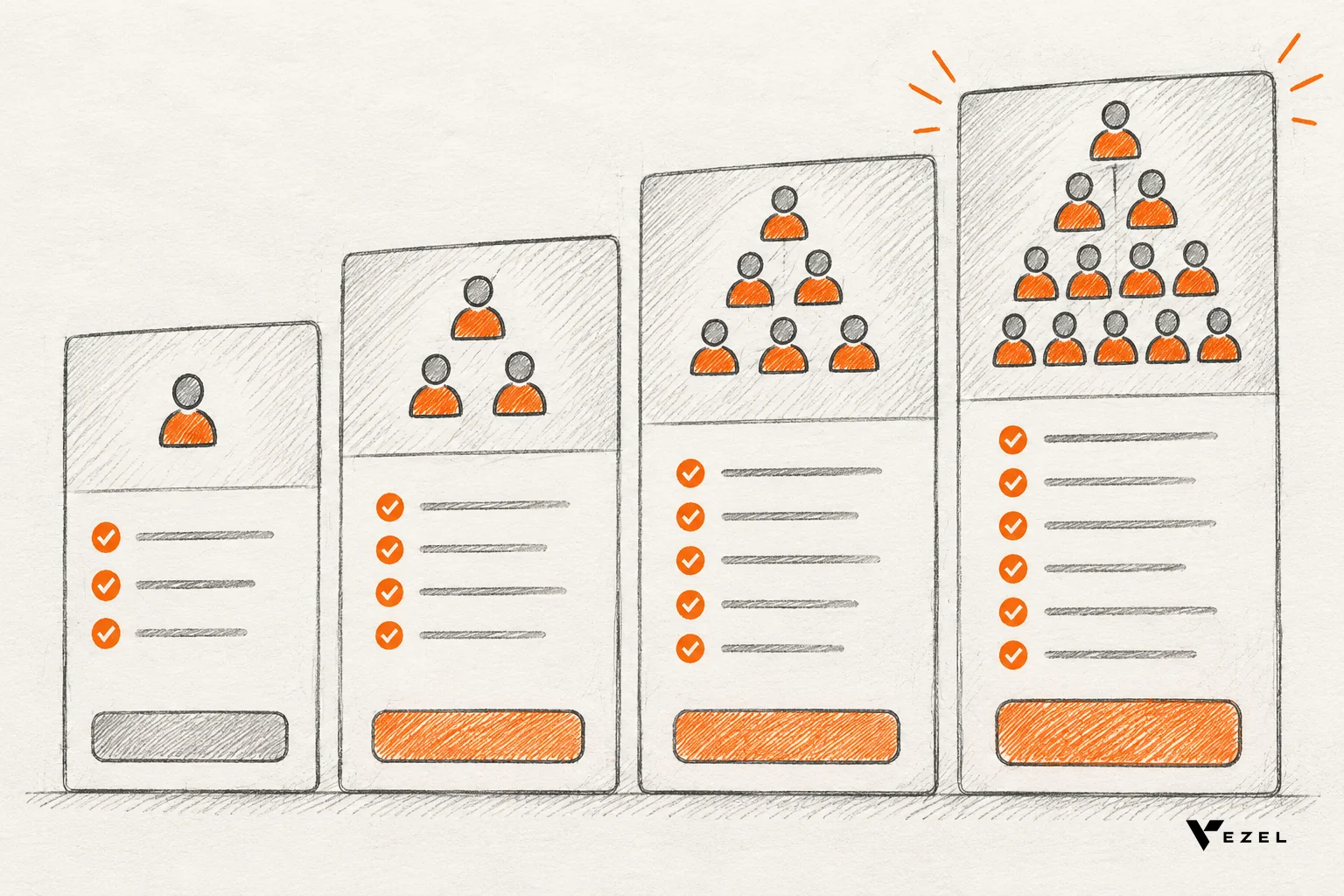
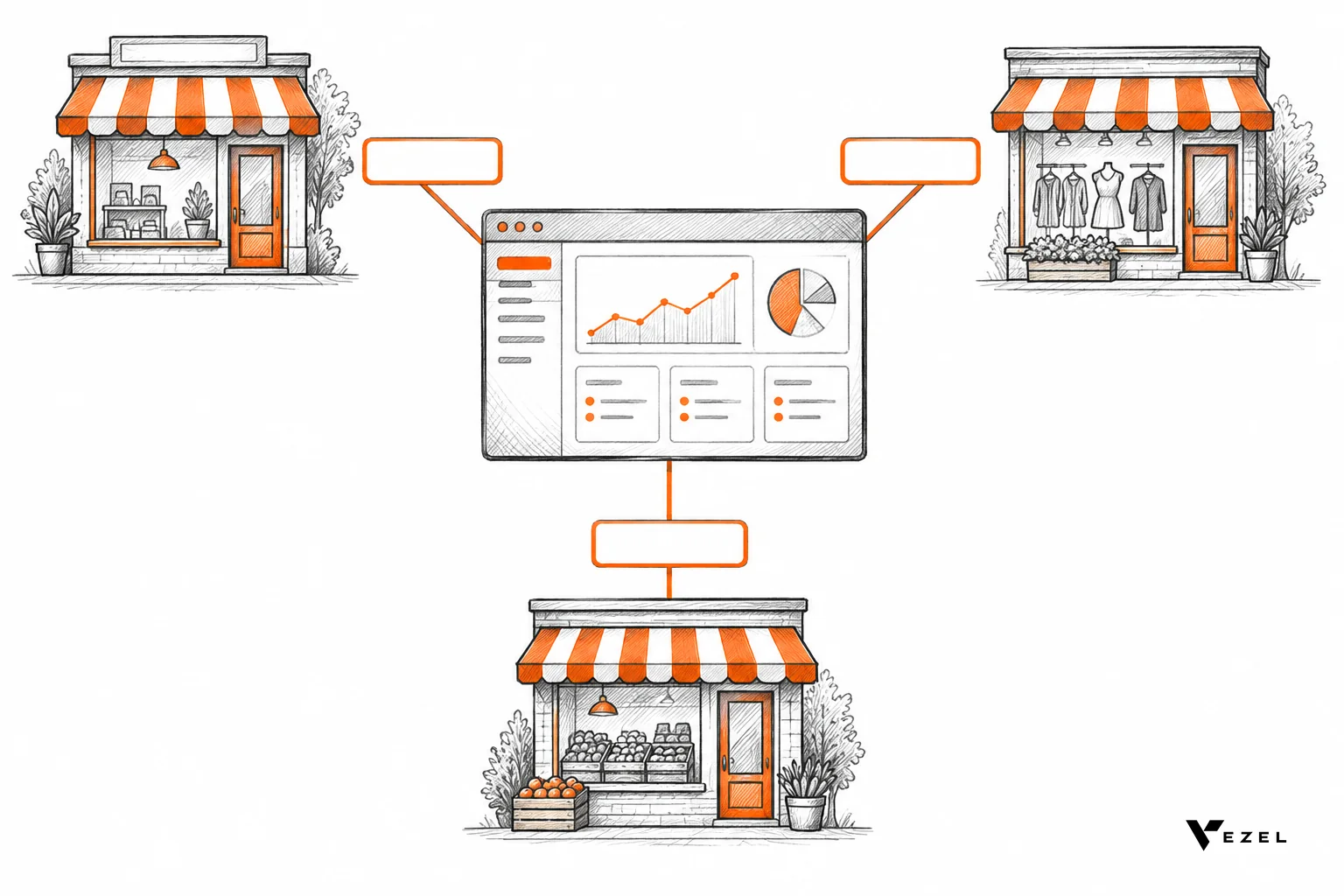
The three common white label SaaS models are reseller, OEM and embedded white-label components. Resellers sell your product to their own clients under their brand. OEM partners build your engine into their product. Embedded components run inside your own product, wearing your design system for your own customers.
Reseller white label
An agency or consultant licenses your product at a wholesale rate and sells it as theirs. They handle sales, onboarding and often first-line support. You handle uptime and the platform.
Here is an illustrative example, not real pricing. An agency pays a wholesale fee of $200 per client per month and charges $350. With 10 clients that is $1,500 a month in margin for the agency, and $2,000 a month in revenue for you without a single sales call.
The catch is control. Your brand is invisible to those end users, so you rarely learn why they churn. Decide up front who owns billing, who answers tickets and what happens to the client if the reseller leaves.
How a buyer finds and vets white-label SaaS to resell
There are two routes. The first is a marketplace or directory of white-label products, where you compare many vendors quickly but have little leverage on terms. The second is a direct vendor deal, where you approach a SaaS company and negotiate the wholesale rate, branding rights and support split yourself. Direct deals take longer but give you clearer terms and a named contact.
Whichever route you take, vet the vendor before you commit:
- Can the product run under your logo, colours, domain and sending email address, with no vendor names left in errors, docs or footers?
- Is it multi-tenant, with each client's data kept separate?
- Who handles first-line support, and who handles incidents and uptime?
- Who owns the client relationship and billing, and what happens to your clients if the vendor changes terms or shuts down?
- Does a trial or sandbox let you test the branded experience before you sell it?
What onboarding a reseller involves
- Sign the reseller agreement covering branding rights, support split and termination.
- Supply brand assets: logo, colours, typography and email templates.
- Set up the custom domain, including DNS validation and automatic certificates.
- Configure branded email so messages come from your address.
- Test the full client journey, from sign-up to support ticket, and check that no vendor branding appears.
- Agree escalation paths, then onboard your first client.
OEM white label
In an OEM deal, your product becomes a part inside someone else's product. Think of a scheduling engine, a reporting module or a document tool inside a larger platform. The partner's customers never see your name.
OEM deals tend to be bigger and slower. They involve technical integration, service-level terms and often minimum commitments. They work best when your component is hard to build and the partner's core business lies somewhere else.
Embedded white-label components
This is the model most product teams overlook. Instead of letting someone else resell your product, you embed a white-labeled capability inside your own. Customers get dashboards, approval workflows, forms or AI agents that look like your product, because they inherit its theme.
The component comes from a specialist vendor, but your customers never see that vendor. Vezel is one example: an embedded AI extension platform that connects to your APIs and lets end customers describe what they want in plain English. White-label theming makes the result match your design system. The four steps are laid out in how white-labeling works with Vezel below.
What Do Customers Expect From a White-Labeled Product?
Customers expect a white-labeled product to look, sign in and behave like one product from one company. That means their own logo and colours, a custom domain, branded email, the same permissions as the host product, and no visible traces of a third-party vendor anywhere in the experience.

Miss one of these and users notice. A login page on an unfamiliar domain or an email from a vendor's address makes a security team nervous, and that is before anyone reads the contract.
Branding and design
Good white-label systems store branding per client rather than hard-coding it. Logos, colours, typography and email templates become configuration. The test is simple: could a user tell which vendor built it? If yes, the white label is not finished.
Custom domains
Enterprise buyers want app.theirbrand.com, not a vendor subdomain. A custom domain needs automatic TLS certificates and DNS validation, which infrastructure providers such as Cloudflare document for their custom hostname features. Plan for this early; domain work is dull but it blocks launches.
Permissions and security
Here is where white-label reseller products and embedded features diverge. A reseller product has its own user system. An embedded feature should not. Vezel's extensions inherit your existing authentication, permissions and access controls, so a user can only see in a dashboard what they could already see in your product.
That inheritance matters more than the logo. A pretty extension that bypasses row-level access is a data leak with a nice theme.
A white-label readiness checklist
- Branding stored per tenant, not hard-coded.
- Custom domains with automatic certificates.
- Email sent from the customer's or your own address, never the vendor's.
- Permissions and roles inherited from the host product.
- Data kept separate between tenants.
- Clear ownership of support, billing and incident communication.
- Removal of vendor names from errors, docs, footers and URLs.
How Do White-Labeled Embedded Features Help SaaS Vendors?
White-labeled embedded features help SaaS vendors by letting customers get the dashboards, workflows and agents they need without the vendor building each one. Because the features look and behave like the core product, adoption is higher and customers see the product as more complete, which supports retention.

Our own view is that "native feel" is the whole point. Users do not think "I'm using a plug-in." They think "my product does this." That perception is what separates a feature that gets used from a tab nobody opens. For a deeper look at the retention side, read how white-label AI extensions boost SaaS retention.
What customers can build
With Vezel, customers can build dashboards, workflows, reports, forms, automations, AI assistants and other business-specific capabilities inside your SaaS product. They describe the need in plain English, and the extension runs in a secure container.
The AI part matters because it matches how expectations have shifted. Users now expect to describe intent and get a result, not memorize menus. For the technique behind this, see plain English AI prompting for SaaS dashboards.
What the vendor keeps
You keep the shared core product. Customer-specific capabilities sit alongside it instead of inside it, with governance for permissions, publishing and lifecycle. That separation is what lets one product serve many different businesses without a separate deployment for each.
When Should You Offer White-Labeled Features?
Offer white-labeled features when customers need the product to work their way, the need is not your core differentiator, and the result must feel native. Skip them when the capability is your competitive edge, or when you cannot yet support the security, branding and governance a white label demands.
Here is the rule we would apply. Pick the model by who the end user is and who owns the relationship:
- You want new distribution: go reseller, and budget for partner support.
- You have a hard-to-build engine: go OEM, with clear service terms.
- Your own customers want custom tools inside your product: go embedded white-label components.
A worked decision walkthrough
Suppose a SaaS vendor's customers keep asking for custom dashboards and approval workflows. Work through four questions in order.
- Is the capability your differentiator? No. Customers want it shaped to their process, but your edge lies elsewhere. White-labeling is still on the table.
- Who is the end user? Your existing customers, inside your product. That rules out reseller, which serves a partner's clients, and OEM, which serves another vendor's product.
- Who owns the relationship? You do. Embedded components keep it with you.
- Can you support security and governance? Check that permissions are inherited and data stays separated. If yes, go embedded.
Now change the facts. If the vendor has no sales team and wants agencies to sell its product, the end user becomes the agency's client and the relationship belongs to the agency. That points to reseller. If a larger platform wants your reporting engine inside its own product, that points to OEM.
Typical contract terms for the reseller model
Reseller agreements usually settle these points. Templates for white label SaaS agreements describe the core as the terms on which the supplier provides the SaaS to the customer, including the supplier's disclaimers.
- Licence and branding rights: what the reseller may rebrand, and in which territory.
- Pricing and billing: the wholesale rate, who invoices the end client and when payment is due.
- Support split: who answers first-line tickets and who handles incidents.
- Service levels: uptime commitments and remedies if they are missed.
- Data and security: data ownership, separation between clients and breach notification.
- Customer ownership: who owns the client relationship and what happens to clients if the reseller leaves.
- Exclusivity: whether the reseller is the only one in a territory or segment.
- Termination: notice periods, transition help and removal of branding.
If you are still weighing whether to build any of this yourself, the build vs buy decision framework for SaaS features gives a scoring method.
When not to white-label
Do not white-label what defines you. If your edge is a scoring algorithm, keep it yours. Be cautious with resellers when you cannot afford a support burden you do not control. And be honest about the open question: some buyers care that a vendor is named, for audit or compliance reasons, and no white-label model fully settles that tension.
How Does White-Labeling Work With Vezel?
Vezel white-labels in four steps: connect to your APIs, generate extensions from plain English, run them in a secure container, then scale and govern them. Most SaaS platforms can integrate Vezel in a few days, and extensions inherit your authentication, permissions and access controls.
- Connect to your APIs. Vezel maps to your existing endpoints and data models.
- Generate extensions from plain English. Customers describe what they need.
- Ready to use in a secure container. The result is native, themed to your design system.
- Scale and govern. Control permissions, publishing and lifecycle centrally.
If your use case starts with reporting, our walkthrough on building custom dashboards inside your SaaS shows the first extension most teams ship. Vezel has offices in San Carlos, California and Noida, India, and replies to inquiries within 1-2 business days.
White Label SaaS FAQ
Is white label SaaS the same as reselling?
No. Reselling is one white-label model. A reseller sells your product under its own brand. White label is the wider idea of hiding the producer's brand, and it also covers OEM deals and embedded components that run inside a vendor's own product.
Does a white-labeled product need its own domain?
Usually yes for reseller and OEM deals, because enterprise buyers expect their own address and certificates. Embedded features can simply live on your existing product domain, since they sit inside your application rather than beside it.
Can AI features be white-labeled?
Yes. AI assistants, dashboards and workflow builders can be themed to match the host product and run under its permissions. The key is that the AI acts with the signed-in user's access, not with its own broader rights.
What should a white-label contract cover?
It should cover who owns the customer relationship, support responsibilities, branding rights, data handling, uptime commitments and what happens at termination. Have counsel review it; templates found online are a starting point, not a substitute.
Next Step: See White-Labeled Embedded Features in Your Product
If your customers keep asking for dashboards, workflows or agents that feel like part of your product, embedded white-label components are the fastest way to say yes without rebuilding your roadmap. Book a Vezel demo and we will show how white label SaaS features can run under your brand, permissions and design system, often integrated within a few days.