

Your enterprise prospect just sent a follow-up email. They loved the demo. They're ready to move — but they need one thing first: a custom approval workflow for their compliance team, scoped to their specific role hierarchy. Your sales lead asks engineering. Engineering says three weeks, minimum. The deal goes cold.
This scenario plays out across B2B SaaS companies every week. And the instinctive fix — "let's use Retool to build it faster", solves a different problem than the one you actually have. Understanding why requires a clear-eyed look at what Retool is built for, what embedded extensibility is built for, and where the architectural gap between them becomes a business problem at scale.
Two Tools, Two Completely Different Jobs
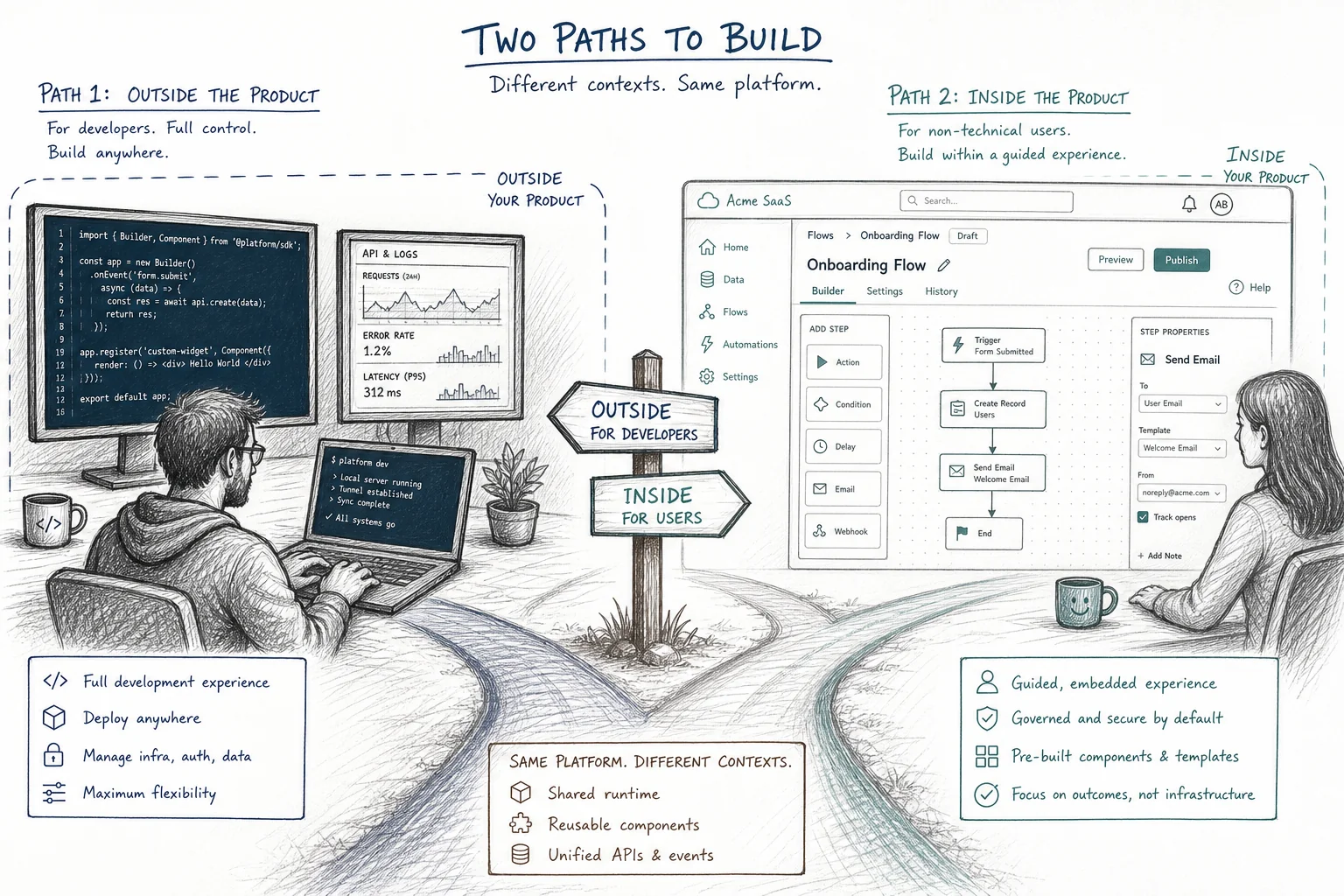
Retool is a developer-facing internal tool builder. It lets engineers assemble admin panels, ops dashboards, and support tooling faster than writing everything from scratch. It's genuinely good at that job. The problem is that "internal tool builder for developers" and "customer-facing extensibility platform" are not the same job, and treating them as interchangeable is where SaaS teams get into trouble.
An embedded extensibility platform is something structurally different. It lives inside your SaaS product. Your end-customers use it. They describe what they need in plain English, and the platform generates a working application, a microapp, that runs on their real data, inherits your security model, and appears in an in-product marketplace. No developer required. No separate URL. No second login.
That architectural difference, where the tool lives and who uses it, determines everything downstream: who can build, how fast they can build, how many customers you can serve, and whether your engineering team ever gets off the customization treadmill.
What Retool Actually Does (and Where It Stops)
Retool's core strength is speed for developers. An engineer who would otherwise spend two weeks building an internal admin panel can build it in two days with Retool. For internal use cases, ops dashboards, support tooling, data management interfaces used by your own team, that's a real and meaningful improvement.
The structural limits appear the moment you try to use Retool for customer-facing extensibility:
- It requires developer-level thinking. Building in Retool means understanding data models, API connections, conditional logic, and layout. A customer success manager or an enterprise customer's ops lead cannot self-serve in Retool. A developer has to build it for them.
- It lives outside your product. Every Retool app has its own URL and its own authentication. Your customer has to leave the product they trust, log into a separate environment, and manage a second system. That friction is invisible in a demo and very visible in daily use.
- It doesn't inherit your security model. Retool doesn't know about your platform's row-level access controls or role-based permissions. Replicating that governance per app, per customer, is a manual engineering task, and at hundreds of customers, it becomes an unmanageable compliance burden.
- It doesn't scale to customer volume. If 200 enterprise customers each need a different workflow view, you need 200 developer-hours to build them. Retool reduces the time per build; it doesn't change the fact that a developer is required for every single one.
None of this is a criticism of Retool's design. It was built for internal tooling, and it does that well. The issue is scope: it was never architected to be a customer-facing extensibility layer inside a multi-tenant SaaS product.
What Embedded Extensibility Actually Does
An embedded extensibility platform, like Vezel, is designed from the ground up for a different scenario: giving your end-customers the ability to build their own workflows, dashboards, and forms directly inside your product, without engineering involvement on your side.
The five architectural pillars that make this work at scale:
- Natural language generation. A customer describes what they need in plain English, "show me overdue work orders grouped by site, with a button to reassign to the nearest technician", and the platform generates a working microapp. No code. No data model knowledge required.
- API auto-discovery. The platform ingests your product's API surface (via OpenAPI specs), infers data shapes, and maps natural-language intents to the correct calls automatically. Your customers don't need to know how your API works.
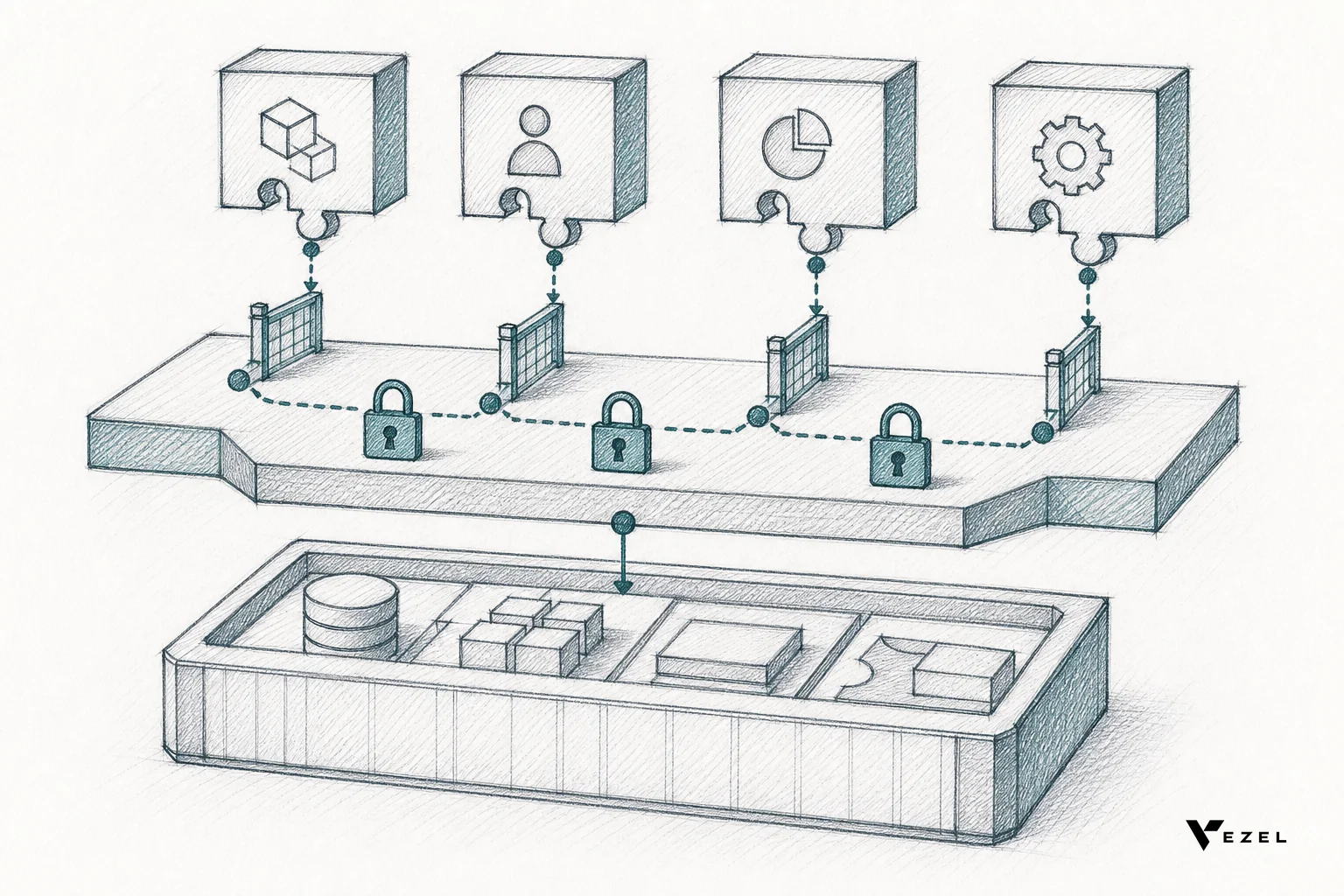
- Security inheritance. Every API call a generated app makes passes through the same authentication, authorization, and row-level access rules your platform already enforces. If a user can't see certain records in your core product, an app they build can't see those records either. This is enforced at the infrastructure level, not in application code that can be misconfigured.
- White-label theming. Generated apps adopt your design system, typography, color tokens, component styles, navigation patterns. From the customer's perspective, they're still inside your product. The extensibility layer is invisible.
- Governed marketplace. Apps are versioned, published, and discoverable by other users in the same organization (or across customer organizations, with permission). Usage analytics tell you what's actually being used. Apps don't disappear after one session, they become part of the customer's daily toolkit.
The result is a fundamentally different dynamic: your customers solve their own workflow problems, your engineering team doesn't get pulled into one-off builds, and the apps that get created are durable, governed, and scoped to each customer's actual permissions. You can explore how this works in practice by seeing how it works before committing to anything.
Head-to-Head: The Five Dimensions That Matter
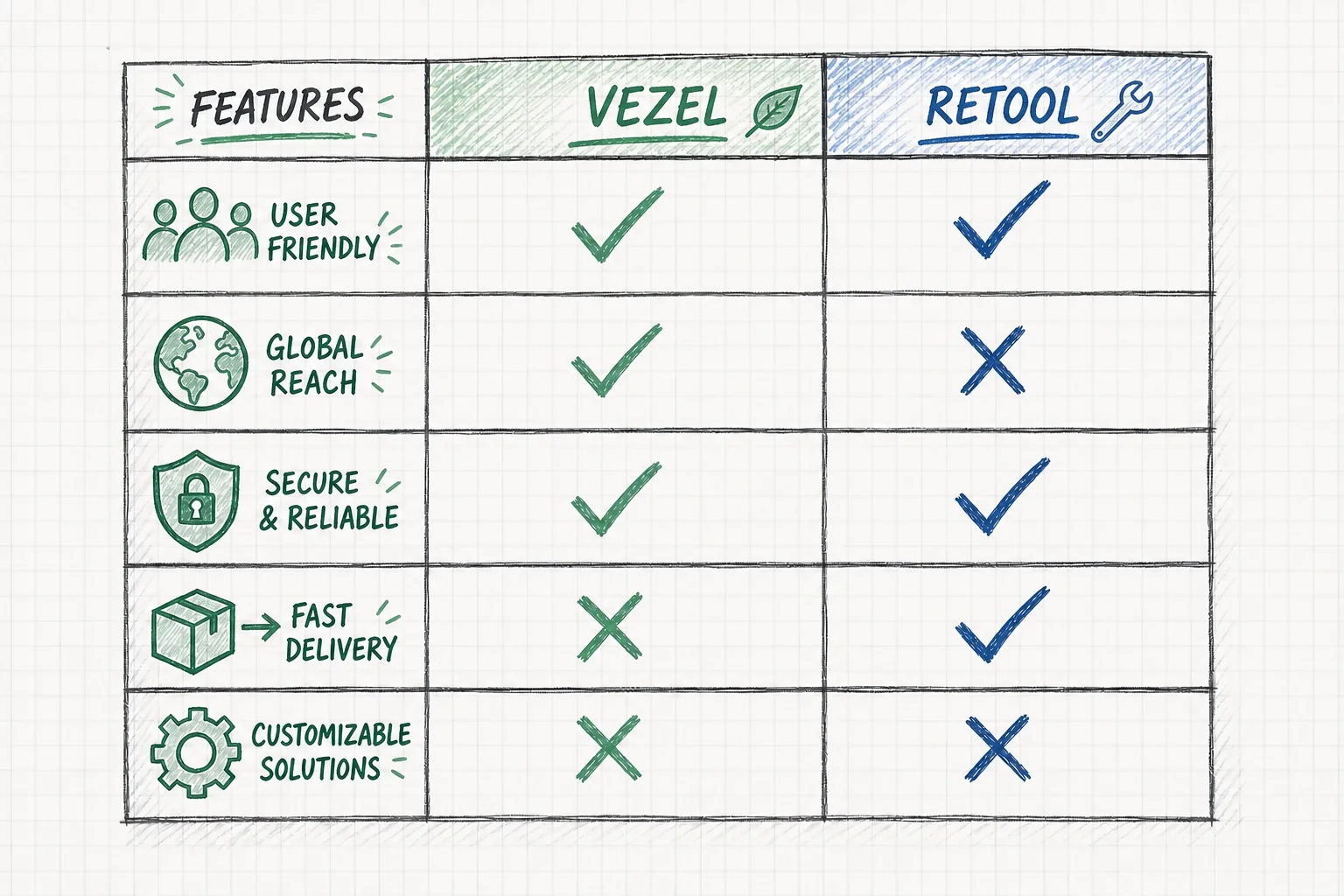
When SaaS product and engineering leaders evaluate these two approaches, five dimensions consistently surface as the ones that determine fit:
1. Who Builds
With Retool, a developer builds every app. With an embedded extensibility platform, end-customers and customer success teams build apps in plain English. The practical implication: Retool's output scales with your developer headcount. Embedded extensibility scales with your customer base.
2. Where It Lives
Retool apps live at their own URL, outside your product. Embedded extensibility apps live inside your product, under your domain, within your navigation. For enterprise customers who care about security posture and user experience, this distinction matters enormously, a separate tool is a separate attack surface and a separate onboarding burden.
3. Security Model
Retool requires manual replication of your platform's access controls for each app. Embedded extensibility inherits your existing authentication, RBAC, and row-level security automatically. At one app, the manual approach is manageable. At hundreds of apps across hundreds of customers, it's an audit and compliance problem waiting to happen.
4. Distribution
A Retool app is shared via a link. An embedded extensibility app is published to a governed in-product marketplace where other users can discover, install, and adapt it. The marketplace model is what turns a one-off customization into a reusable asset, and what allows a workflow built for one customer to benefit others facing the same problem.
5. Engineering Overhead
Retool reduces build time per app but doesn't eliminate developer involvement. Embedded extensibility shifts the build entirely to the customer, engineering overhead for individual customizations approaches zero. That freed capacity goes back to core product innovation instead of bespoke builds. For teams already struggling with custom dashboard requests from enterprise accounts, this shift is significant.
Real Scenarios: When Retool Wins and When It Doesn't
Retool is the right tool in a specific set of circumstances: your own team needs an internal admin panel, a support dashboard, or an ops tool, and you have a developer available to build and maintain it. That's a legitimate use case, and Retool handles it well.
The scenarios where Retool breaks down are the ones that matter most for SaaS growth:
Scenario 1: Enterprise deal with a custom workflow requirement. A prospect needs a compliance approval flow before they'll sign. With Retool, a solutions engineer has to build a separate app, wire up your API manually, replicate the prospect's permission structure, and share a link to something that lives outside your product. That takes days. With embedded extensibility, a CS or SE can describe the workflow in plain English and show a working app, inside your product, on the prospect's real data structure, during the sales call.
Scenario 2: 300 customers, each needing a different view. A maintenance management platform serving hospitals, roofing companies, and manufacturing plants has three completely different "first thing in the morning" workflows. Retool requires three developer builds. Embedded extensibility lets each customer build their own. The platform doesn't care how many customers have different needs, it scales horizontally without adding engineering headcount.
Scenario 3: Customer wants to self-serve. An enterprise customer's ops lead wants to build a shift-handoff tool that pulls from your platform's inspection and maintenance data. They're not a developer. They can't use Retool. With embedded extensibility, they describe what they need and get a working app in minutes, without ever leaving your product or filing a support ticket.
The Enterprise Sales Acceleration Angle
One of the most concrete business cases for embedded extensibility over Retool is what happens during enterprise sales cycles. Industry data from the source material behind this analysis is direct: solutions engineers who can build a requested workflow live during a sales call, rather than promising it "on the roadmap", report meaningfully higher win rates.
The "roadmap promise" trap is a well-known pattern in enterprise SaaS sales. A prospect asks for a specific workflow. The SE says "we can build that." The deal closes. Engineering gets the request. It sits in the backlog for six months. The customer churns at renewal because the workflow never shipped. The promise that closed the deal became the liability that ended the relationship.
Embedded extensibility breaks this cycle. The workflow doesn't go on the roadmap, it gets built by the customer or the CS team, on the day it's needed, inside the product the customer already uses. The sales cycle shortens because the answer to "can you do this?" is no longer "yes, eventually", it's a live demonstration.
For teams working through how to embed a workflow builder inside their SaaS product, this sales acceleration effect is often the first measurable ROI signal.
Engineering Overhead: The Hidden Cost Comparison
The cost comparison between Retool and embedded extensibility looks different depending on whether you're counting per-app cost or total-cost-at-scale.
Per app, Retool is faster than building from scratch. A developer who would spend two weeks on a custom dashboard might spend two days in Retool. That's a real saving, for the first few apps.
At scale, the math inverts. Industry estimates put the share of engineering capacity consumed by one-off, single-customer requests as high as 30-40% at mid-market B2B SaaS companies. Retool reduces the time per request; it doesn't change the fact that every request still requires a developer. If you have 200 enterprise customers each filing two or three workflow requests per quarter, you're looking at 400-600 developer-hours per quarter just on customization, before any core product work gets done.
Embedded extensibility changes the denominator. When customers build their own workflows, the engineering cost per customization drops to near zero. The 30-40% of capacity that was going to bespoke builds goes back to the roadmap. Core product innovation, the work that actually differentiates your platform, gets the engineering attention it was always supposed to have.
There's also a maintenance dimension. Every Retool app your team builds is a permanent maintenance obligation. As your core product evolves, those apps need to be updated. Embedded extensibility apps are generated against your current API surface, when the API changes, the governance layer handles versioning, not your engineering team.
Which Model Fits Your Growth Stage?
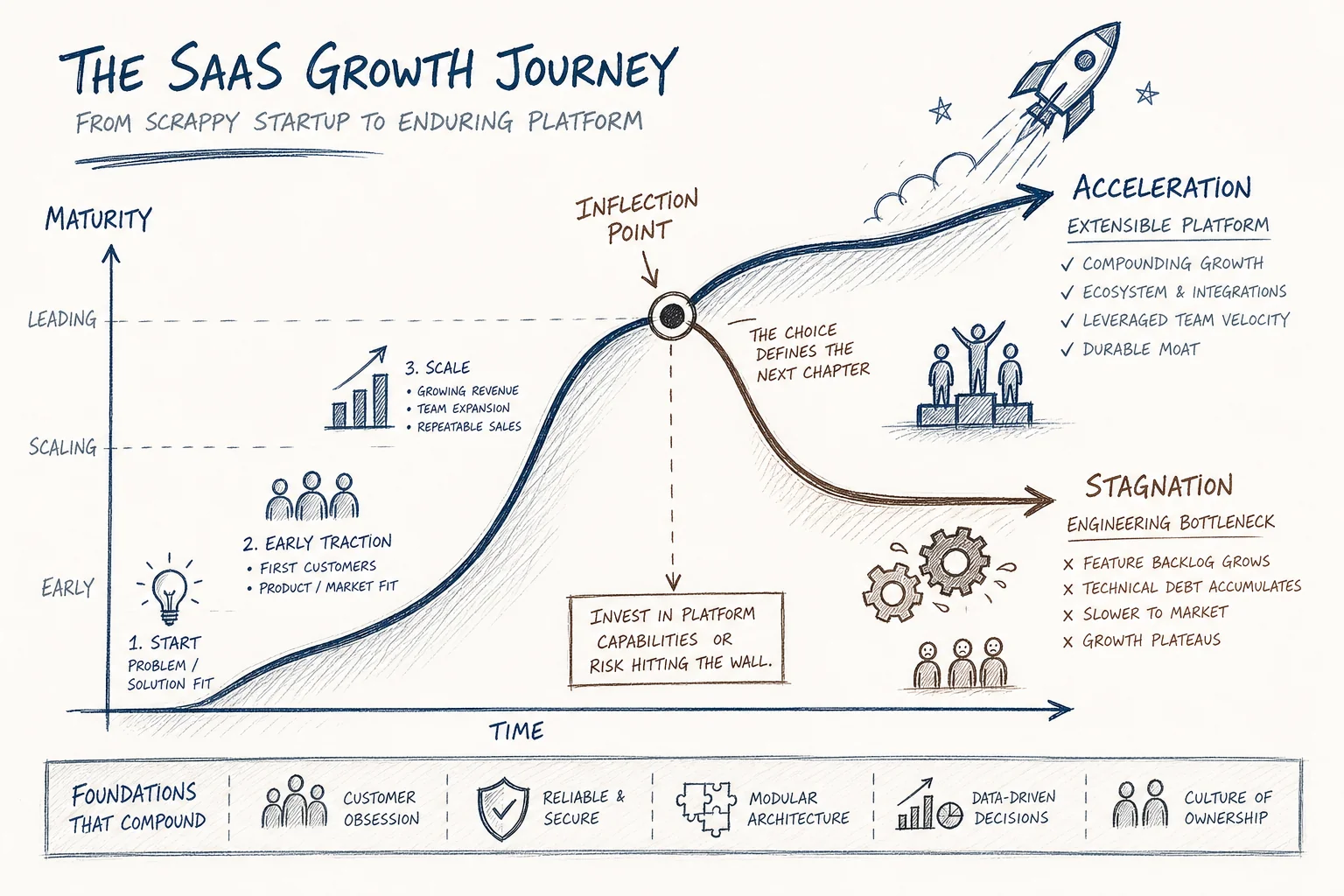
The honest answer is that both tools have a place, just not the same place, and not at the same growth stage.
Early-stage, internal tooling needs: If you're a small team that needs to build internal admin panels and ops dashboards for your own use, Retool is a reasonable choice. The developer requirement isn't a problem when your whole team is developers. The external URL isn't a problem when the users are internal.
Scaling SaaS with enterprise customers: The moment your growth depends on winning and retaining enterprise accounts with diverse workflow needs, the Retool model starts to break. The inflection point is usually when one-off customization requests start consuming a meaningful share of your roadmap, or when a deal stalls because you can't show a custom workflow fast enough.
At that inflection point, the question isn't "how do we build custom things faster?" It's "how do we stop being the bottleneck for custom things entirely?" That's the question embedded extensibility is designed to answer.
Vezel is built specifically for this transition. It integrates via API into your existing SaaS platform, zero footprint, no rearchitecting required, and gives your end-customers the ability to build their own dashboards, workflows, forms, and AI agents in plain English, inside your product, under your brand. The security model is inherited automatically. The apps are governed, versioned, and discoverable. Your engineering team doesn't touch any of it.
The goal isn't to build custom things faster. It's to stop being the bottleneck for custom things entirely.
Production deployments of embedded extensibility platforms report adoption rates in the 85-95% range for custom apps, compared to a typical 20-40% for standard feature releases. Day-30 retention among users who built or used a custom app runs in the high 80s. These aren't marginal improvements; they're the kind of numbers that show up in NRR and renewal conversations.
Frequently Asked Questions
Can I use Retool and an embedded extensibility platform together?
Yes, and many teams do. Retool handles internal tooling, admin panels, support dashboards, ops tooling for your own team. An embedded extensibility platform handles customer-facing customization. They serve different users in different contexts, so they don't compete directly in practice.
Does embedded extensibility require rearchitecting my SaaS product?
No. Platforms like Vezel integrate via your existing API surface, ideally via an OpenAPI spec, without requiring changes to your core product architecture. Integration typically takes around two weeks, covering API connection, security mapping, and design system configuration.
What happens to the apps customers build if they cancel?
Apps are versioned and governed within the platform's lifecycle management system. The governance model, including what happens to apps at offboarding, is configurable by the SaaS vendor, not left to chance.
How is this different from just adding a chatbot or AI copilot to my product?
A chatbot answer disappears when the session ends. An embedded extensibility app is durable, it becomes part of the customer's daily toolkit, appears in their in-product marketplace, and can be discovered and reused by other users. The output is a persistent application, not a one-time conversation. This is the difference between Level 2 (conversation) and Level 3 (application generation) AI in SaaS, and it's why adoption and retention numbers for embedded extensibility are dramatically higher than for chat-based AI features.
Is Superblocks a closer comparison than Retool?
Superblocks is also an internal tools platform for engineering teams, structurally similar to Retool in that it requires developer involvement and lives outside the host product. The architectural distinction from embedded extensibility is the same: developer-built vs. customer-built, external vs. embedded, manual security replication vs. automatic inheritance. The Superblocks use case is internal tooling; embedded extensibility is customer-facing customization.
The Decision Is About Who You Want Building
Retool and embedded extensibility for SaaS products are solving adjacent but fundamentally different problems. Retool answers: "How do we build internal tools faster?" Embedded extensibility answers: "How do we let our customers build their own tools, inside our product, without our engineering team being involved?"
If your growth depends on winning enterprise deals faster, retaining customers who need last-mile workflow customization, and freeing your engineering team to build the core product instead of bespoke requests, embedded extensibility is the model that scales. Retool is a faster shovel. Embedded extensibility is a different machine entirely.
If you're at the inflection point where one-off enterprise requests are starting to define your roadmap, book a demo with Vezel to see how embedded extensibility works inside a real SaaS product. Or if you want to explore the mechanics first, start a free trial and see what your customers could build on day one. Either way, the conversation starts with a simple question: who do you want building the next hundred custom workflows, your engineering team, or your customers?