

Most vertical SaaS platforms don't fail at extensibility because the idea is wrong. They fail because the rollout skips the boring parts: permission inheritance, theming, lifecycle governance. The mistakes SaaS platform owners make building an extensibility ecosystem almost always trace back to treating extensions as a side project instead of a platform decision with real security and trust consequences.
Key Takeaways
- RBAC inheritance isn't optional: extensions that don't reuse your existing row-level permissions create a second, unaudited security surface.
- Unthemed extensions read as bugs: customers assume a mismatched interface is broken, not "yours," even when it works perfectly.
- A marketplace without governance is shadow IT with a login: no versioning means no way to deprecate, patch, or audit what customers built.
- Chasing scale before critical mass backfires: most marketplace platforms fail before reaching the network effect that makes them worthwhile.
- Sherlocking your own ecosystem kills trust fast: absorbing what customers or partners already built natively teaches everyone to stop building on you.
At a Glance: The 10 Mistakes and Their Fallout
| Mistake | Operational Consequence |
|---|---|
| Treating extensibility as a feature | No owner, no roadmap, extensions become one-offs again |
| Skipping white-label theming | Customers file "bugs" against extensions that work fine |
| Ignoring RBAC inheritance | Row-level access leaks, security review fails late in sales cycle |
| Launching without a governed marketplace | No versioning, no deprecation path, extension sprawl |
| Building plumbing before talking to customers | Engineering ships infrastructure nobody uses |
| Sherlocking your own ecosystem | Third-party and customer builders stop investing in your platform |
| Underestimating ongoing investment | Platform decays into unmaintained legacy surface |
| Chasing marketplace scale too early | Thin catalog, no network effect, wasted budget |
| Unmapped API auto-discovery gaps | Extensions silently break on edge-case data models |
| Security review as an afterthought | Enterprise deals stall in procurement over unanswered questions |
1. Treating Extensibility as a Feature Instead of a Platform Decision
A roadmap item ships, gets maintained for two quarters, and quietly rots. That's what happens when "let customers build dashboards" gets treated like any other feature request instead of a standing platform commitment.
Extensibility needs an owner who thinks in terms of lifecycle, not launch date. Without that, you end up right back where you started: engineering fielding one-off requests, just with extra infrastructure to maintain on top. If your team is already drowning in bespoke work, read how to reduce SaaS engineering backlog from enterprise requests before you add a platform layer on top of the problem.
2. Skipping White-Label Theming
An extension that looks like it came from a different company doesn't feel like a gift. It feels broken. Customers raise support tickets for things that technically work, because the fonts, colors, and layout don't match the product they pay for.
Theming isn't cosmetic polish you add later. It's the difference between an extension customers trust enough to build their daily workflow around, and one they quietly stop using.
3. Ignoring RBAC Inheritance
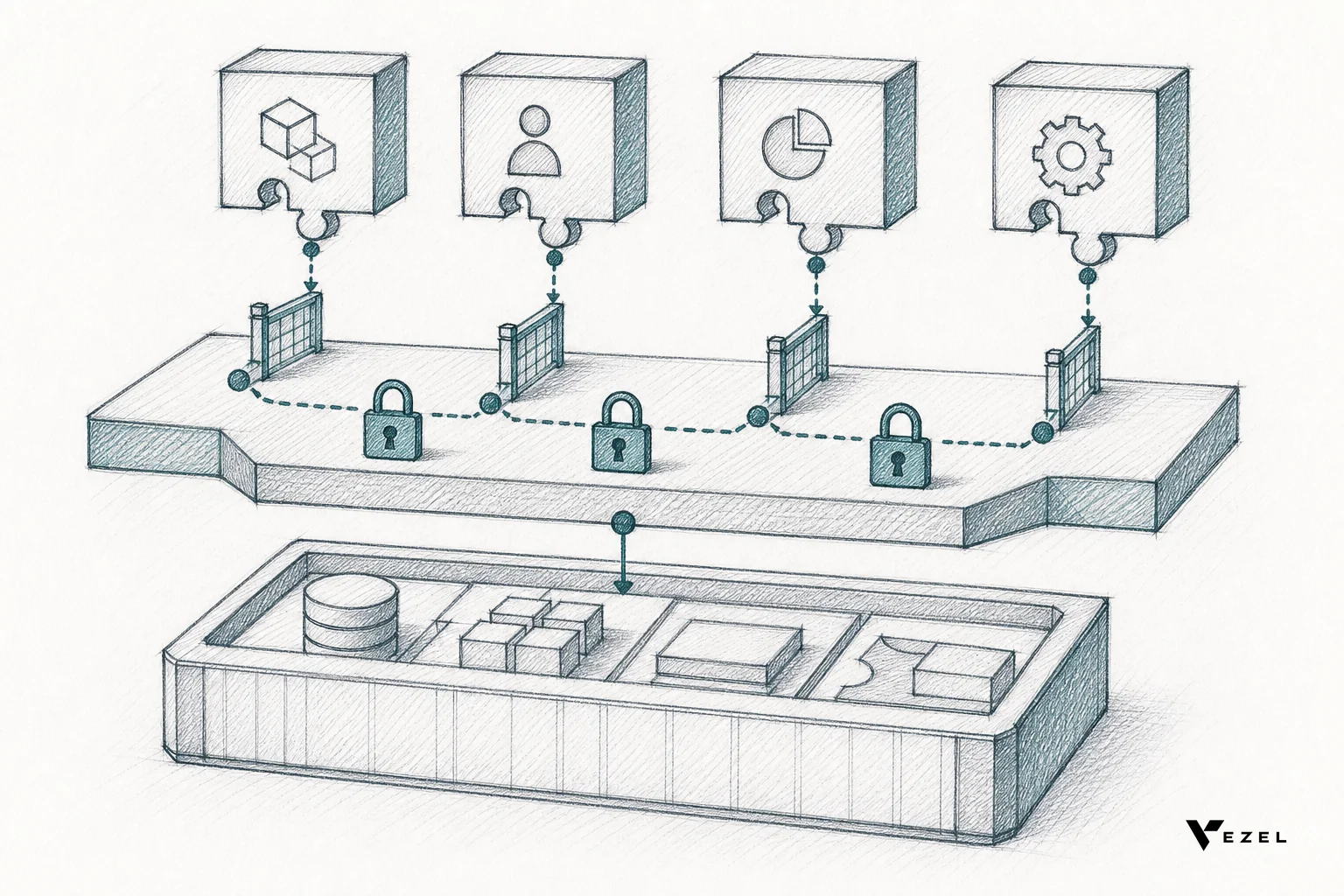
Skipping RBAC inheritance means every customer-built extension needs its own permission model from scratch, and that second system is where row-level access leaks happen. Extensions should run inside the same authenticated session as the host product, reusing existing role checks instead of reinventing them.

Build a second permission system and you've built a second attack surface nobody is monitoring. Security reviewers ask about this on nearly every enterprise call, and "we rebuilt it separately" is rarely the answer that closes the deal.
4. Launching Without a Governed Marketplace
A marketplace without governance has no way to deprecate a broken extension, no version history, and no record of who published what. That's a fast way to turn self-serve customization into shadow IT that happens to live inside your own product.

Governance doesn't mean locking customers out. It means every extension has a publish state, a version number, and an owner who gets notified when the underlying API changes. Skip this and you're not running a marketplace, you're running an unmonitored file share. For the shadow IT angle specifically, see how to prevent shadow IT in your SaaS platform.
5. Building the Plumbing Before Talking to Customers
Engineering teams love solving infrastructure problems. Give them a green light to build an extensibility layer and they'll often build the generic, most technically elegant version first, then go looking for customers who need it.
That order is backwards. Talk to the three or four accounts already filing custom workflow requests. Build toward what they actually asked for. A platform built for a hypothetical customer base, rather than the one asking for it today, is one of the seven classic ways platform efforts fail before they get traction.
6. Sherlocking Your Own Ecosystem
Sherlocking is the most damaging thing a platform can do to the people building on top of it: absorbing the functionality third parties or customers already built, natively, without warning. The term borrows from Apple's habit of folding third-party app features into the operating system, and it poisons developer trust in a platform fast.
If a customer or partner builds a popular extension and your team quietly ships the same thing as a core feature six months later without acknowledging the overlap, word travels. The next builder decides it's safer to build outside your platform entirely, which defeats the entire point of opening one up.
7. Underestimating Ongoing Investment
An extensibility layer isn't a project with a finish line. APIs change, permission models get updated, customers publish extensions that need monitoring. Treat it as a one-time build and you'll have a working platform for about two quarters before it starts breaking in ways nobody budgeted time to fix.
Staffing this like a feature launch, instead of an ongoing product line with its own backlog, is a reliable way to watch adoption stall right as it should be accelerating.
8. Chasing a Marketplace Before Reaching Critical Mass
Marketplaces are notoriously hard to bootstrap, and the data on this isn't gentle. SaaS app marketplaces, like broader two-sided marketplaces, face failure rates over 90% before they reach critical mass, according to research on SaaS plugin systems versus app marketplaces. Developers won't build for an empty catalog, and customers won't visit an empty one either.
Before investing in marketplace mechanics, discovery, ratings, revenue share, get a handful of genuinely useful extensions live for real customers. A thin catalog with no activity does more damage to perceived platform maturity than having no marketplace at all.
9. Letting API Auto-Discovery Gaps Go Unnoticed
Automatically mapping extensions to your existing data models sounds clean until it hits an edge case your API never documented well. A half-mapped data model produces extensions that work in the demo and break the first time a customer's account has unusual fields or nested relationships.
Audit your API surface for the inconsistencies before customers find them. An extension that fails silently, rather than erroring clearly, is the fastest way to lose trust in self-serve tools you spent months building.
10. Treating Security Review as a Launch-Day Afterthought
Enterprise security teams ask the same handful of questions on nearly every procurement call: can customer-built extensions see data they shouldn't, where does extension data live, and who's liable if an extension misbehaves. Answering those for the first time mid-deal is how extensibility becomes a reason deals stall instead of a reason they close.
Bring security review in before launch, not after your first enterprise prospect asks the hard question live on a call.
How Do You Tell Whether an Extensibility Model Is Actually Governed, Versus Just Technically Open?
A governed model has version history, publish approvals, and permission inheritance baked in before any customer builds anything. A technically open one just exposes an API and hopes for the best. The test is simple: can you answer, right now, who published every live extension and what it can access?
If that question takes a scramble through logs and Slack threads to answer, the model is open, not governed. Governance shows up in the tooling, not in a policy document nobody enforces.
Building the Extensibility Flywheel the Right Way
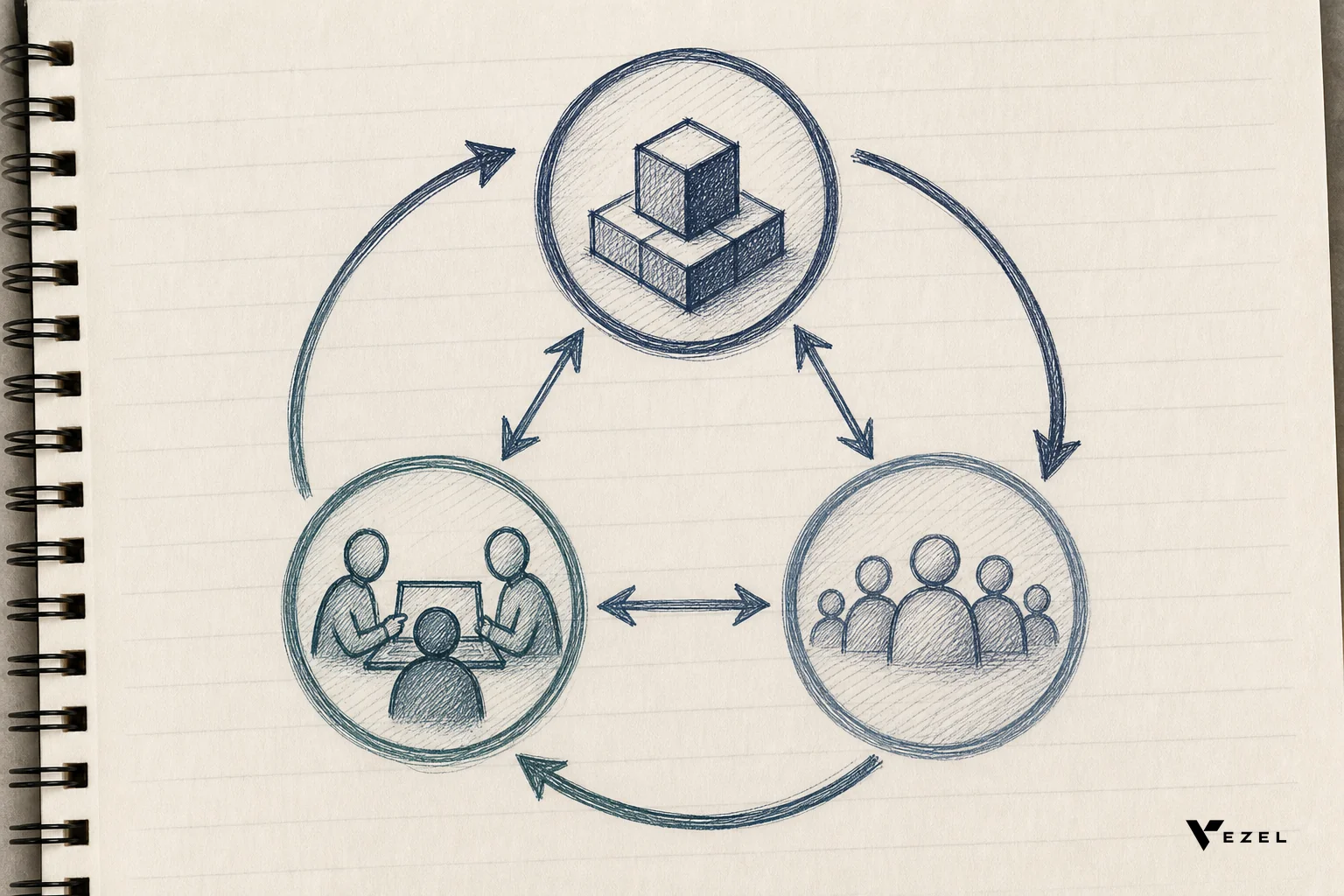
Done right, an extensibility ecosystem builds a flywheel: a platform opens real surface area, builders create genuinely useful extensions, those extensions make the platform stickier, and stickiness attracts more customers and more builders. That loop is what the extensibility flywheel framework describes, and it only spins once the governance, theming, and permission work from mistakes one through ten is already in place.
This is a different path from general-purpose no-code tools like Glide or internal builders like Retool and Superblocks, which weren't built to inherit a host product's permissions or wear its brand for customer-facing use. It's also lighter than standing up a full low-code platform like Mendix or a developer-heavy marketplace model like Salesforce AppExchange.
Vezel exists specifically to skip straight to the governed, white-labeled, permission-inheriting version of extensibility, without the ten mistakes above being yours to make from scratch. Compare the approaches directly in how to choose an embedded extensibility platform or see the retention case in vertical SaaS extensibility for enterprise customers: a retention playbook.
If your team is weighing whether to build this layer in-house or embed it, book a demo and we'll walk through exactly how permission inheritance, theming, and marketplace governance work inside your own product. Or see how it works before committing engineering time to building the plumbing yourself.