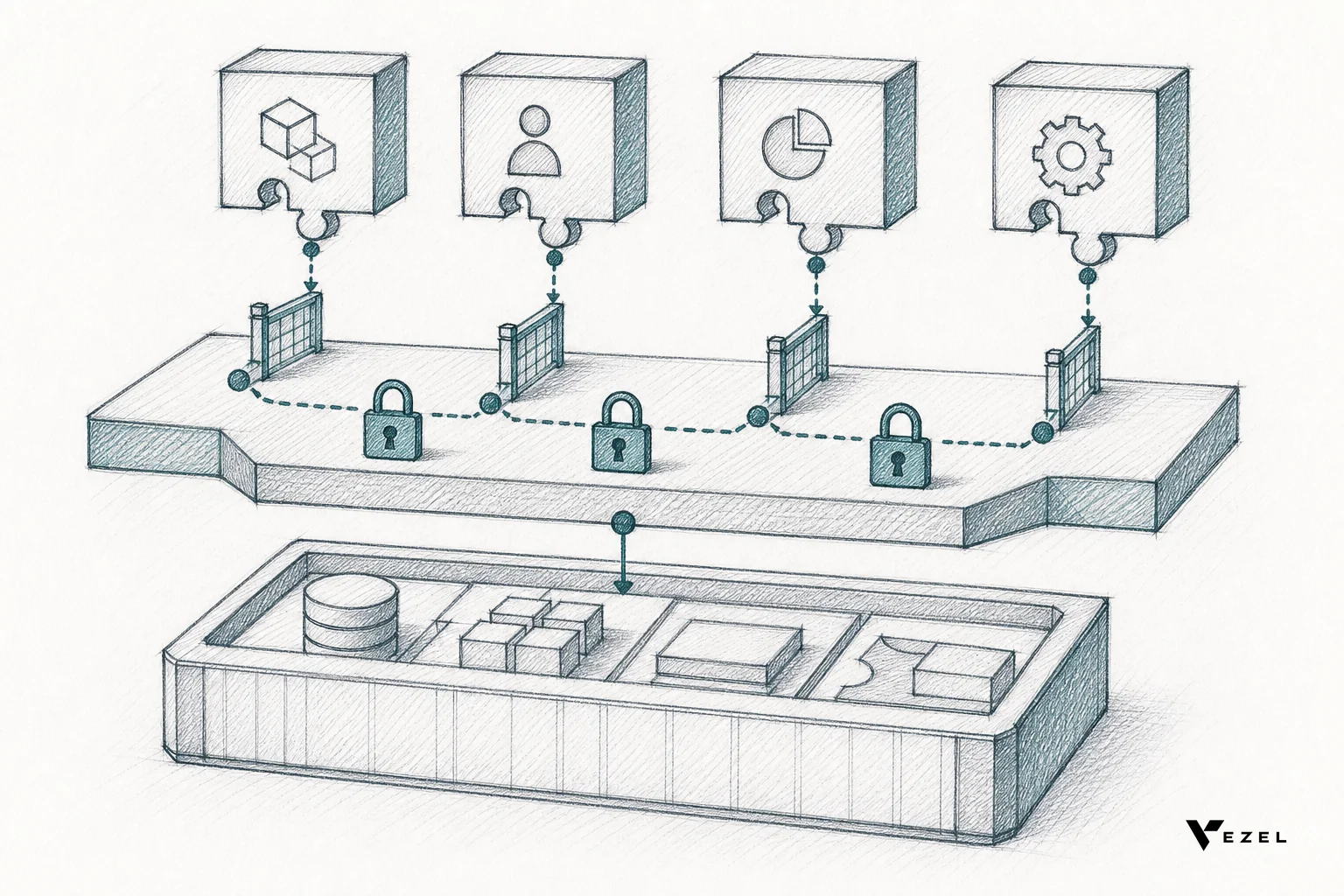



An enterprise deal stuck on custom workflow requirements usually isn't a product problem. It's a timing problem: the prospect needs an approval flow, dashboard, or process your core product doesn't ship today, and nobody wants to promise a feature that engineering hasn't scoped yet. The fastest fix is separating the purchase from the build, then delivering the workflow through an extension layer instead of a sprint.
Key Takeaways
- The blocker is rarely the product itself: it's a mismatch between one buyer's process and your shared roadmap, and that gap grows as your customer base diversifies.
- The hidden cost is bigger than the deal size: stalled pipeline ties up sales capacity, pushes quota timelines, and often pulls engineers off core work anyway.
- Saying "it's on the roadmap" is a renewal risk: unshipped promises resurface at renewal time and become churn conversations.
- An embedded extension layer can close deals inside the sales cycle: a working workflow, built live in plain English, replaces a roadmap promise with a working demo.
- Governance still matters after signature: permissions, versioning, and publishing controls need to travel with whatever gets built, not get bolted on later.
At a Glance: Stalled Deal Diagnosis
| Signal | What it usually means | Typical response |
|---|---|---|
| Procurement note mentions a specific workflow | Buyer already runs this process elsewhere and won't switch without it | Scope a narrow build, not a platform rewrite |
| Legal/security asks about custom extension permissions | They expect the new workflow to respect existing roles | Confirm the build inherits RBAC, don't build a parallel system |
| Sponsor references "next release" | Sales already promised a roadmap item verbally | Replace with a working build, not a date |
| Deal has stalled 60+ days on this issue | Feature request cycle has outpaced the sales cycle | Move it off the roadmap and into a time-boxed track |
| Multiple stakeholders want different reporting views | Not one requirement, several — a dashboard problem, not a feature | Consider self-serve dashboard tooling instead of one-off builds |
The Problem: Why Custom Workflow Requirements Stall Enterprise Deals
Every enterprise buyer runs approvals, reporting, and onboarding differently, even inside the same industry. A CRM built for pipeline tracking still has to bend around one company's deal-desk sign-off and another's territory rules. When your product was built for the common case, the buyer's edge case becomes a blocker at the exact moment procurement wants a firm answer.
This is what we call the adaptation gap: the space between what your shared product does and what one specific customer needs it to do. It doesn't show up in a demo. It shows up in month two of the sales cycle, buried in a security questionnaire or a line in the SOW that says "custom approval routing required before go-live."
Sales teams have three reflexes when this happens. Promise the feature for a future release. Ask engineering for a one-off build. Or push back and hope the prospect compromises. None of these are wrong, exactly. They're just slow, and slow is what kills enterprise deals more than price ever does.
The Problem Behind the Problem: What a Stalled Deal Actually Costs You
A stalled deal drains more than the deal itself. Reps burn calls re-selling stakeholders who've gone quiet. Forecasts slip a quarter, then two. And the engineering team that gets pulled in to "just build this one thing" doesn't come back to core roadmap work on schedule.
Industry estimates put the share of engineering capacity lost to bespoke, single-customer requests at roughly 40% for many B2B SaaS teams. That's not one deal's tax. It's a recurring drag that compounds every time sales closes a similar-shaped gap with a promise instead of a product answer.
The most expensive line in an enterprise contract is often the one nobody priced: "custom workflow required before go-live."
There's also a renewal cost that shows up later. If the workflow was promised as a roadmap item to close the deal, it becomes a churn risk the moment renewal conversations start and the feature still isn't shipped.
Three Attempted Fixes — and Why Each One Falls Short
Most teams default to one of three moves when a deal stalls on a missing workflow. Each has a real cost attached, even when it works.
- Promise a roadmap feature: closes the deal on paper but creates a delivery obligation with no guaranteed ship date.
- Build a one-off custom integration: solves this deal but adds a bespoke codebase that someone has to maintain indefinitely.
- Tell the prospect no: protects engineering time but risks the deal outright, especially if a competitor says yes.
Is Building the Custom Workflow In-House the Right Fix?
Sometimes, yes. If the requirement will genuinely benefit most of your customer base, building it into the core product is the right long-term investment. The problem is when a single-customer requirement gets built as if it were a platform feature, then has to be maintained, patched, and re-tested with every release for an audience of one.
That maintenance burden rarely shows up in the original estimate. It shows up six months later, when the workflow needs updating and nobody remembers why it was built that way in the first place. For a deeper look at this trade-off, see how extensibility platforms compare to custom development on cost.
The Solution: How an Embedded Extension Layer Unblocks the Deal Without a Sprint
An embedded extension layer unblocks a stalled deal by letting sales or a solutions engineer build the missing workflow in plain English during the sales cycle, connected to real data, instead of waiting on an engineering sprint. The prospect sees a working approval flow, not a promise.
Vezel works this way inside a host SaaS product. A rep describes the approval chain the buyer needs, the platform maps it to existing API endpoints through auto-discovery, and the resulting workflow inherits the host product's authentication and role-based permissions automatically. Nobody stands up a parallel security model.

Because the extension is white-labeled, it looks and feels native to the product, not like a bolted-on tool. That matters in procurement reviews, where a visibly different interface raises more questions than it answers. If you want to see this in a live sales context, see how it works before your next demo.
This approach doesn't replace your roadmap. It removes the pressure to turn every single-customer request into a roadmap item, which is the real source of engineering backlog. Teams that adopt this model report shipping compliance and approval workflows without adding headcount, a pattern covered in how vertical SaaS teams are shipping compliance workflow apps without custom development.
Comparing the Fixes: Custom Dev vs Embedded Extensibility vs Saying No
| Approach | Time to unblock deal | Ongoing maintenance | Risk if requirement changes |
|---|---|---|---|
| Custom in-house build | Weeks to months | Owned by engineering indefinitely | High — code change needed |
| Standalone tools (e.g. Retool-style internal builders) | Days to weeks | Requires developer upkeep, permissions modeled separately | Medium, still developer-dependent |
| Embedded extension layer (Vezel) | Same sales cycle, often same call | Governed inside the host product, no separate codebase | Low, rebuilt in plain English as needs shift |
| Say no / lose the deal | Immediate | None | Deal lost or delayed to competitor |
Retool and similar internal tool builders are designed for engineering teams building internal applications, not for handing extensibility directly to end customers inside a live product. That distinction matters when the person building the workflow is a sales engineer, not a developer.
Solution Steps: A Practical Playbook for Sales and Product Leaders
Unblocking a stalled deal takes a process, not a heroic effort from one engineer. Here's a step-by-step sequence that works across most enterprise cycles.
- Diagnose the actual requirement. Get the exact workflow, not a vague "we need approvals." Ask for the current process, even if it's a spreadsheet.
- Separate procurement from the build. Keep the contract moving on its own timeline. Put the workflow request into a time-boxed track with a named owner and a decision date.
- Build it live, not later. Use an extension layer to construct the workflow during the evaluation, connected to sandbox or live data, so the prospect sees it work.
- Get security sign-off early. Confirm the extension inherits existing RBAC and row-level permissions before legal asks. That question always comes.
- Govern it after signature. Publish the workflow through a managed process so it's versioned and doesn't turn into an ungoverned one-off nobody remembers building.

Product and CS teams that want to reduce how often this cycle repeats should look at where roadmap pressure is coming from in the first place. Stopping enterprise deals from bloating your roadmap starts with catching these requests before they hit a sprint planning meeting.
Frequently Asked Questions About This Problem and Its Fix
How fast can a custom workflow actually get built during a sales cycle?
With an embedded extension layer, a basic approval workflow or dashboard can be built in minutes during a call, since it connects to existing APIs and doesn't require a separate development environment. Complex multi-stage approval chains take longer but still fit inside a single evaluation window, not a release cycle.
Does this fix replace the need for engineering to build features?
No. Features that will benefit most of your customer base still belong on the core roadmap. Extensibility handles the single-customer or small-segment requirements that would otherwise consume engineering time for one account's benefit.
What about security and compliance reviews?
A workflow built through an embedded extension layer inherits the host product's existing authentication and role-based access controls, so it doesn't introduce a separate permission model for security teams to review. That's typically the first question enterprise security teams ask, and it's worth having a clear answer ready before the call, not during it.
What happens if the buyer's requirement changes after signing?
Because the workflow is built in plain English rather than hard-coded, it can be adjusted without a new engineering ticket. This is one advantage over a bespoke integration, which usually needs a developer to make any change after launch.
A deal stuck on custom workflow requirements doesn't need a longer roadmap conversation. It needs a working answer inside the sales cycle you're already in. If your team is losing quarters to this exact pattern, book a demo and see what an approval flow or dashboard looks like built live, in your own product, in the time it takes to finish the call.