


Your customers aren't rebelling. They're compensating. When a SaaS product can't produce the report, workflow, or approval chain a team needs, that team builds it themselves in a spreadsheet, a Slack channel, or a tool nobody on your side approved. These are the signs your customers are building shadow IT workarounds, and each one tells you exactly where your product falls short.
Key Takeaways
- Support tickets are the earliest signal: repeated requests for "can you pull this report" mean customers already export and reshape your data manually.
- Approval chains moving to email or Slack mean your workflow features stopped matching how the customer's team actually operates.
- Renewal calls that surface unfamiliar tools are the clearest proof a workaround has become permanent infrastructure.
- Regulated industries like healthtech ask for permissioned reporting more often than any other segment, because generic exports can't respect row-level access rules.
- Each sign has a self-serve fix that keeps the work inside your governed platform instead of pushing it onto tools you can't see or secure.
At a Glance: Shadow IT Warning Signs and Fixes
| Warning Sign | What It Looks Like | Self-Serve Fix |
|---|---|---|
| Recurring "pull this report" tickets | Support answers the same custom data request weekly | Embedded, live dashboards |
| Manual spreadsheet exports | Customers rebuild your data in Excel or Google Sheets | Native dashboards connected to live data |
| Approvals over email/Slack | Sign-offs happen outside any audit trail | No-code approval workflow builder |
| Unfamiliar tools at renewal | QBRs reveal third-party apps stitched around your product | In-product extension marketplace |
| Repetitive feature requests describing a workaround | Tickets explain the hack, not the goal | Plain-English capability builder |
| Stalled onboarding | Customers build parallel process docs during rollout | Embedded onboarding workflow builder |
| Permissioned reporting asks in regulated industries | Healthtech, fintech customers need row-level slicing | Reporting that inherits existing RBAC |
1. Support Tickets Ask for Reports You Don't Offer
Look at your support queue for the phrase "can you pull" or "is there a way to export." If the same customer asks three times in a quarter, that customer has already built a manual process around the gap. Your support team is quietly doing the job a dashboard should do.
The fix isn't a bigger reporting roadmap item. It's letting customers build the view themselves, on live data, the moment they need it. Our guide on signs your product needs live embedded reporting covers this pattern in more depth if this is the sign you're seeing most.
2. Customers Export Your Data Into Their Own Spreadsheets
CSV exports feel harmless until you notice the same file gets downloaded every Monday morning. That's not a report anymore. It's a shadow system, and it lives entirely outside your permissions, your audit log, and your product analytics.
Every export a customer schedules by hand is a dashboard they've told you, indirectly, that they need. Replacing that export with a live, embedded view connected to real data closes the loop and gives you visibility you never had before. See how to build custom dashboards inside your SaaS for the mechanics.
3. Approval Chains Happen Over Email or Slack
When a discount, a change order, or an access request gets approved through a forwarded email thread instead of your platform, you've lost the audit trail entirely. Compliance teams hate this. Customers tolerate it because it's faster than waiting on your roadmap.
A workflow app that lets customers define their own approval steps in plain English removes the incentive to route around you. Our piece on how to build approval workflows without coding walks through what that setup looks like in practice.

4. Renewal Conversations Surface Tools You've Never Heard Of
Quarterly business reviews have a way of exposing what customers actually built while you weren't watching. A customer success manager asks about a metric, and the customer pulls up a dashboard built in a completely different tool, stitched together with data pulled from your API.
By the time this shows up at renewal, the workaround is load-bearing. The team's whole week runs through it. Pulling that logic back inside your product, where it inherits your permissions and shows up in your usage data, is the difference between renewing on your terms and renewing on theirs. Our guide to preventing shadow IT in your SaaS platform goes deeper on catching this earlier.
5. Feature Requests Repeat the Same Workaround Language
Read your product feedback board closely. Requests that describe a specific hack ("we use a shared spreadsheet to track this because there's no field for it") are more telling than requests phrased as a feature name. Customers describing their workaround are handing you a spec for free.
Treat that language as a demand signal, not just a backlog item. A self-serve builder lets that customer create the field, the view, or the automation themselves, the same day, instead of waiting for it to clear a sprint planning meeting.
6. Onboarding Stalls While Customers Build Their Own Process
If new customers create their own onboarding checklists in Notion or Trello because your built-in flow doesn't match their internal steps, onboarding time creeps up and adoption suffers before the relationship even starts. That gap compounds.
SaaS retention research consistently ties low product adoption to elevated churn risk. A parallel onboarding process is adoption happening somewhere you can't measure it.
An onboarding workflow builder that customers can shape to their own steps keeps that process, and that adoption data, inside your product from day one. Our review of what to look for in an onboarding workflow builder lays out the criteria.

7. Permissioned Reporting Requests Pile Up in Regulated Industries
Healthtech, fintech, and insurance customers ask for reporting more carefully than most. They don't just want a chart. They want a chart that only the right role, at the right facility or account, can see.
When your product can't slice data by permission, these customers build their own permissioned layer manually, often in a BI tool with access rules maintained by hand.
That's expensive to maintain and easy to get wrong. A single misconfigured spreadsheet share can expose data that should have stayed locked down.
How Do Healthtech Platforms Build Permissioned Reporting for Customers?
Healthtech platforms build permissioned reporting by having each report inherit the same authentication and row-level access rules the core product already enforces, instead of exporting data into a separate tool with its own permission model. The report only ever shows what that logged-in user is already allowed to see.
That inheritance matters more in healthcare than almost anywhere else. A facility administrator should see facility-wide numbers. A single clinician should see only their own caseload.
Building this by hand, per customer, is exactly the kind of one-off work that drains engineering time. Building it once, so every report generated automatically respects the existing permission model, removes the risk and the maintenance burden together. Our page on how CRM SaaS platforms offer custom reporting covers a parallel pattern outside healthcare if you want a second example.
Turning Workarounds Into Signals, Not Shadow Systems
None of these seven signs mean your product failed. They mean your customers are resourceful, and resourceful customers will always find a way to get their work done, with your platform or without it.
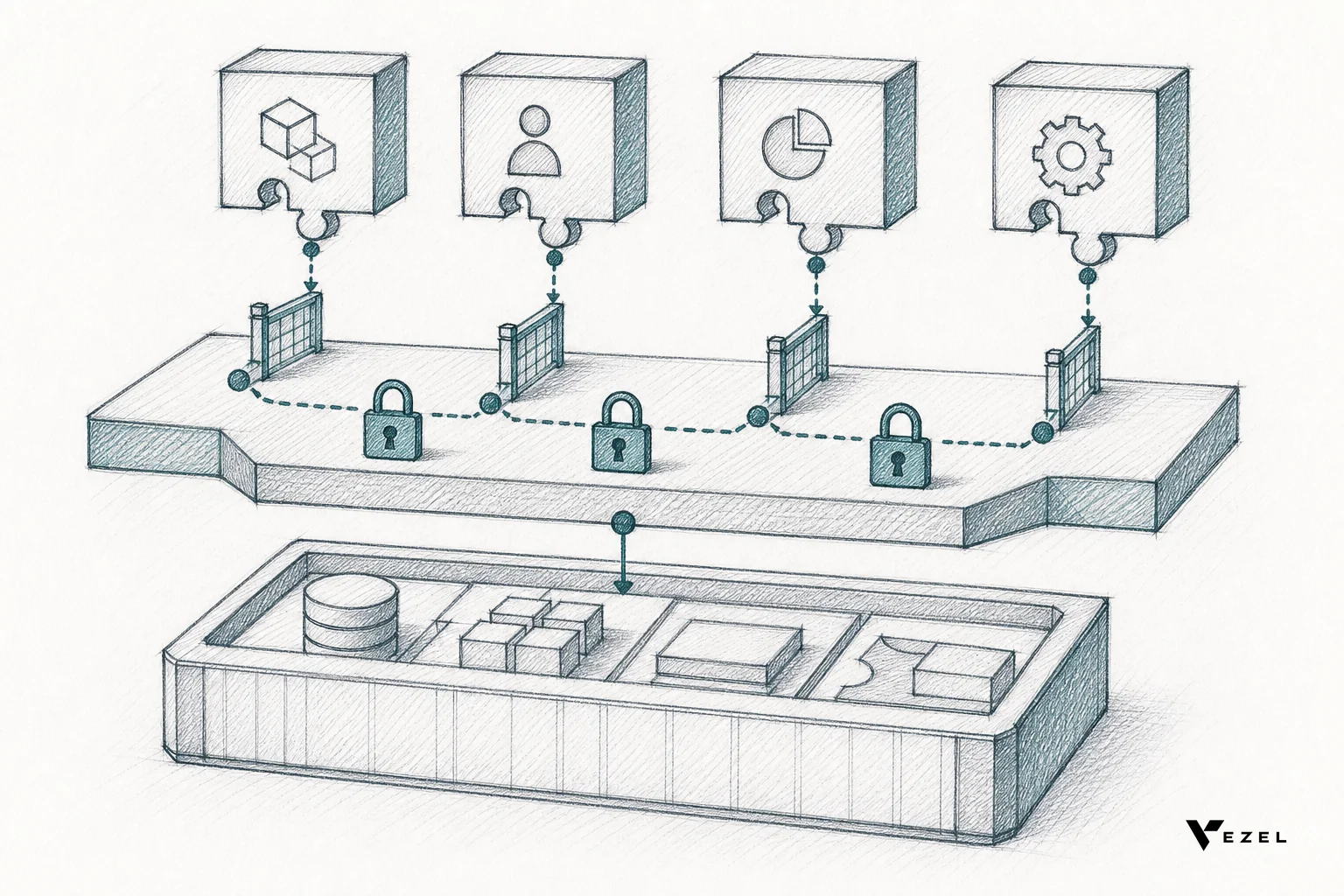
The fix isn't shipping seven new features. It's giving customers a way to build the dashboard, the workflow, or the report themselves, inside your product, in plain English, connected to live data, and secured by the permissions you already built.
That's what an embedded extension layer does, and it's why teams stop routing around the roadmap once they have one. If you want to see this pattern applied across engineering backlog specifically, read how to reduce engineering roadmap pressure from customers.
If two or more of these signs sound familiar this quarter, don't wait for the next QBR to find out what your customers built without you. Book a demo and watch a live dashboard, workflow, or permissioned report get built inside your own product in minutes, or see how it works before you talk to anyone.