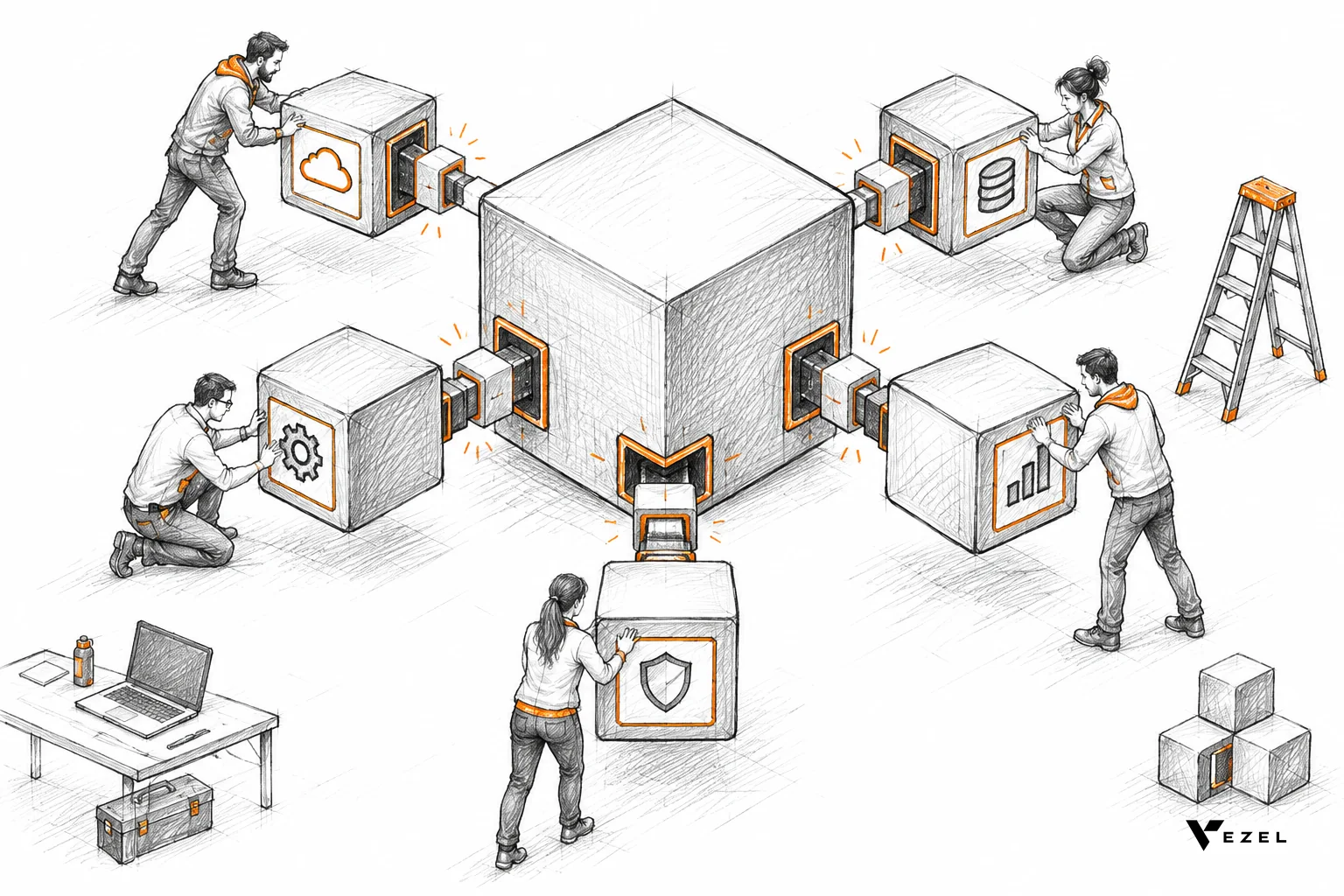



Nine reporting complaints usually mean one thing: your SaaS product needs live embedded reporting, not another static export. If your support queue is full of "can you pull this report" tickets, customers are exporting your data into their own spreadsheets, or every enterprise deal stalls on a custom dashboard request, static reporting has stopped scaling with your business.
Key Takeaways
- Ticket volume is the tell: Recurring ad hoc reporting requests in your support queue signal customers have needs your product doesn't natively serve.
- Spreadsheets are shadow IT: When customers export your data into their own BI tools or spreadsheets, they've already built the workaround you should own.
- Stale data costs deals: Reports refreshed on a schedule instead of live create decision lag that enterprise buyers notice during procurement.
- Permissions multiply the cost: Every custom report request also requires re-solving row-level access, which is why engineering backlog grows faster than headcount.
- Live embedded reporting fixes the root cause: Connecting reports directly to live, permissioned platform data lets customers self-serve instead of filing tickets.
At a Glance: Static Reporting vs Live Embedded Reporting
| Factor | Static Reporting | Live Embedded Reporting |
|---|---|---|
| Data freshness | Hours to days old (scheduled export) | Real-time, queried on open |
| Who builds new views | Engineering or support, per request | The customer, in plain English |
| Permissions handling | Rebuilt manually for each report | Inherited from existing RBAC/row-level rules |
| Time to new dashboard | Days to weeks (backlog dependent) | Minutes |
| Common workaround it prevents | None — it's often the cause | Spreadsheets, shadow BI tools |
| Impact on sales cycle | Stalls on custom requirements | Demonstrable inside the sales cycle |
| Engineering load | Recurring, per-customer | One-time platform integration |
1. Your Support Queue Is Full of Ad Hoc Reporting Tickets
If your CS team fields the same three requests every week, "can you pull this by region," "can you break this down by team," "can you export last quarter's numbers," that's not a support problem. It's a product gap wearing a support costume.
Every ticket like this takes someone off a paying customer's real issue to manually run a query, format a spreadsheet, and email it back. Multiply that across dozens of accounts and you've quietly built an entire reporting department out of your support org.

2. Customers Are Building Their Own Spreadsheet Dashboards
Once a customer exports your data into Excel or Google Sheets on a recurring basis, they've told you exactly what feature they need. They just built it themselves instead of waiting for you.
This is the same pattern covered in why missing workflows drive SaaS churn: the workaround is a signal, not a failure of the customer. Left unaddressed, it turns into shadow IT that lives entirely outside your platform, disconnected from your data model and invisible to your product team.
3. Every Enterprise Deal Comes With a Custom Reporting Requirement
Enterprise buyers rarely sign without seeing their own metrics reflected somewhere. Procurement notes that mention "custom compliance dashboard" or "board-level reporting view" are now standard, not exceptions.
When that requirement can't be demonstrated during the sales cycle, deals stall while a sales engineer waits on an engineering favor. That's a direct hit to how fast you can close enterprise SaaS deals.
4. Your Reports Are Always a Few Hours (or Days) Stale
Scheduled exports and nightly batch jobs made sense when reporting was a nice-to-have. They don't hold up when customers make daily operational decisions off the numbers you send them.
A support manager reviewing yesterday's escalation volume is making a decision on data that's already outdated. A finance lead reconciling last week's export can't catch a billing anomaly happening right now. The gap between "when the data changed" and "when the customer saw it" is where trust erodes.
5. Product Managers Are Prioritizing One-Off Report Requests Over Roadmap Work
Every sprint spent building "Acme Corp's custom supplier scorecard" is a sprint not spent on the core product. Product teams end up maintaining a shadow backlog of bespoke reports that never scale beyond the customer who asked for them.
This is the same roadmap-bloat pattern detailed in how to reduce SaaS engineering backlog from enterprise requests. Reporting requests are usually the largest single category inside that backlog because every customer measures success differently.
6. Different Customers Need Different Metrics From the Same Data
Two customers running the exact same product often need completely different views of the same underlying tables. One retail chain cares about sell-through by store. Another cares about margin by SKU. Your data model didn't change; their business did.
This is the core diversity problem behind reporting requests: no single static report can serve every customer's definition of success, no matter how well designed it is.
7. Permissions Get Complicated Every Time Someone Asks for a New View
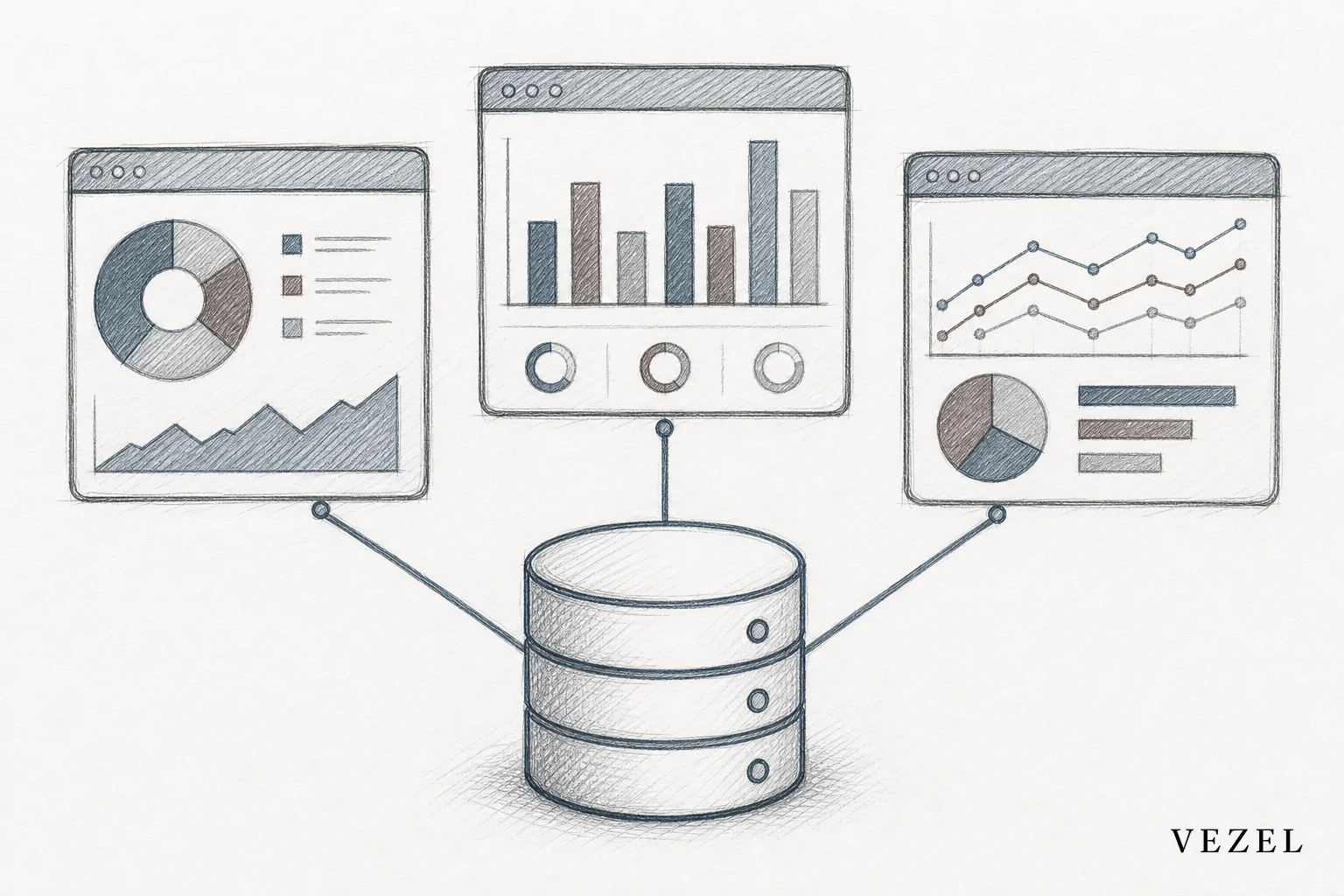
Every custom report also means re-solving who can see what. A hospital network needs facility-level access controls. A logistics customer needs region-scoped visibility. Rebuilding row-level permissions by hand for each one-off report is where engineering time actually disappears, not in the query logic itself.
How Do Healthtech Platforms Build Permissioned Reporting for Customers?
Healthtech platforms build permissioned reporting by connecting dashboards directly to existing role-based and row-level access controls, so a report automatically shows only the facility, provider, or patient population a given user is already authorized to see. No separate access system is built per report.
That's the model covered in how healthcare SaaS platforms can offer extensibility without re-engineering compliance controls for every customer request. The permission logic is inherited once, then reused across every report a customer builds afterward.
8. Engineering Keeps Getting Pulled Into One-Off Report Builds
When a report request needs a new endpoint, a new query, or a new export format, it lands on engineering's desk regardless of what the roadmap says. That's expensive work with a single-customer payoff, and it competes directly with the features that would help every customer.
Compare that ongoing cost against what custom development actually costs versus an extensibility platform: one is a recurring tax on every future request, the other is a one-time integration.
9. Renewal Conversations Turn Into Reporting Complaints
When a renewal call opens with "we still can't get the report we asked for last year," you're not negotiating price anymore. You're defending a gap the customer has already worked around, likely with a spreadsheet or a competitor's tool.
A reporting gap that shows up at renewal was visible in the support queue months earlier. The ticket was the warning; the churn risk was the consequence of ignoring it.
What Live Embedded Reporting Actually Looks Like
Live embedded reporting means a customer types a plain English request inside your product, and a dashboard appears, built from your live API data, styled to match your product, and scoped to that user's existing permissions. No ticket, no export, no separate login.
Vezel's platform does this through API auto-discovery that maps to your existing data model, so a customer's request connects to real endpoints instead of a static snapshot. Every report inherits your existing authentication and row-level access rules automatically, and the resulting dashboard is white-labeled to feel native, not bolted on.

This is the same approach walked through in how to build custom dashboards inside your SaaS, and it applies whether the customer is a supply chain operator asking for supplier scorecards or a compliance officer asking for an audit trail.
Getting Started Without a Dev Sprint
You don't need to rebuild your reporting stack to fix this. Start by counting how many support tickets last quarter were actually reporting requests in disguise, then check how many of your last ten enterprise deals mentioned a custom dashboard requirement in procurement notes. Those two numbers tell you how far the gap has grown.
From there, the fix is architectural, not a bigger BI team. Connecting your existing APIs to a governed extension layer lets customers build the reports they've been requesting, without adding another line to the engineering backlog.
If your team is fielding the same reporting tickets every week or losing deals to a dashboard requirement you can't build fast enough, book a demo to see how live embedded reporting connects to your platform's existing data and permissions. Want the mechanics first? see how it works, or talk to an expert about what it would take for your specific data model.