

A VP of Engineering at a mid-market vertical SaaS company gets a message from her CEO on a Friday afternoon: "Sales says this enterprise account will sign Monday if we build them a custom compliance dashboard. Ballpark it for me?" She does the quick math in her head. One dashboard, maybe two weeks of engineering time. She replies "sure, doable" and closes her laptop for the weekend, not yet realizing that the two-week estimate is the smallest number in a much longer equation.
That gap between the sticker-price estimate and the real cost is where most build-vs-buy decisions quietly go wrong. When teams compare saas platform extensibility vs custom development cost, they usually compare the wrong numbers: one engineer's time-to-ship against a platform's sticker price. The real comparison has to include maintenance, roadmap delay, security review, and what happens to that custom code twelve months later. This post walks through the full cost stack on both sides, with the categories most teams leave out of the spreadsheet.
What "Custom Development" Actually Costs
The first mistake is treating a custom build like a one-time transaction. It isn't. A custom dashboard, approval flow, or reporting module built for a single enterprise account has at least four cost layers, and only the first one shows up in most engineering estimates.
- Build hours. The visible cost: design, development, and initial testing. This is the number that gets quoted to sales.
- Review and security overhead. Any feature touching customer data needs a security review, a QA pass, and often a compliance sign-off, especially in regulated verticals like healthcare or finance.
- Project management drag. Someone has to coordinate between the requesting account, sales, and engineering. That coordination tax rarely gets logged against the project.
- Maintenance in perpetuity. This is the layer teams underestimate most. Once shipped, that custom code has to survive every future API change, every framework upgrade, every security patch, for as long as the customer keeps paying for it.

Industry estimates commonly put the share of engineering capacity consumed by one-off, single-customer requests at 30 to 40 percent at mid-market B2B SaaS companies. That's not a rounding error. That's a third or more of the team building things that, in most cases, only one account will ever use. Worse, the vast majority of these bespoke builds are never reused. They become permanent maintenance debt embedded in the core codebase, quietly slowing down every future release cycle.
This dynamic also creates a predictable internal fight. Sales promises customization to close a deal. Engineering resists because the request doesn't generalize to other accounts. The result is a recurring pattern where the loudest deal of the quarter ends up dictating the roadmap, whether or not it's the right thing to build. If that sounds familiar, our post on how to stop enterprise deals from bloating your roadmap digs into exactly how that fight starts and how to defuse it before it becomes a habit.
The Hidden Costs Nobody Puts in the Budget
Beyond the direct engineering hours, custom development carries costs that rarely make it into a project estimate but show up clearly on a P&L a year later.
Roadmap delay
Every engineer pulled onto a one-off enterprise request is an engineer not working on the core product. Founder communities consistently report that 70 to 80 percent of enterprise feature requests never ship, not because of bad prioritization, but because of arithmetic. If a hundred enterprise accounts each file two or three requests a quarter, that's two to three hundred requests against a team that can realistically ship twenty or thirty features in the same window. No amount of overtime closes that gap.
Sales cycle delay
Enterprise deals frequently stall for weeks while a prospect waits to see proof that a specific workflow can be built. Every week of delay is a week the deal can slip, get re-scoped, or go to a competitor who says yes faster. Our piece on reducing SaaS engineering backlog from enterprise requests covers how this backlog and the sales cycle problem are really the same bottleneck wearing two different hats.
Technical debt
Every bespoke code path is a permanent liability. It has to be tested with every release, documented for every new hire, and often can't be removed even after the original requesting customer churns, because nobody remembers if anyone else quietly depends on it.
Opportunity cost
Perhaps the least visible cost of all: what doesn't get built because the team is heads-down on one-off requests. Core product innovation, the thing that actually differentiates a SaaS company from its category, stalls while the team plays catch-up on account-specific asks.
What an Embedded Extensibility Platform Actually Costs
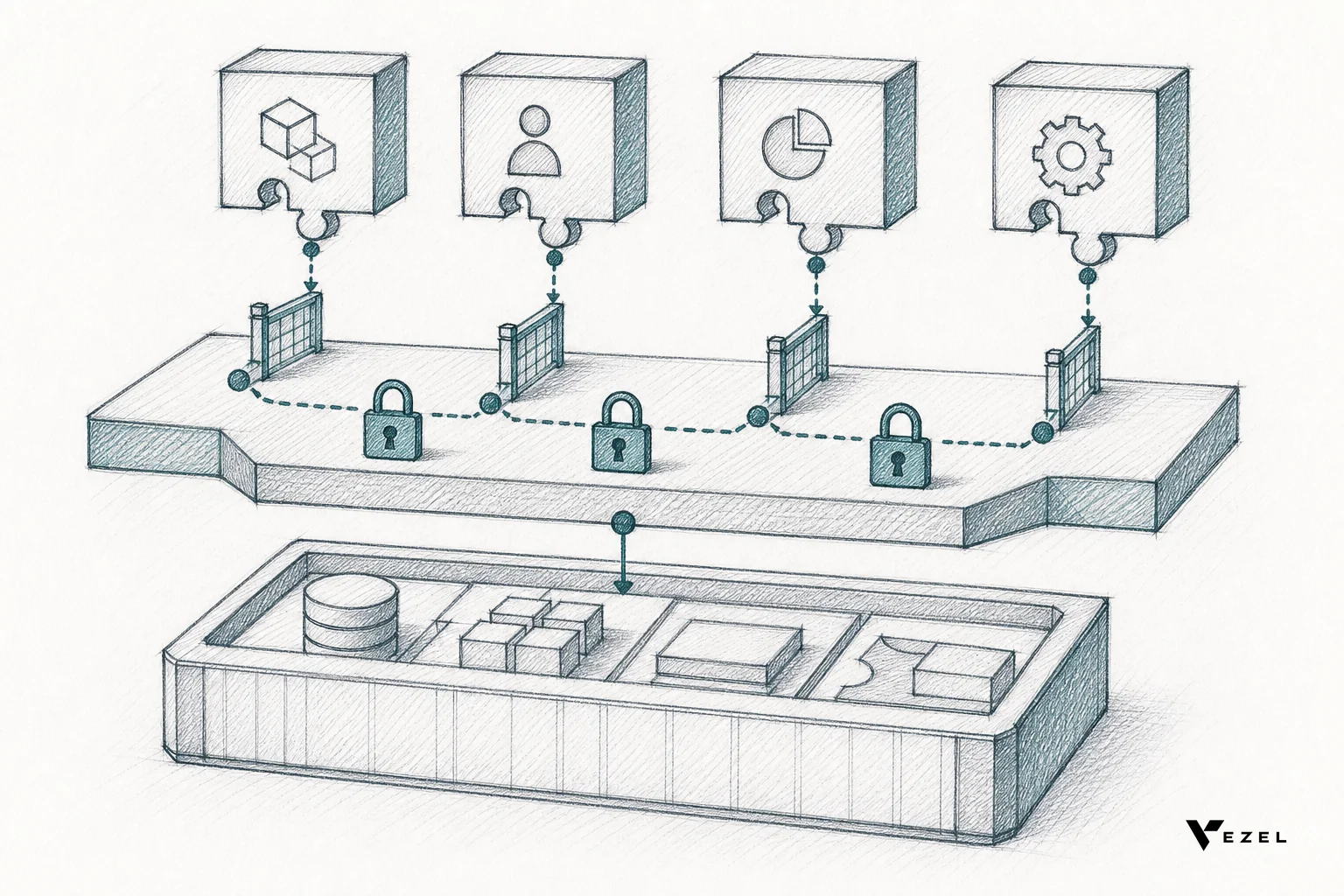
The alternative model flips the cost curve. Instead of paying engineering hours for every individual request, a SaaS company makes one integration investment and then lets end-customers, implementation teams, or customer success staff generate the workflows themselves in plain English.
Typical integration timelines for an embedded platform run around two weeks: connecting to the host product's API surface, mapping the security model so permissions and row-level access carry over automatically, and applying the product's design system so generated apps look native rather than bolted on. That's the whole one-time cost. After that, each new request, a compliance checklist, a margin calculator, a shift-handoff report, gets built by describing it in plain English rather than filing an engineering ticket.
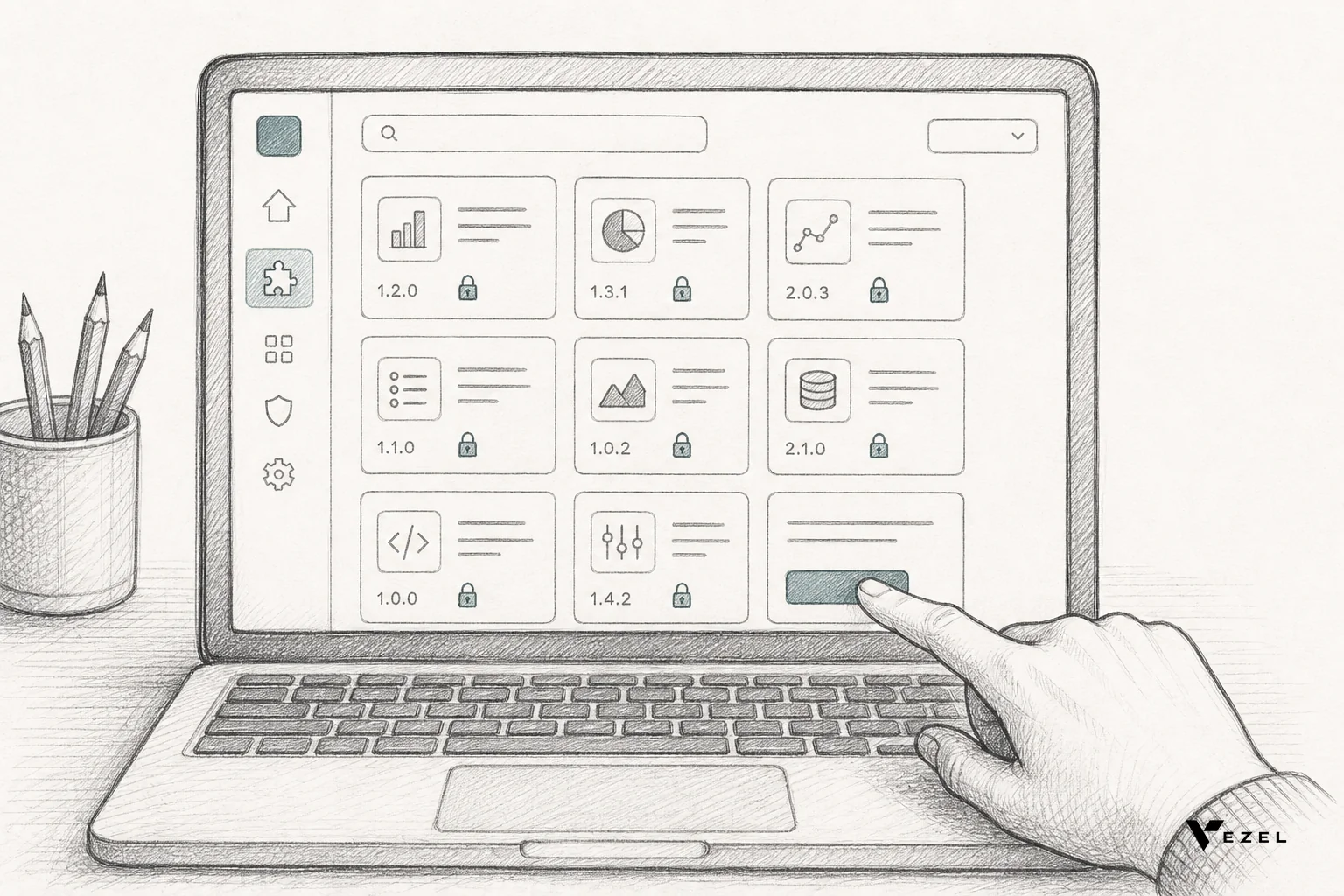
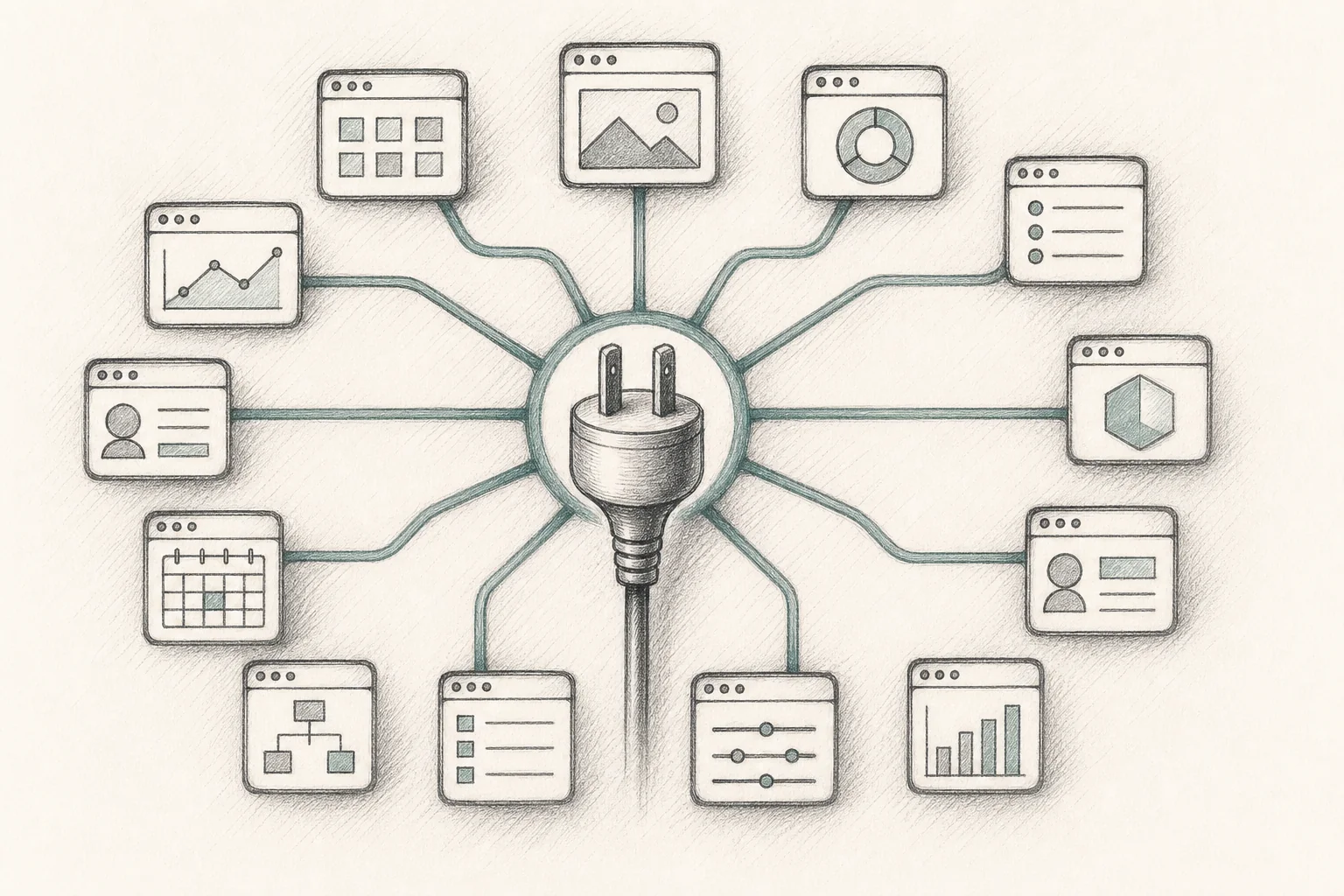
This is the model Vezel is built around: an embedded AI extension layer that plugs into an existing SaaS product's APIs, inherits its authentication and permissions, and lets customers or CS teams build custom dashboards, workflow apps, forms, and AI agents without writing code or waiting on a sprint. Every generated app is white-labeled to match the host product, versioned for rollback, and published into a governed in-app marketplace so it can be reused instead of rebuilt for the next account that asks for something similar.
The cost difference isn't just about speed. It's about what scales. A custom-dev shop scales cost linearly: every new request adds engineering hours, review time, and maintenance burden. An extensibility platform scales cost closer to flat: the integration is paid once, and marginal requests cost a fraction of what a custom build would, because there's no new code path for engineering to own forever. If you're evaluating vendors in this category, our guide on what to look for in an embedded extensibility platform breaks down the criteria that actually matter versus the ones that just look good in a demo.
SaaS Platform Extensibility vs Custom Development Cost: Side-by-Side
Numbers make this comparison easier to defend in a budget meeting than adjectives do. Here's how the four common approaches stack up across the cost dimensions that actually determine total spend over a year.

| Cost Dimension | In-House Custom Development | Low-Code Internal Tool Builder (e.g. Retool) | Generic AI Chatbot/Copilot | Embedded Extensibility Platform (e.g. Vezel) |
|---|---|---|---|---|
| Time to first deployment | Weeks to months per request | Days, but requires a developer | Fast to ship, slow to become useful | Same-day, described in plain English |
| Cost per additional request | Full engineering cycle each time | Developer time each time | Near zero, but low adoption limits value | Marginal, no engineering ticket required |
| Security/permission inheritance | Manual, reviewed each build | Not inherited; rebuilt per app | Inherited if built into core product | Inherited automatically by design |
| Maintenance burden | Permanent, compounds every release | Owned by whoever built it | Low, but so is usage | Centralized in the platform, not the core codebase |
| Reuse across accounts | Rare; most builds are single-use | Limited; lives outside the product | N/A; identical for every account | Built-in via governed marketplace |
| Impact on core roadmap | High; pulls engineers off core work | Low, but requires dev time | Low | Minimal after initial integration |
| Typical adoption rate | Varies; often unused past requester | Internal use only | Single-digit weekly active use after novelty fades | Reported in the 85-95% range in production deployments |
That adoption row matters more than any other line on this table. A feature nobody uses is a sunk cost no matter how it was built. Production deployments of embedded extensibility layers report adoption rates in the 85 to 95 percent range, against a typical 20 to 40 percent adoption rate for a standard feature release, along with 30-day retention figures in the high 80s. That gap is the real payoff behind the integration cost.
Worth noting: low-code internal tool builders like Retool and Superblocks solve a different problem well. They're excellent for internal ops tooling, but they don't inherit the host product's security model or live inside the customer-facing product, which is why they don't close the same usage gap. Our comparisons on Retool vs embedded extensibility for SaaS products and Superblocks vs embedded extensibility go deeper on where each tool actually fits.
Why the Math Tips Further Every Quarter You Wait
This isn't a decision that gets easier to defer. Each quarter a SaaS company runs on custom-only development, more bespoke code accumulates that has to be maintained forever, and more engineering hours get committed to one-off requests instead of core product work. The backlog doesn't shrink on its own. It compounds.
Meanwhile the retention math keeps working against the status quo. Multiple customer-success research studies converge on a similar figure: roughly two-thirds of B2B SaaS churn correlates with low product adoption, not product defects or dissatisfaction with quality. Customers rarely leave because the software is broken. They leave because it never became part of their daily routine, and the missing 20 to 40 percent of their workflow moved into spreadsheets, side tools, or shadow IT instead. Our post on whether missing workflows are causing your SaaS churn walks through how to spot that pattern in your own account data before a renewal call goes sideways.
On the flip side, teams that close the gap see it show up in support and revenue metrics too: commonly cited reductions of 30 to 35 percent in "how do I..." and feature-request support tickets, and net revenue retention gains in the 20-plus percentage-point range in some deployments, as accounts expand usage and seats once they can shape the product around their own workflow. Delaying the decision doesn't freeze these numbers in place. It lets the cost side of the ledger grow while the benefit side stays out of reach.
How to Run Your Own Build-vs-Buy Cost Model
You don't need a consultant to build this comparison. Pull three numbers from the last two quarters and the math writes itself.
- Count your custom requests. How many one-off enterprise customization requests did engineering ship, or attempt to ship, in the last two quarters?
- Price the build hours. Multiply that count by average engineering hours per request, loaded with salary, benefits, and overhead, not just base pay.
- Add the review tax. Include security review, QA, and project management time. This is usually 20 to 40 percent on top of raw build hours.
- Project the maintenance tax. Estimate hours spent maintaining existing custom code over the next 12 months, including framework upgrades and bug fixes tied to those code paths.
- Compare against integration cost. Weigh that total against a one-time platform integration cost plus ongoing platform fees, and ask how many of those same requests could have been self-served instead.
Run this exercise with product, engineering, and sales or GTM leadership in the same room. Engineering sees the maintenance debt. Sales sees the stalled deals. Product sees the roadmap that never gets touched. All three perspectives are needed to see the full cost, because no single team owns every line item. If you want a structured way to evaluate vendors once the numbers are in front of you, revisit how to choose an embedded extensibility platform and how to prevent shadow IT in your SaaS platform for the governance side of the equation.
Making the Call
The saas platform extensibility vs custom development cost comparison rarely favors custom development once you count everything: build hours, review overhead, roadmap delay, technical debt, and the requests that never ship at all. Custom development scales cost with every new account. An embedded extensibility platform scales adoption instead, with a single integration investment absorbing what used to be a growing pile of one-off engineering tickets.
If you want to see the mechanics behind that trade-off, including how API auto-discovery and security inheritance actually work under the hood, book a demo and walk through it against your own product's API surface. Curious what the integration and generation process looks like before committing anyone's calendar? see how it works first. Engineering leads who want to test the plain-English build experience directly can start a free trial, and teams still building out their internal cost model are welcome to talk to an expert about where the numbers land for your specific product. The backlog isn't getting shorter on its own. Start the comparison with real numbers before the next enterprise request lands on your sprint board.