


Three days before a six-figure contract is supposed to close, the deal stalls. Not on price. Not on a competitor. It stalls because the prospect's ops director sends one more email: "Before we sign, we need to see how this handles our approval hierarchy. We've been burned before by 'that's on the roadmap.'"
The account executive forwards it to the solutions engineering team. The solutions engineer forwards it to product. Product says it's a reasonable request, but there's no capacity until next quarter. Legal has already cleared the contract. Security has signed off. What's standing between this deal and a signature is a workflow nobody has built yet, and everybody has committed to.
This is a quiet contributor to slower enterprise deal velocity. Sales teams obsess over objection handling, pricing tiers, and champion-building, but a common reason enterprise SaaS deals drag past their forecasted close date is unresolved proof of fit. Prospects don't want to hear that a workflow, dashboard, or approval process is possible. They want to see it running on their own data before they sign a contract they can't unwind for twelve months.
If you're trying to figure out how to shorten your enterprise SaaS sales cycle, the fix isn't a better slide deck or a faster legal review. It's addressing a structural reason deals can stall: the gap between what your product does today and what a specific enterprise buyer needs it to do before they'll risk their budget on it.
Why Enterprise Prospects Demand Custom Workflows Before They'll Sign
Enterprise buyers have usually been burned once already. Somewhere in their procurement history is a vendor who said "we can build that" during the sales cycle, closed the deal, and then the request sat in a backlog for two quarters. By the time a prospect reaches your negotiation stage, they've learned to distrust promises and demand proof.
That skepticism shows up in very specific ways. Legal wants the contract to reflect what exists today, not what's promised for next year. Security wants to see how a custom workflow inherits existing permissions, not a hand-wave about "future integration." And the internal champion, the person who has to justify this purchase to their own leadership, wants something they can screenshot and forward internally as evidence the deal was worth pushing through.
This is a moment where enterprise deals can quietly die or drift months past their original close date. Not necessarily because the product lacks value, but because nobody could prove, live, during the evaluation window, that the product could do the one thing this specific customer actually needed.
The Real Cost of a Long Sales Cycle Built on "We'll Build That Later"
Every solutions engineer has made a promise they weren't sure engineering could keep. It closes the deal in the short term, but it creates two problems that compound over time.
First, it adds to a backlog that was already overloaded. Founder communities have reported that a large share of enterprise feature requests never ship. If a hundred enterprise accounts each file two or three requests per quarter, that can add up to more requests than a team can realistically ship in the same period. No amount of reprioritization solves that arithmetic. It's a capacity problem, not a willpower problem.
Second, and this is the part that hurts sales specifically, every unfulfilled promise makes the next enterprise deal harder to close. Prospects talk to each other. Analysts and consultants who guide enterprise procurement remember which vendors deliver and which ones stall. A sales team that wins deals by promising custom builds is quietly borrowing against its own future credibility, and against engineering's ability to actually pay it back.
You can read more about how this backlog problem compounds inside engineering teams in our breakdown of how to reduce SaaS engineering backlog from enterprise requests. The short version: a sales team that keeps closing deals on unshipped promises is also a reason product roadmaps get hijacked by whoever has the loudest deal this quarter. We've written separately about how to stop enterprise deals from bloating your roadmap, and the pattern often traces back to the same root cause: no way to prove fit without engineering.
What Actually Shortens the Enterprise SaaS Sales Cycle
Here's a structural fix, and it isn't a sales tactic. It's a product capability. If prospects can build and validate the exact workflow, dashboard, or approval flow they need during the evaluation window, without waiting on an engineering sprint, the "we need a custom build first" blocker can disappear.
This is different from generic AI chatbots or standalone AI app generators, and the difference matters for anyone evaluating options here. A chatbot can answer a question about the data, but the answer disappears when the tab closes. It doesn't become a permanent part of the prospect's evaluation. Standalone AI app builders like Bolt or Replit can spin up a working prototype fast, but that prototype lives on its own infrastructure, with its own login and its own database. It has no connection to the prospect's real records inside your platform, and it inherits none of the security model your security review already depends on. (Product names here are mentioned for illustration only and are not a recommendation or endorsement.)

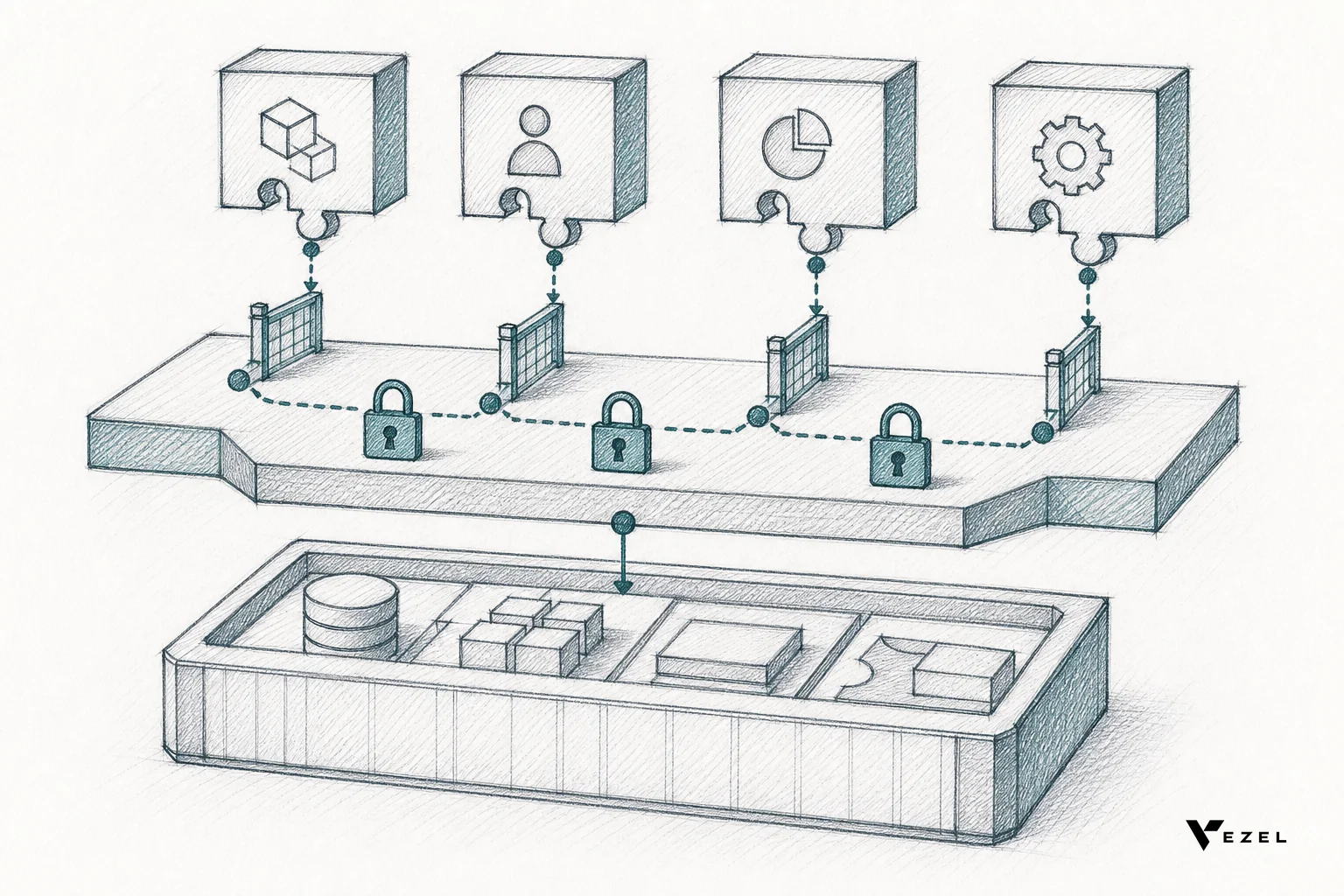
An embedded extension builder solves this differently. It sits inside your existing SaaS product, connects to your real API surface, and lets a prospect (or, more often at this stage, your solutions engineer working alongside them) describe a workflow in plain English. The system generates a working microapp that runs on the prospect's actual trial data, respects the same permissions your platform already enforces, and looks native because it inherits your design system. The aim is for it to feel like part of the product rather than a bolted-on demo trick.
This is the core mechanism behind Vezel, which embeds directly into your SaaS product so your customers, and your own team during a sales cycle, can build custom dashboards, workflows, forms, and AI agents without writing code or filing an engineering ticket. If you want the deeper mechanics of how that changes the buying experience, our post on giving SaaS customers self-serve customization and our guide to choosing an embedded extensibility platform both go further into evaluation criteria.
A Sales Cycle Walkthrough: Before and After Embedded Extensibility
Picture the same enterprise deal running two different ways.
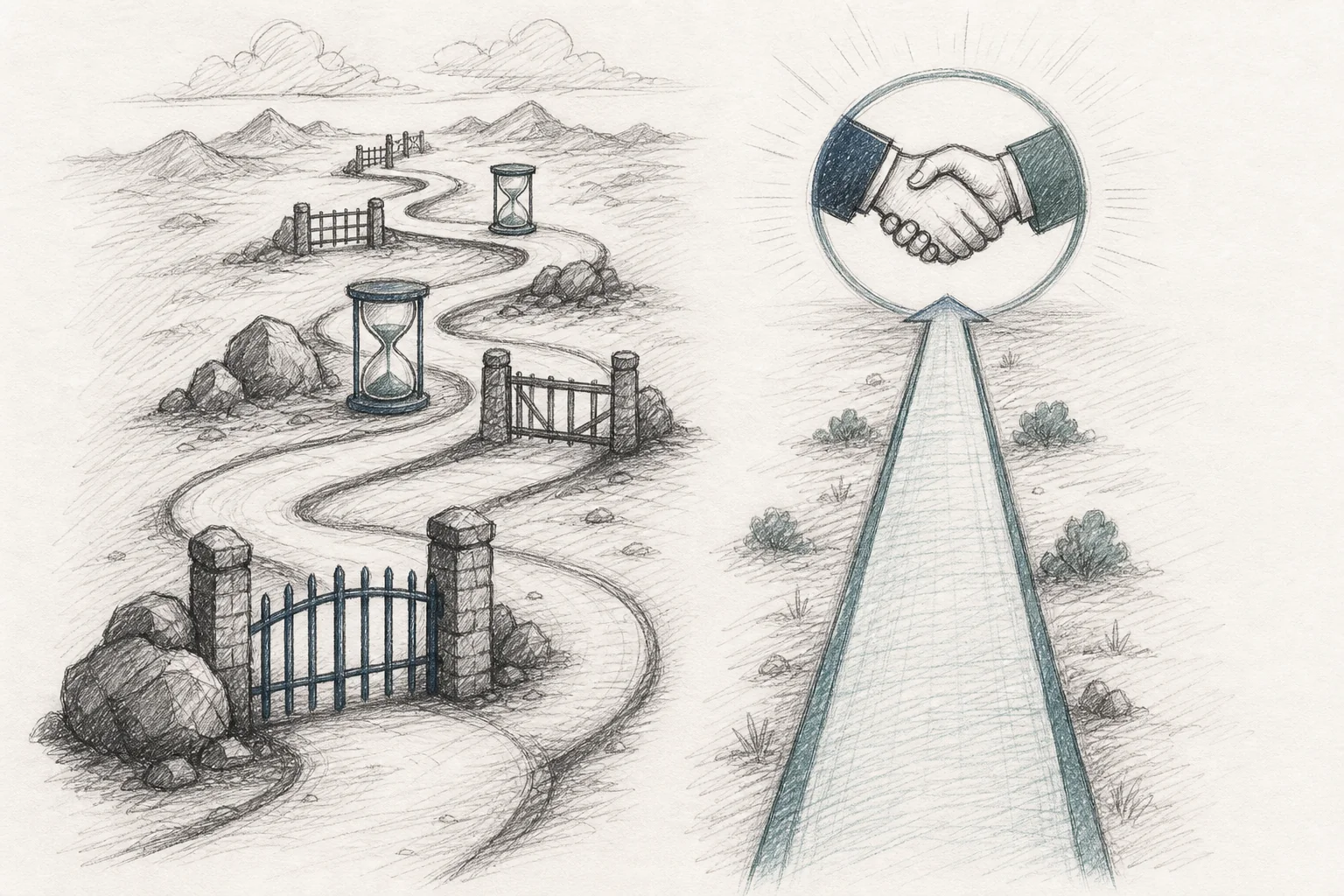
In the traditional version, the prospect asks for a compliance approval workflow scoped to their specific role hierarchy during week six of the evaluation. The account executive escalates to a solutions engineer, who scopes the request and escalates it again to product. Product agrees it's valuable but can't commit engineering time until the following quarter. The account executive goes back to the prospect with a roadmap commitment instead of a working demonstration. The prospect's legal and security teams, unwilling to sign based on a promise, ask for a follow-up call in sixty days. The deal can slip a full quarter, sometimes longer.
In the embedded extensibility version, the same request lands on the same call. The solutions engineer opens the extension builder already integrated into the product, describes the workflow in plain English exactly the way the prospect described it, and can have a working approval flow running on the prospect's trial data before the call ends. The prospect's ops lead sees their actual hierarchy reflected back at them. Security asks how permissions are enforced, and the answer is straightforward: the generated workflow inherits the same authentication and row-level access controls already in place, because it isn't a separate system. In this scenario, the deal can move toward signature more quickly.
| Sales Cycle Stage | Traditional "We'll Build It" Approach | Embedded Self-Serve Extensibility |
|---|---|---|
| Custom workflow request surfaces | Escalated from sales to solutions engineering to product | Can be handled live, in the same call, by the solutions engineer |
| Proof of fit | Roadmap commitment or slide mockup | Working microapp on the prospect's real trial data |
| Security review of custom feature | Delayed until a build exists | Can begin sooner, since the app inherits existing auth and permissions |
| Engineering involvement | Sprint planning, backlog prioritization | Typically none required for the initial build |
| Typical delay introduced | Weeks to a full quarter | Potentially same day to a few days, depending on complexity |
| Champion's internal pitch | "They said they would build this" | "I already saw it working on our data" |
The difference isn't a faster sales script. It's aiming to remove a stage from the buying process, the stage where the prospect waits for proof that doesn't exist yet.
Where This Works Across Verticals
The pattern generalizes because the underlying problem, diverse enterprise buyers forced through one fixed interface, shows up in many categories of B2B SaaS.
- Healthcare tech platforms: A hospital system's biomedical engineering team wants to see a critical-equipment-down dashboard reorganized around patient impact before signing. Proving that live, during procurement, on real equipment data, can help move the deal past a security and compliance review that might otherwise stall for months. We cover this in depth in how healthcare SaaS platforms can offer extensibility.
- Supply chain and logistics SaaS: A national distributor wants custom reporting that reflects their specific margin and routing logic before they'll commit budget. Building that reporting view live, instead of promising it on the roadmap, can help move an evaluation toward a signed contract sooner.
- Field ops and HR tech platforms: Multi-step approval flows tied to a customer's exact role hierarchy are a common last-mile blocker in enterprise deals. Our post on building approval workflows without coding walks through several of these scenarios directly.
In every case, the workflow the prospect asks for isn't exotic. It's specific, unglamorous, and often a factor in whether the deal closes on schedule or slips.
How to Build This Into Your Sales Process
Shortening the enterprise SaaS sales cycle this way takes a bit of process change, not just a new tool sitting unused in a corner of your platform.
- Equip solutions engineers directly, not just account executives. The person on the call needs to be able to build the workflow in real time, which means the extension builder has to be part of their standard toolkit, not something they request access to after a deal is already at risk.
- Seed a library of common enterprise requests. Many custom asks repeat across deals: approval hierarchies, compliance checklists, margin dashboards, shift-handoff reports. Pre-building templates for common requests can help your team adapt an existing microapp quickly, rather than starting from a blank page.
- Track which requests recur and turn them into reusable assets. If several enterprise prospects in one quarter all ask for a similar reporting view, that's a signal worth feeding back into the marketplace layer, not just your product roadmap.
- Get sales, product, and engineering aligned on which requests need this treatment. Not every request should be solved this way, and not every request needs a full engineering build either. The goal is matching the right fix to the right request instead of defaulting to "add it to the backlog."
Our guide on how to embed a workflow builder in your SaaS covers the integration side of this in more detail, including what a typical rollout timeline looks like for engineering teams evaluating whether to build this in-house or bring in a platform like Vezel.
Frequently Asked Questions
Does embedded extensibility replace engineering entirely for enterprise deals?
No. It's intended to reduce routine, repeatable customization requests that can drain engineering time and slow deals. Genuinely novel platform features still belong on the core roadmap. The goal is making sure engineering is pulled in mainly for work that actually needs their expertise.
How fast can a prospect actually validate a custom workflow?
In practice, teams using embedded extension builders have reported validating a workflow live during a sales call or within the same evaluation week, rather than waiting on a sprint cycle. The timeline depends on the complexity of the request and how well your API surface is documented.
Does this create security risk during a sales evaluation?
Done properly, it's intended to reduce risk rather than add to it. A generated workflow should inherit the same authentication, authorization, and row-level access controls already enforced by your platform, rather than existing as a separate, unaudited system. That's a core architectural requirement to check for when evaluating any extensibility approach, as we outline in how to prevent shadow IT in your SaaS platform.
Does this approach work for regulated industries?
It can be especially useful there, since regulated buyers (healthcare, financial services, government contractors) tend to have strict "prove it before we sign" requirements. The security inheritance model matters even more in these cases, since a generated workflow that doesn't respect existing permissions could be a concern for a compliance review.
Turn Your Sales Cycle Into a Live Demonstration, Not a Promise
The enterprise deals that stall aren't necessarily stalling because your product lacks value. They can stall because somewhere between the demo and the signature, a prospect asked to see proof that their specific workflow would actually work, and the answer available was a roadmap commitment instead. Every quarter that pattern repeats, it can cost your sales team deal velocity and your engineering team capacity.
One approach is giving your team the ability to build and demonstrate a workflow a prospect needs, live, on real data, without an engineering ticket. That can help move a sales cycle from quarters toward days.
If you want to see how this works inside a real SaaS product, book a demo and we'll walk through how Vezel embeds directly into your platform. Curious about the mechanics first? see how it works before you talk to anyone. And if your team wants to test it against your own API surface, you can start your free trial today, or talk to an expert about what this would look like for your specific enterprise pipeline.