


An implementation specialist at a mid-market HR tech company is three minutes into a kickoff call when the customer's ops lead says the sentence that used to mean trouble: "We need a custom approval flow." Not a generic one. This customer wants new hire records to route to the department manager first, then to HR compliance, then to IT for provisioning, with a 48-hour SLA at each stop and an automatic escalation if anyone sits on it too long.
Six months ago, that sentence would have triggered a ticket, a scoping call, a sprint estimate, and a customer waiting weeks for something that should have taken an afternoon. Today, the specialist opens the platform's embedded workflow builder, types out exactly what the customer described in plain English, and watches a working approval chain appear, connected to real employee records, live before the call ends.
That shift, from engineering request to plain-English description, is what this guide walks through. If you're a product or engineering leader trying to figure out how to build approval workflows without coding, the short answer is that you no longer build them at all in the traditional sense. You describe them, and an embedded AI extension layer generates, secures, and deploys them inside the product your customers already trust.
Why Approval Workflows Break the Traditional SaaS Model
Approval workflows are, structurally, one of the worst-fitting requests for a shared SaaS core. Every company's chain of command is different. A hospital system routes credential renewals through a department head and a compliance officer. A distributor routes discount approvals through a sales manager and then finance, but only above a certain deal size. A construction firm routes safety exceptions through a site supervisor before work can resume. None of these chains look alike, and none of them can be predicted by a product team designing for an "average" customer who doesn't exist.
Configuration panels don't solve this. Toggling a setting can change how an existing approval step behaves, but it can't invent a new step, a new escalation rule, or a new routing condition that wasn't already built into the product. Configuration changes behavior. It cannot create new logic. When a customer's approval chain requires a sequence the product doesn't already support, no amount of settings-panel tinkering will produce it.
So the request lands on engineering's desk. And here's where the arithmetic gets ugly: founder communities across B2B SaaS consistently report that 70-80% of enterprise feature requests never ship. If a hundred enterprise accounts each file two or three requests a quarter, that's two to three hundred requests against a team that can realistically ship twenty or thirty features in the same window. A custom approval workflow for one account, once built, becomes permanent maintenance debt embedded in the core codebase, slowing down every release after it. Most of these one-off builds are never reused by a second customer.
The result is what the industry has started calling roadmap bloat: real engineering hours consumed by requests that don't generalize, while the product's actual differentiators sit in the backlog. If this pattern sounds familiar, how to stop enterprise deals from bloating your roadmap covers the broader dynamic in more depth.
1. Map the Approval Logic Before You Describe It
Before typing a single prompt, get the logic straight. This step takes ten minutes and saves you from rebuilding a workflow you described wrong the first time.
- Identify the trigger event. What starts the approval? A new hire record, a discount request above a threshold, a safety exception, a compliance exception, a credential renewal.
- List every approval step and who owns it. Write down each role in order: manager, then compliance, then IT, for example. Don't skip a step just because it feels obvious.
- Define what happens on rejection or timeout. Does a rejected request go back to the requester, or escalate automatically? Does an unanswered approval after 48 hours bump to a supervisor?
- Decide what each approver needs to see. A department manager approving a new hire needs different context than the IT team provisioning equipment. Map the data each step actually requires to make a decision.
Skipping this step is the most common reason a generated workflow needs a second pass. Get the sequence right on paper, and the plain-English description becomes almost mechanical to write.
2. Describe the Workflow in Plain English
This is the step that replaces the engineering ticket entirely. Instead of writing a spec document and waiting for a sprint, you write a sentence like this one, straight into the builder:
"When a new hire record is created, route it to the department manager for approval. Once approved, send it to HR compliance. Once that's approved, send it to IT provisioning. Give each step a 48-hour SLA, and escalate to the regional director if any step goes unanswered."
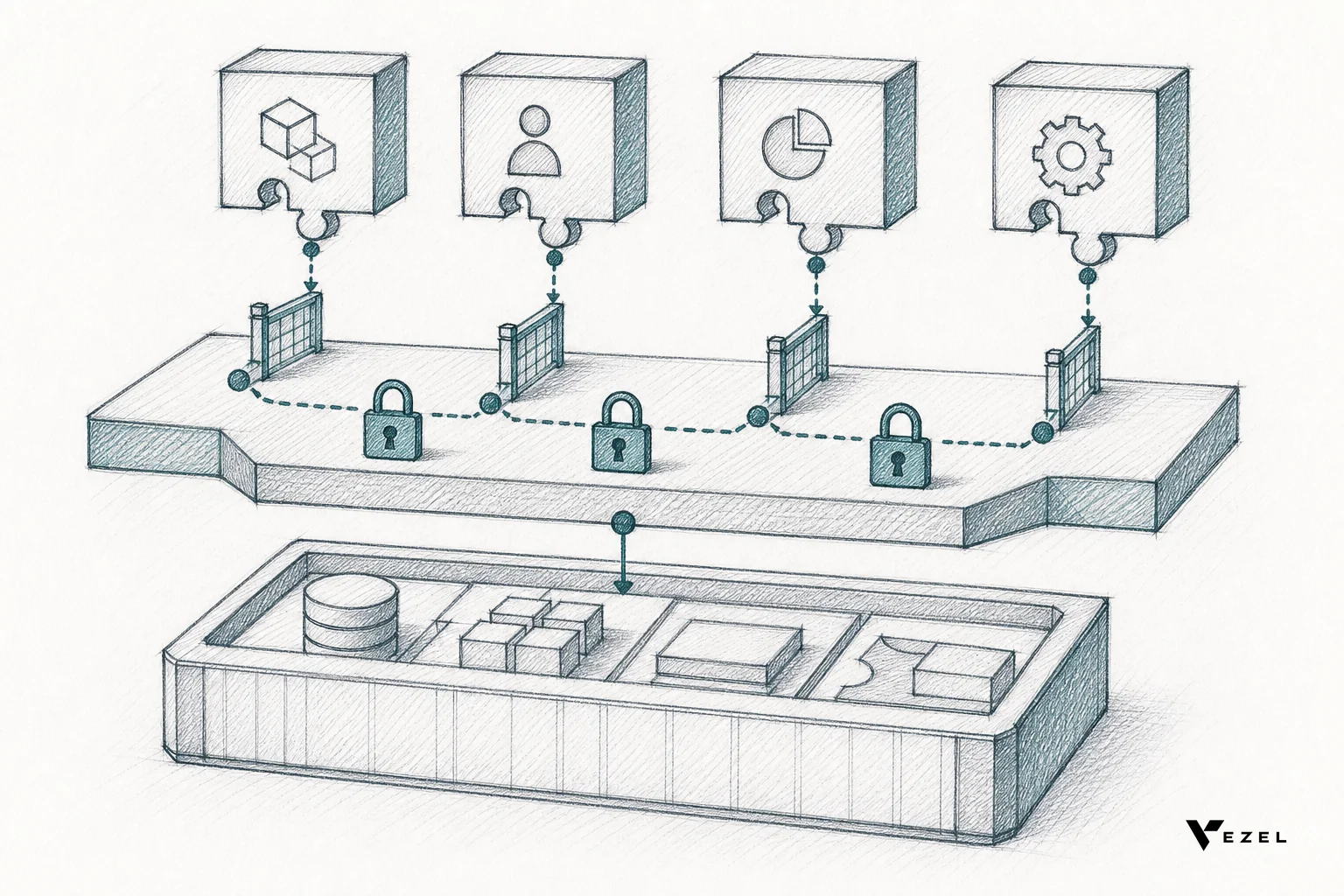
An embedded AI extension builder like Vezel takes that sentence and maps it directly to the host product's real API endpoints and data model, no manual integration work required. It identifies the "new hire" object, the roles available in the account's permission structure, and the fields relevant to each approval step, then generates a working application that reads and writes against actual employee records, not a sandbox copy.

Nobody has to leave the product to do this. There's no separate login, no second tool with its own URL to manage, and no engineer translating the request into code. The person who understands the workflow, usually a customer success manager, an implementation specialist, or the end customer's own ops lead, is the same person who builds it. This is the core difference between an embedded extension builder and standalone low-code tools like Retool or Bubble, which require the builder to think in data models and API calls rather than plain descriptions of the job. how to embed a workflow builder in your saas goes deeper into how that integration works on the platform side.
3. Configure Permissions and Publishing Controls
A workflow that anyone can see or edit isn't a workflow, it's a liability. This is where security inheritance matters most, and it's the single biggest differentiator between an embedded extension builder and a generic AI app generator.
Every approval step generated this way runs through the same authentication and row-level access rules the rest of the platform already enforces. If a department manager can only see employees on their own team in the core product, the generated approval app enforces that identical restriction automatically. There's no separate security model to configure, audit, and maintain per workflow.
Beyond inherited security, you'll want to set publishing controls for the workflow itself:
- Who can build. Decide whether workflow creation is limited to admins, implementation teams, or opened up to end-users directly.
- Who can approve. This maps to existing roles, not a new permission system layered on top.
- Who can publish. A finished workflow can stay private to one team, be shared org-wide across the customer's account, or, with the right governance settings, be offered as a template to other customers solving a similar problem.
- Audit visibility. Every generation event, approval action, and edit is logged, which matters enormously for regulated industries running compliance-driven approval chains.
Healthcare tech platforms, in particular, lean on this governance layer heavily, since a credential-renewal approval flow often needs to satisfy an auditor as much as it needs to satisfy the department head who uses it daily. how healthcare saas platforms can offer extensibility covers how that plays out for regulated verticals in more detail.
4. Test, Publish, and Let the Workflow Run on Real Data
Before a generated workflow goes live, it passes through automated validation: schema checks, permission enforcement, and logic verification that catches broken references or missing approval steps before anyone sees them. This isn't a manual QA cycle stretched across a sprint; it happens in the seconds after generation.
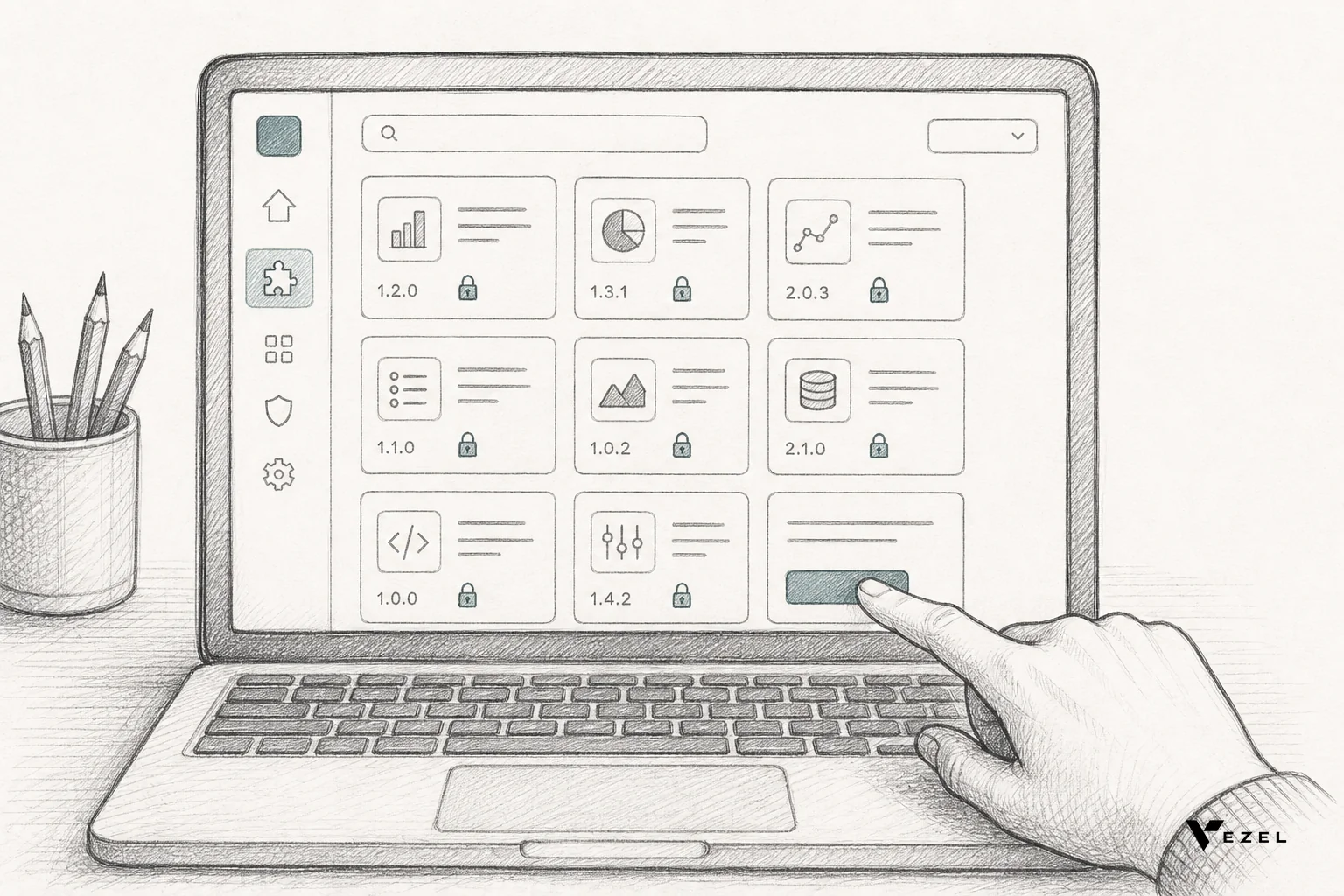
Once validated, the workflow deploys the same day it was described, connected to the customer's real records, not a demo environment that someone has to migrate later. From there, it can be published into the platform's in-app marketplace, where other teams at the same company, or other customers facing a comparable approval chain, can discover it, install it, and adapt it to their own role hierarchy.
Version history sits underneath all of this. If a change to the escalation rule breaks something, rolling back to the previous version takes seconds, not a re-deployment cycle involving engineering.
5. Iterate Conversationally as the Business Changes
Approval chains are never static. A company restructures, adds a compliance step after an audit finding, or removes a layer of sign-off to speed up onboarding. Under the old model, each of these changes meant a new ticket, a new scoping conversation, and another wait.
With a plain-English workflow builder, the update is a follow-up sentence: "Add a security review step between HR compliance and IT provisioning" or "Change the SLA on the manager approval step to 24 hours." The workflow updates in place, still connected to live data, still governed by the same permissions.
This is the part that actually eliminates the one-off engineering request cycle, not just for the first version of a workflow, but for every revision after it. The maintenance burden that used to compound with every custom build simply doesn't accumulate the same way, because the customer or the implementation team is closing their own loop.
Real-World Approval Workflows Across Vertical SaaS
The pattern shows up almost identically across very different products, because the underlying problem, one interface trying to serve every customer's approval chain, is universal.

- HR tech: A healthcare HR team builds a credential-expiration approval flow grouped by department, with automatic renewal reminders and a compliance sign-off step before a credential lapses.
- CRM: A distributor builds a discount-approval workflow that routes deals above a certain size to a sales manager and then to finance, something a generic forecasting module was never designed to produce because it's specific to how that company prices deals.
- Field service and CMMS: A manufacturing plant builds a safety-exception sign-off requiring supervisor approval before equipment can return to service, complete with mandatory photo capture and an audit-ready history.
- Healthcare tech: A hospital's biomedical engineering team builds an equipment-downtime escalation flow that reorganizes work orders around patient impact instead of ticket age.
None of these are exotic requests. They're the unglamorous, specific tools a particular team needs to get through a particular week, the kind of thing that's "too niche for the roadmap" but "too important to the customer to ignore." Platforms that let end-customers build these themselves report meaningfully fewer "how do I..." support tickets, because the customer solves the problem in the product instead of waiting on a response. If you want a closer look at how this changes retention outcomes, is missing workflows causing your saas churn walks through the churn side of the equation directly.
What This Means for Your Roadmap and Sales Cycle
Once approval workflow requests stop consuming engineering sprints, two things happen at once. First, your roadmap stops absorbing one-off logic that only ever serves a single account. Second, and often more valuable, your sales and solutions engineering teams gain the ability to build a requested approval flow live during a sales call instead of promising it "on the roadmap" and hoping the prospect waits.
That second shift matters more than it sounds. A prospect asking for a compliance approval flow scoped to their exact role hierarchy isn't asking for a feature, they're asking for proof the product can handle how their company actually works. Being able to show that in the room, rather than in a follow-up email three weeks later, changes the conversation. For a deeper look at how this plays out across enterprise deal cycles, how to reduce saas engineering backlog from enterprise requests and vertical saas extensibility for enterprise customers a retention playbook both cover the downstream effects on retention and deal velocity.
If you want to see the mechanics behind this yourself, see how it works with a live walkthrough of the builder mapping a plain-English approval request to real API endpoints in real time.
Frequently Asked Questions
Do end-customers need technical skills to build an approval workflow?
No. The entire premise of an embedded AI extension builder is that the person describing the workflow doesn't need to understand data models, APIs, or conditional logic. They describe the approval chain the way they'd explain it to a new hire, and the system handles the mapping to real endpoints and permissions.
How is this different from a generic no-code tool like Retool or Glide?
Standalone no-code tools live outside the host product, with their own login and their own security model. An embedded extension builder generates the workflow inside the product the customer already uses, inheriting existing authentication and row-level permissions automatically. There's no second environment to manage. A closer comparison is available at retool vs embedded extensibility for saas products which scales.
Is the workflow data secure and correctly permissioned?
Every API call a generated workflow makes passes through the same authorization rules already enforced elsewhere in the product. If a role can't see certain records today, a workflow built for that role can't see them either. Every generation, edit, and approval action is logged for audit purposes.
Can approval workflows be reused across customers?
Yes, depending on governance settings. A workflow built for one customer's onboarding process can be published as a template inside the marketplace, discoverable by other customers or teams facing a similar chain of approvals, then adapted to their own role hierarchy without starting from scratch.
Start Building Approval Workflows Your Customers Actually Need
Every approval workflow request sitting in your backlog right now represents a real customer trying to get through their week without your product's help. That's the pattern worth breaking. Vezel embeds directly into your existing SaaS platform so your customers, and your own implementation teams, can describe an approval, onboarding, or compliance workflow in plain English and see it running on real data the same day, governed by the permissions you already enforce.
If you're ready to stop scoping one-off approval flows into next quarter's sprint, book a demo to see a live approval workflow built and deployed in minutes. Prefer to explore it hands-on first? start your free trial and describe your first workflow today. And if you have questions about integrating this into your specific product's API surface or permission model, talk to an expert on the Vezel team.