


Customers churn when roadmap features never ship because the missed feature is not the real problem. It is the proof point. Once a customer catches you overpromising, they stop trusting every future date on your roadmap. By renewal time, they are already pricing out alternatives.
This case study follows a hypothetical vertical SaaS company that nearly lost a seven-figure renewal over one unshipped custom reporting feature, and how it turned things around. To be clear, the scenario below is illustrative, not a real account; the research references cited throughout are drawn from published industry sources.
Key Takeaways
- Missing features are a documented churn driver, though the scale varies by source: One churn-reason tracker attributes a smaller, specific slice of cancellations directly to slow feature velocity, describing it as "medium severity, 3% of cancellations." Broader "missing features" complaints are likely undercounted by that narrower category, but no single source in our research confirms a precise overall percentage, so treat any specific figure here as an estimate rather than a hard number.
- Silence is the real trigger, not the delay: Renewal risk spikes when a customer asks "is this on the roadmap?" and nobody can answer with confidence, a dynamic described in this framework for honest roadmap conversations.
- Custom reporting is a common broken promise in vertical SaaS (hypothetical scenario): In the illustrative case below, enterprise buyers ask for tailored dashboards and reports more than any other customization category.
- Self-serve extensibility can shorten the fix from quarters to hours: Letting the customer build the report inside the product removes the roadmap dependency entirely, at least in the scenario walked through here.
- The fix is not more roadmap communication, it is fewer roadmap dependencies: Reducing renewal-critical asks on the engineering backlog is more durable than improving status updates.
At a Glance: The Renewal Timeline (Hypothetical Scenario)
| Stage | What Happened | Renewal Risk Level |
|---|---|---|
| Sales cycle | Custom compliance reporting promised for Q3 delivery | Low |
| 3 months post-close | Feature moved to "next quarter" in the backlog | Medium |
| 6 months post-close | Customer builds a manual spreadsheet workaround | High |
| 9 months post-close | CS flags the account as churn risk ahead of renewal | Critical |
| Week of renewal | Customer builds the report themselves via self-serve extensibility | Resolved |
| Renewal signed | Account renews with expanded seat count | Retained |
The Renewal That Almost Didn't Happen (A Hypothetical Case)
Picture a vertical SaaS company selling operations software to mid-size healthcare clinics. This is a constructed example, not a documented account. During the sales cycle, an account executive promised a large multi-location clinic group a custom compliance report broken out by facility. That was a common ask in the segment.
Engineering scoped the request and put it in the backlog behind two platform-wide priorities. The quarter came and went without the report shipping.
Nine months later, the customer's ops director asked their CS manager a direct question in a QBR: "Is the facility report still coming, or should we plan around not having it?" Nobody on the call had a confident answer.
That single moment, not the missing feature itself, moved the account from healthy to churn risk in this scenario.
Why did this become a renewal problem instead of just a feature gap?
It became a renewal problem because the customer had built internal reporting workflows around a promise, not a shipped capability. Every quarter without delivery made the vendor's other commitments feel less credible.
The gap widened from one missing report to a general trust issue.
Why a Missed Roadmap Feature Hits Harder Than a Bug
A bug is a broken promise about the present. A roadmap miss is a broken promise about the future, and the customer has usually made business decisions based on that promise.
They staffed a process around it. They told their own leadership it was coming.
Real-world roadmap audits back this up. One product-management review reports that in 80% of the companies it audited, the published roadmap, the actual work in progress, and customer requests overlapped by less than 50%.
Roadmaps fail when teams treat them as commitments instead of directional communication, per that same audit. Customers rarely know which kind they are reading.
The question "is this on the roadmap?" asked in a renewal call is rarely a request for information. It's a test of whether the vendor still deserves the benefit of the doubt.
Separately, one churn-reason tracker attributes roughly 3% of cancellations specifically to slow feature velocity and roadmap silence, describing the issue as customers perceiving the product as stagnant, in its published churn-reason data. Other "missing feature" narratives likely contribute additional churn that isn't captured in that specific category, but we don't have a verified combined figure to cite here, so we're not asserting one.
Whatever the exact share, roadmap-related churn shows up consistently enough across independent sources that it deserves structural attention, not just better status updates.
What the Account Team Tried First (Hypothetical Scenario, Continued)
Before reaching for a structural fix, the team did what most CS organizations do: they managed the relationship harder. A dedicated CSM took over the account.
Engineering built a one-off manual export as a stopgap. Someone on the customer's side started maintaining a shared spreadsheet stitched together from three exports a week.
None of this was bad execution. It was a normal response to a normal problem. But every workaround added labor on both sides without closing the actual gap.
The customer still could not self-serve the report they needed on their own schedule.
This pattern shows up constantly in vertical SaaS, and it is covered in more depth in this breakdown of missing workflows and churn. The workaround buys time. It does not buy trust back.
How Self-Serve Extensibility Reversed the Trend (In This Hypothetical)
The turning point came when the account team stopped trying to get the feature prioritized. Instead, it gave the customer a way to build the report themselves.
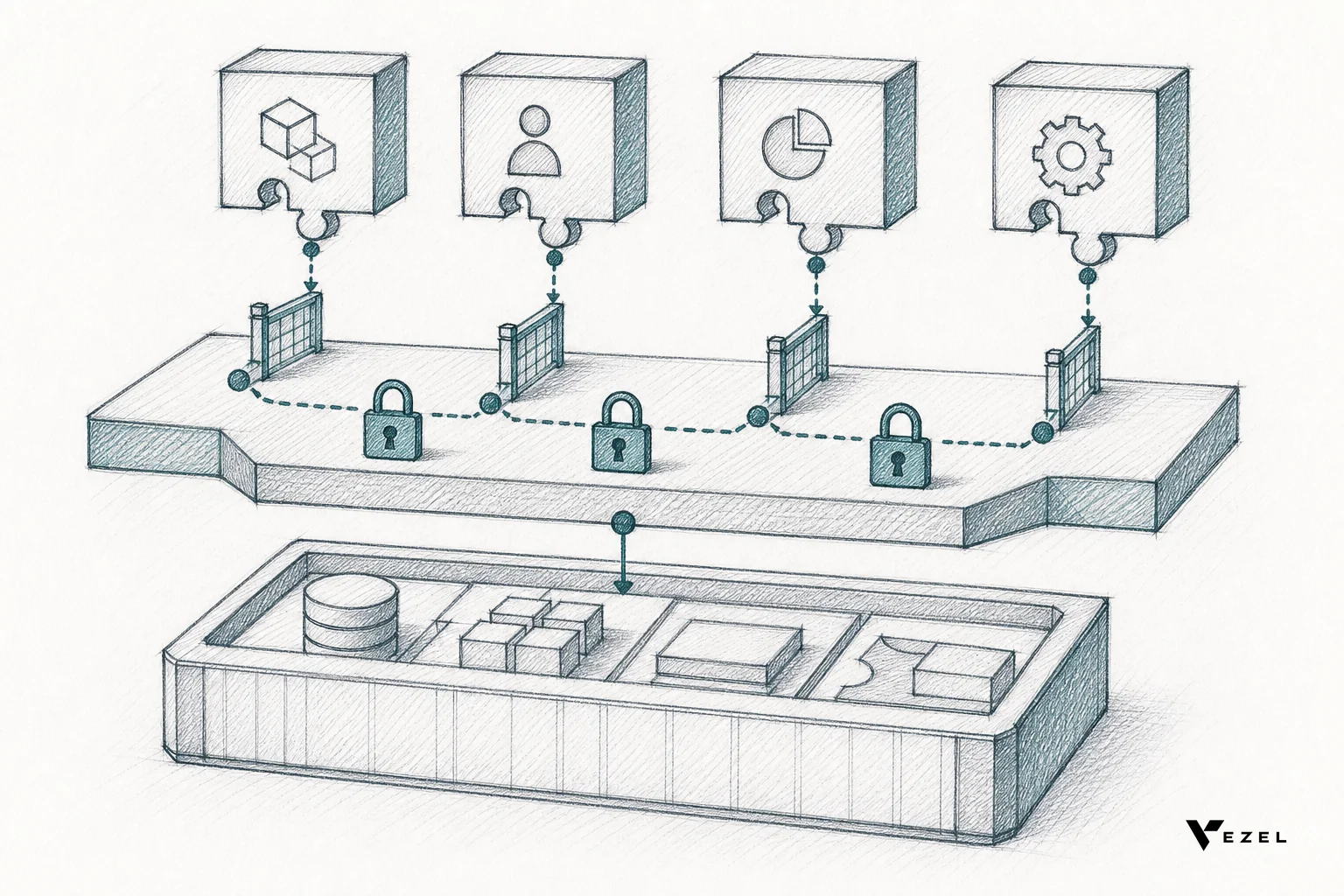
Using an embedded extension layer inside the product, the clinic group's ops director described the report in plain English. They connected it to live facility data already permissioned to their account.

The report existed within the hour. It respected the same row-level access controls as the rest of the product, so no separate security review was needed.
It looked native to the product because it was white-labeled to match the existing design system.
How does this actually stop the customer from asking for the next feature too?
It does not stop them from asking. It changes who builds the answer.
The next request becomes something the customer's own team can create directly in the product. It becomes less dependent on another ticket sitting behind a backlog they cannot see into.
This is the core mechanic behind building custom dashboards inside a SaaS product without a dev sprint. The customer's specific need gets met without ever touching the shared roadmap.
Roadmap Feature Requests vs Self-Serve Capabilities
| Attribute | Traditional Roadmap Request | Self-Serve Extension |
|---|---|---|
| Time to delivery | Weeks to multiple quarters | Hours to days |
| Who builds it | Engineering, competing with platform priorities | The customer, using plain English prompts |
| Security model | Rebuilt or reviewed per request | Inherited automatically from existing permissions |
| Maintenance burden | Falls on the vendor's engineering team long-term | Owned and versioned by the customer, governed centrally |
| Renewal risk if delayed | Grows every quarter it slips | Removed at the point of build |
What is embedded extensibility, exactly?
Embedded extensibility is a layer built into a SaaS product that lets end customers create their own dashboards, workflows, reports, and AI agents through plain English. They do not need to write code or wait on the vendor's engineering team.
It connects to existing APIs and inherits existing permissions automatically.
Is Your Renewal Pipeline Carrying the Same Risk?
A renewal at risk from unshipped roadmap items shows a few recognizable signs. Watch for a customer asking about the same feature in two consecutive QBRs.
Also watch for a support ticket referencing a spreadsheet workaround, or a CSM avoiding a direct answer about the timeline. That avoidance pattern is exactly what the CS-product alignment framework describes as the "overpromise chain."
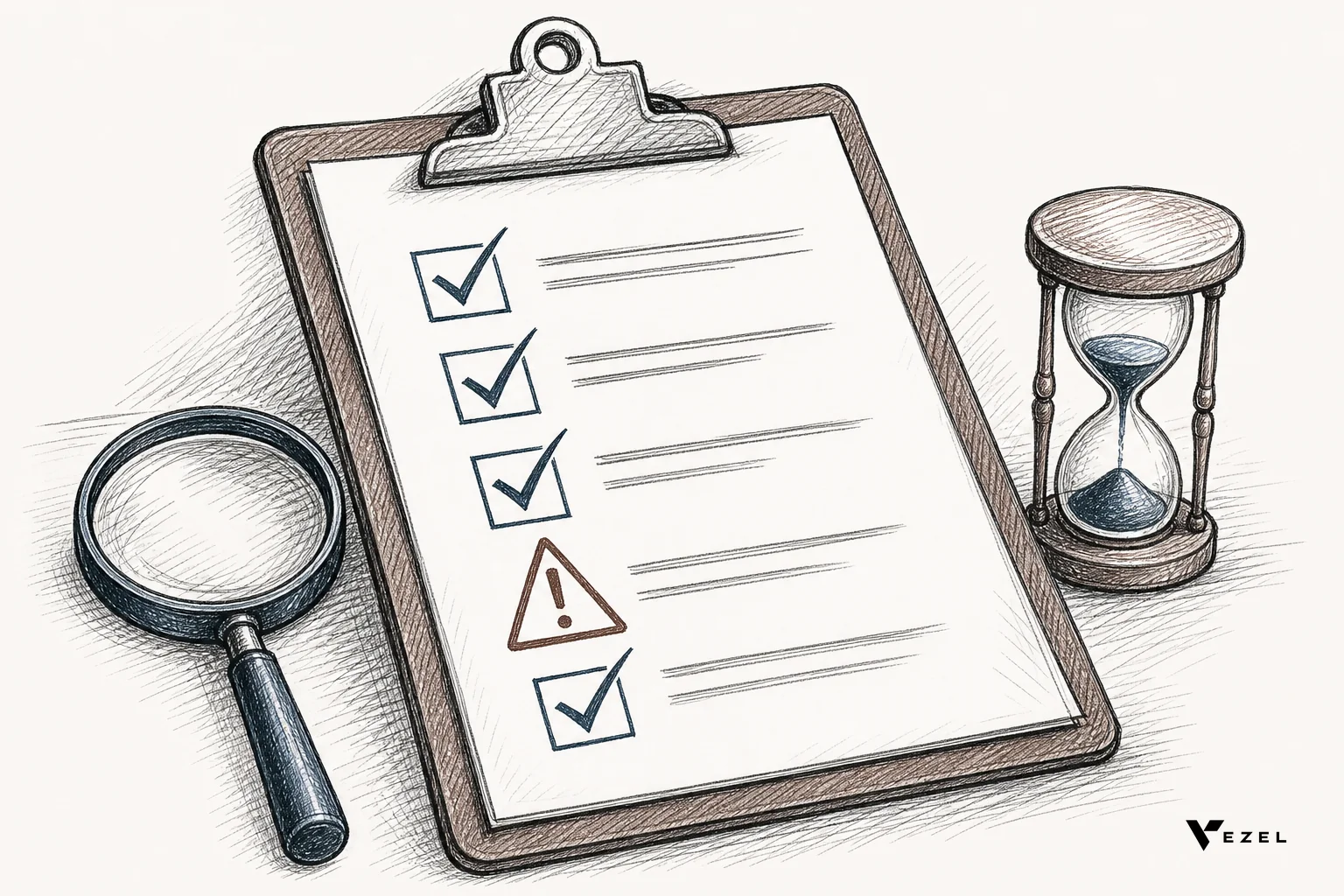
- 🚩 A customer references the same missing feature across more than one QBR
- 🚩 CS or support tickets mention a manual export, spreadsheet, or shared doc as a stand-in
- 🚩 A sales rep made a specific delivery promise that never appeared in the released changelog
- 🚩 The account's usage of core features is flat or declining while ticket volume climbs
Any two of these together is worth a direct conversation before the renewal date, not during it.
Teams building this into a repeatable process often look at signs of shadow IT workarounds as an early warning system. A spreadsheet workaround today often becomes an unapproved tool tomorrow.
What Product and CS Leaders Should Do Differently
Getting better at communicating roadmap delays is a real improvement, but it treats the symptom. The structural fix is reducing how many renewal-critical requests depend on the shared roadmap at all.
That means routing customer-specific dashboard, report, and workflow requests through a self-serve extension layer instead of a backlog ticket. This applies when the request is specific to one account's operations rather than the whole market.
Reserve engineering capacity for capabilities that genuinely benefit every customer.
Sales and CS also need a shared answer to "is this on the roadmap?" That answer should not depend on guessing engineering's next quarter.
When the honest answer is "you can build that yourself this week," the renewal conversation changes entirely. Teams working through this shift often start with reducing engineering roadmap pressure from customer requests before rolling out a self-serve tool company-wide.
One thing is worth stating plainly: not every request belongs on a self-serve layer. Deep platform-level integrations still need engineering.
The judgment call is knowing which requests are customer-specific reporting or workflow gaps, and which are genuine product-wide feature needs. That line moves by account and by industry, and getting it wrong in either direction has a cost.
Frequently Asked Questions
Can self-serve extensibility replace the product roadmap entirely?
No, it complements the roadmap rather than replacing it. Platform-wide capabilities that benefit every customer still belong on the shared roadmap.
Account-specific dashboards, reports, and workflows are what move to self-serve extensibility.
How fast can a customer actually build a replacement for a promised feature?
Simple dashboards and reports connected to existing data can typically be built in hours using plain English prompts.
The extension inherits existing API connections and permissions instead of requiring new integration work.
Does giving customers a builder tool create a security risk?
Not when the tool inherits the host product's existing authentication and row-level permissions rather than creating a separate access model.
That is the standard design pattern for embedded extension platforms.
Take the Renewal Risk Off Your Roadmap
A missed roadmap feature will keep costing renewals as long as customer-specific requests depend entirely on engineering bandwidth.
Vezel's embedded extension layer lets your customers build the dashboard, report, or workflow they were promised inside your product, on their own timeline.
Book a demo to see how it fits your renewal pipeline, or check out how it works before your next at-risk QBR.