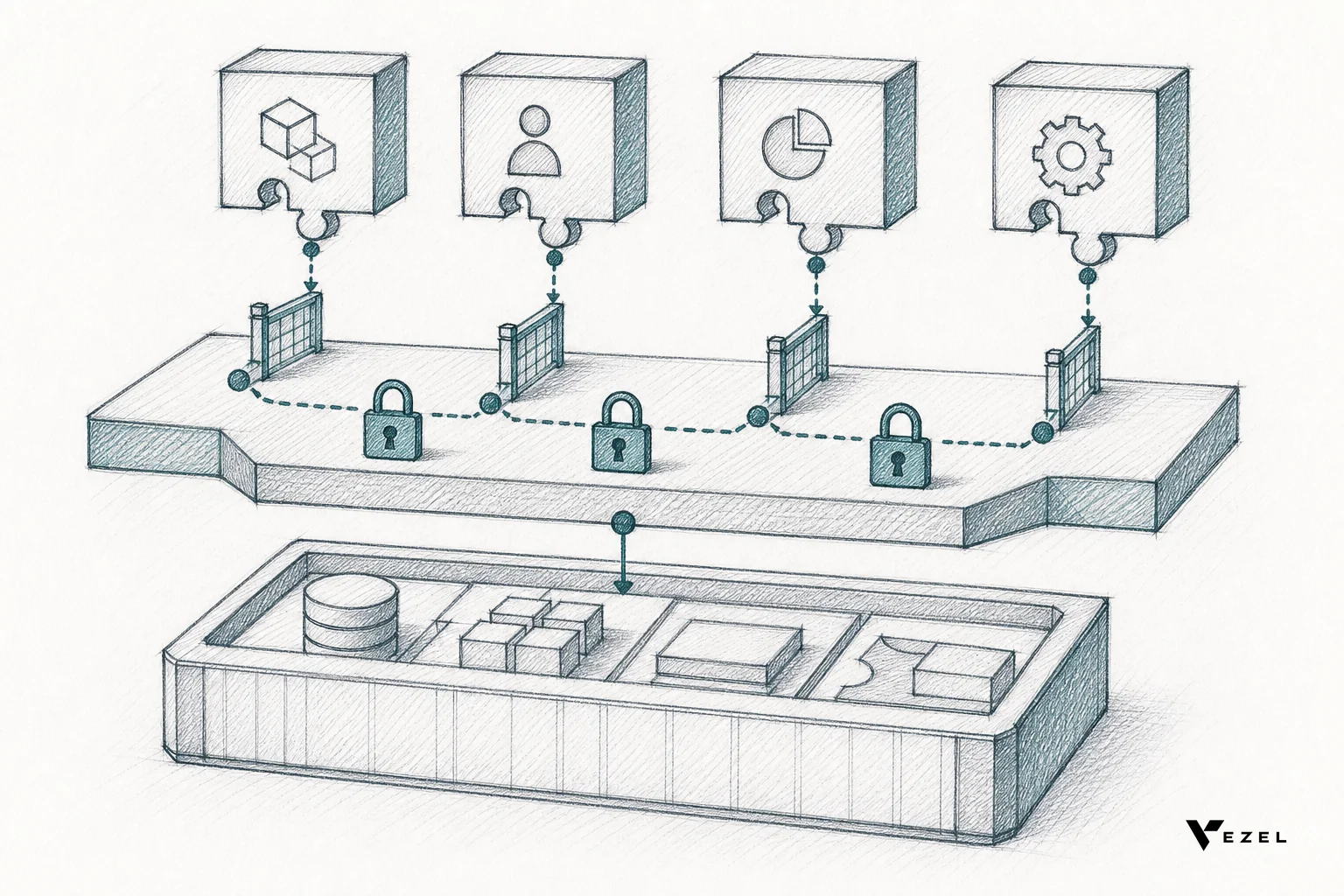


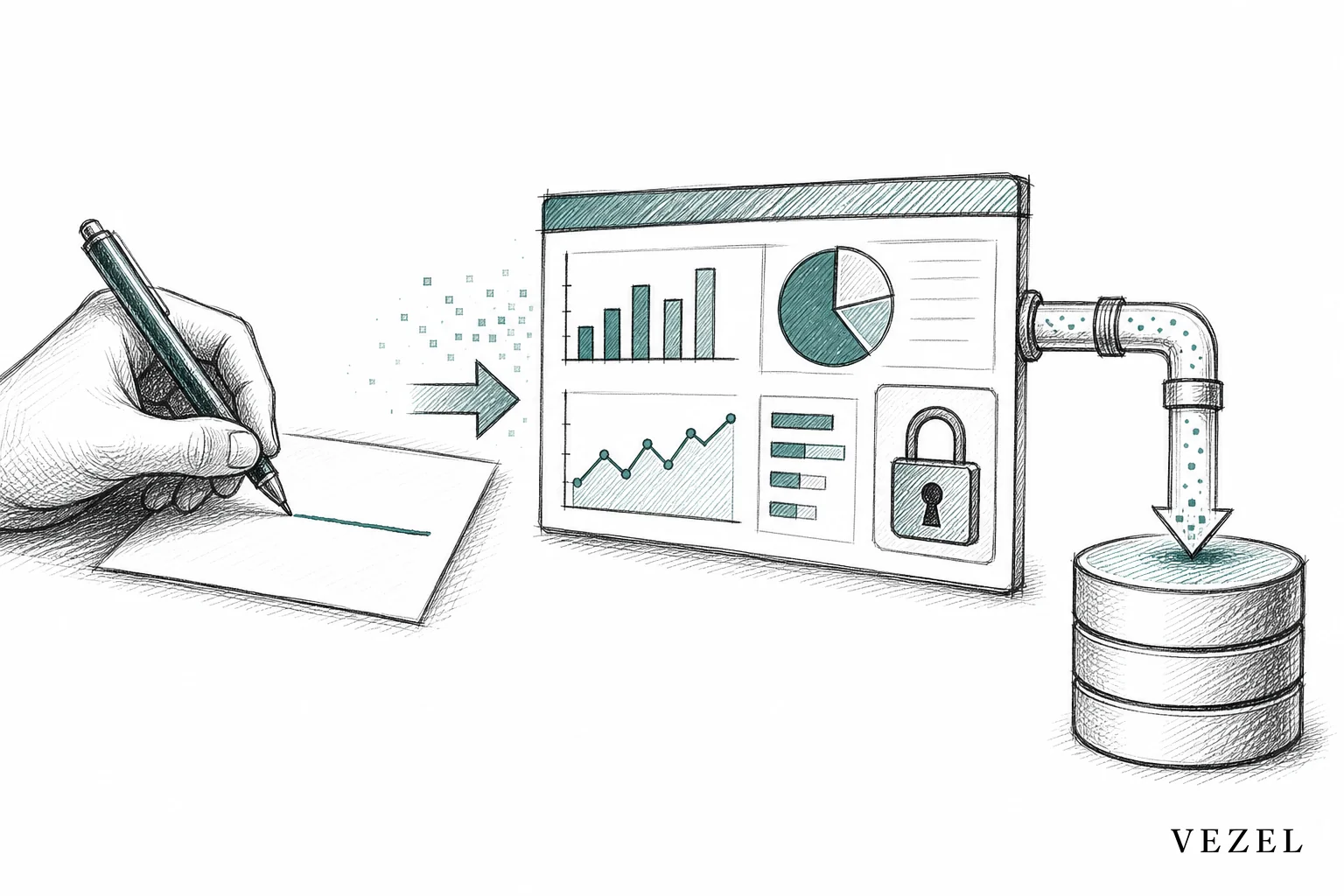
A payments platform closes a deal with a regional acquiring bank, then hits a wall: the bank's compliance team needs a PCI DSS-scoped audit trail formatted around its own merchant hierarchy, not the vendor's standard export. Custom reporting for fintech SaaS platforms means letting each bank, lender, or payments customer build compliance reports, audit trails, and reconciliation views in plain English, directly inside the platform, without opening an engineering ticket. The report connects to live transaction data and inherits the existing permission model automatically.
Key Takeaways
- Compliance reports rarely match a single template: a lender under SOX and a payments company under PCI DSS need different fields, retention rules, and formats, even on the same platform.
- Engineering can't own every reconciliation request: chart-of-accounts structures differ by customer, so a "generic" reconciliation dashboard rarely survives contact with a real ledger.
- Extensions should inherit RBAC and audit logging, not rebuild it, so a generated report never exposes data outside a user's existing access scope.
- A governed marketplace stops the spreadsheet workaround that creates shadow IT and audit gaps in regulated environments.
- Self-serve reporting shortens enterprise sales cycles because prospects can see their exact compliance report before signing, not after a quarter of custom development.
Fintech Reporting At a Glance
| Report Type | Typical Customer | Data Source | Permission Sensitivity | Old Build Time |
|---|---|---|---|---|
| PCI-scoped audit trail | Payments processor, acquiring bank | Transaction logs, merchant records | High (row-level by merchant) | 4-8 weeks |
| Reconciliation dashboard | Lending platform, corporate treasury | Ledger, chart of accounts | High (account-level) | 3-6 weeks |
| SOX compliance report | Public company finance team | General ledger, approvals log | Medium-high | 4-6 weeks |
| Commission/fee statement | Broker-dealer, payments partner | Fee schedules, transaction data | Medium | 2-4 weeks |
| KYC/AML exception report | Bank, credit union | Customer records, flagged transactions | Very high | 6-10 weeks |
| Custom-built via embedded AI extensibility | Any of the above | Same live APIs, auto-discovered | Inherited automatically | Hours to days |
Why Fintech SaaS Reporting Never Fits One Module
Every bank, lender, and payments company runs on a different compliance stack. A community bank answers to state regulators and the FDIC. A public fintech answers to the SEC and Sarbanes-Oxley reporting requirements. A card processor lives inside PCI DSS scope. None of these regulatory regimes ask for the same fields, the same retention windows, or the same level of detail in an audit trail.
Reconciliation makes it worse. Two lending customers on the same SaaS platform can structure their chart of accounts completely differently. One reconciles by loan product; another reconciles by branch. A shared reporting module can hit maybe 70% of what either customer needs, then leaves the rest to spreadsheets or a support ticket.
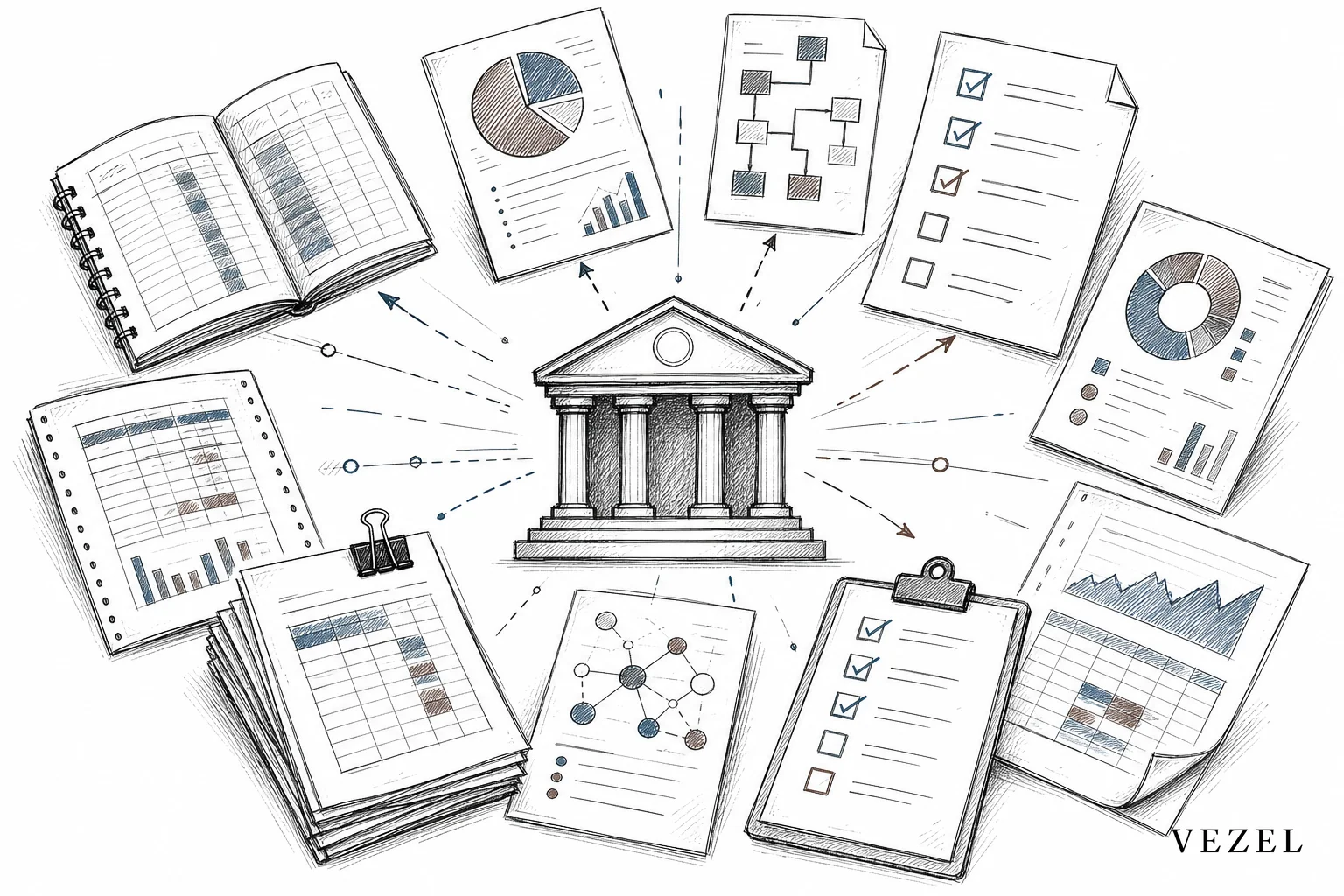
This isn't a sign that the product is behind. It's the natural result of serving customers who each answer to different regulators, auditors, and internal controllers. The gap between the reporting module you ship and the report a specific bank's compliance officer needs by Friday keeps widening as your customer base diversifies.
The Cost of Building Custom Fintech Reports the Old Way
Most fintech SaaS teams already know this cycle. A customer's compliance lead asks for an audit-ready export in a specific format. Product logs the request. Engineering estimates it. It sits behind the roadmap until either it ships, months later, or the customer builds a workaround in a spreadsheet exported from your API.
That workaround carries real risk in fintech specifically. A spreadsheet pulled from your platform and manually reconciled outside your access controls is a compliance gap waiting to surface in an audit. It's also a sales problem: enterprise banking and payments prospects routinely ask for a specific compliance report during due diligence, and if you can't produce it in the sales cycle, the deal slows or dies.
Engineering teams building one-off bespoke reports for individual banking customers also accumulate long-term maintenance debt. Every custom report is code someone has to keep working when the underlying data model changes. That's capacity taken directly from core product work.
How Embedded AI Extensibility Solves Custom Fintech Reporting
An embedded AI extension layer changes where the report gets built. Instead of a bank's compliance officer filing a request and waiting on your backlog, they describe the report in plain English, directly inside the platform they already log into. Vezel's approach connects that request to your live transaction and ledger data through API auto-discovery, mapping existing endpoints and data models automatically rather than requiring a new integration for every customer.
The part that matters most for fintech specifically is security inheritance. A generated audit trail or reconciliation dashboard inherits the platform's existing authentication, RBAC, and row-level permissions, the same scoping that already governs merchant-level or account-level access. A regional compliance officer only ever sees the merchants or accounts they're authorized to see, because the extension runs under their existing identity, not a shared admin account. This is the same principle covered in detail in how to inherit row-level permissions in SaaS tools.
Every generated report is also white-labeled, so it renders inside your product's existing design system. A compliance officer at a lending customer never leaves your platform or opens a third-party tool to get their SOX report.
Can I Connect My Own AI Client to My Own SaaS Accounts?
This is a question fintech product teams ask often, and the honest answer is: it depends on what "your own AI client" means. If you mean pointing a general-purpose AI assistant at your platform's data through an exposed API, you can, but you inherit the burden of building and maintaining that connection, plus replicating every permission rule yourself so the assistant doesn't leak data across accounts.
Embedded extensibility platforms handle this differently. Instead of a customer wiring up their own AI client against your raw API, the extension lives inside your product, runs API auto-discovery against your existing OpenAPI spec, and executes every query as the requesting user, not a standalone service account. That distinction matters in fintech because a misconfigured AI connection touching live transaction or account data is a compliance incident, not just a bug. For a closer look at connecting extensions to real-world APIs, see connecting AI extensions to legacy SaaS APIs.
What This Looks Like in Practice
Picture a payments platform serving a mid-sized acquiring bank. The bank's risk team needs a PCI-scoped audit trail that flags transactions above a threshold, grouped by merchant category code, refreshed daily. Instead of a ticket, the bank's admin describes the report inside the platform. The extension pulls from the same transaction API the core product already uses, applies the bank's existing merchant-level permissions, and the report appears as a native tab in their dashboard.
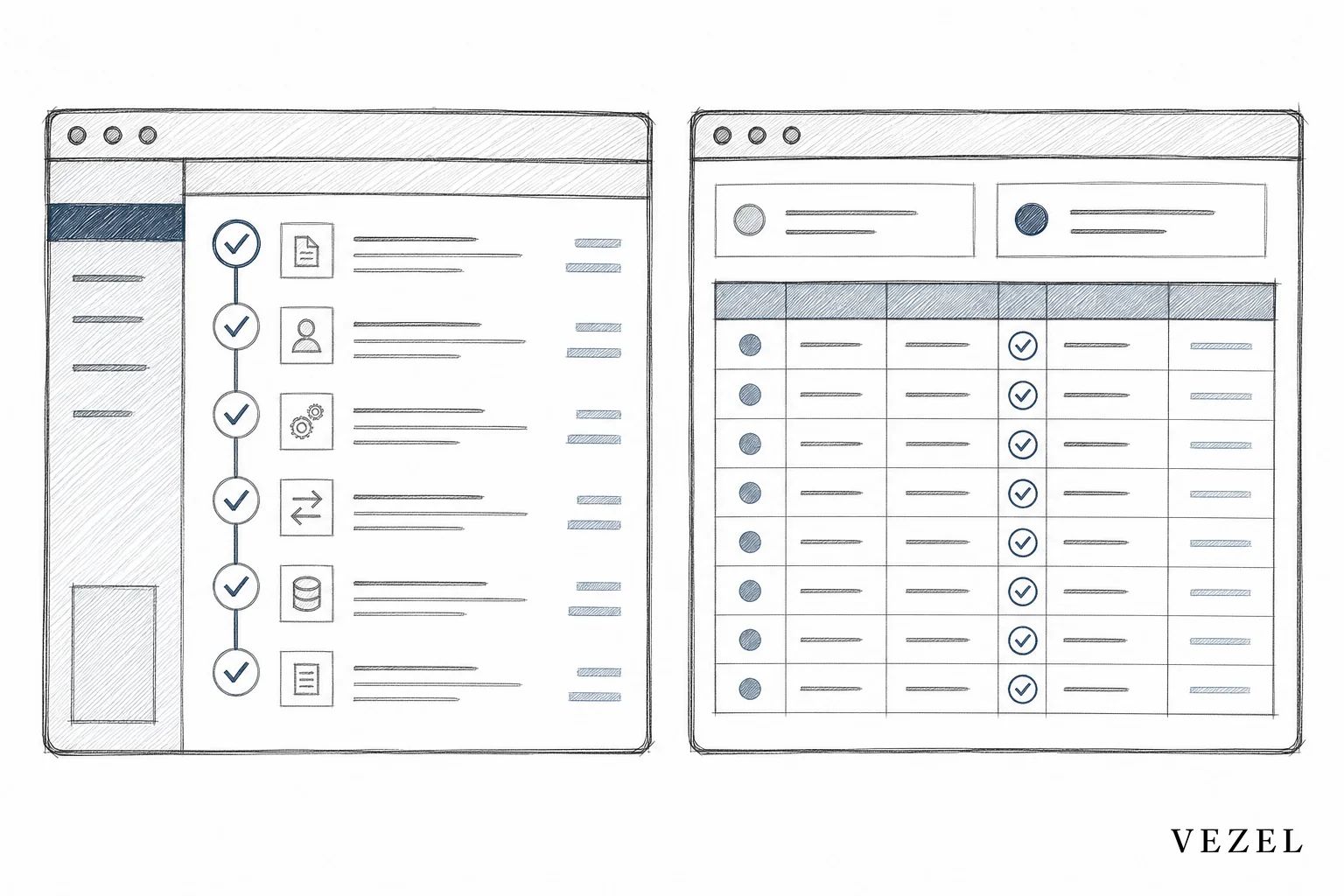
Now picture a lending SaaS customer who reconciles by loan product instead of branch. Their operations lead builds a reconciliation dashboard matching their exact chart of accounts, published through a governed marketplace so it's versioned and reviewed before it reaches their whole finance team. Nobody on your engineering team writes a line of code for either report. Both examples mirror patterns already working in adjacent verticals, covered in how CRM SaaS platforms offer custom reporting and how insurance SaaS platforms offer custom reporting.
Fintech Reporting vs Other Verticals
Custom reporting shows up across every vertical SaaS category, but fintech carries a specific weight: regulatory audit trails have legal consequences if they're wrong, and reconciliation precision has direct dollar impact. A CRM customer's pipeline dashboard being slightly off is annoying. A bank's reconciliation report being off by a rounding error during an audit is a different category of problem. That's part of why security inheritance, not just report generation, is the load-bearing feature for fintech extensibility. It's also worth comparing how a governed extension approach differs from letting internal teams build ad hoc tools; the tradeoffs are laid out in internal tool builders vs customer-facing extensibility.
Getting Started Without Adding to the Backlog
Start by identifying the compliance and reconciliation requests that show up repeatedly across your fintech customer base but never quite fit your standard reporting module. Those are the requests currently costing engineering hours or pushing customers toward spreadsheets. Map which of those reports depend on data you already expose through your API, since that's what auto-discovery can connect to immediately.
From there, a governed extensibility layer lets you pilot self-serve report building with a handful of enterprise customers before rolling it out platform-wide, with every generated report still passing through the same review and versioning controls your compliance team expects. You can see the mechanics of how these building blocks fit together in how to build custom dashboards inside your SaaS.
If your team is tired of watching enterprise banking and lending deals stall on a custom audit report nobody has time to build, book a demo and see how Vezel connects to your existing data model in a working session, not a slide deck. Want the technical walkthrough first? see how it works, or talk to an expert about your specific compliance reporting backlog.