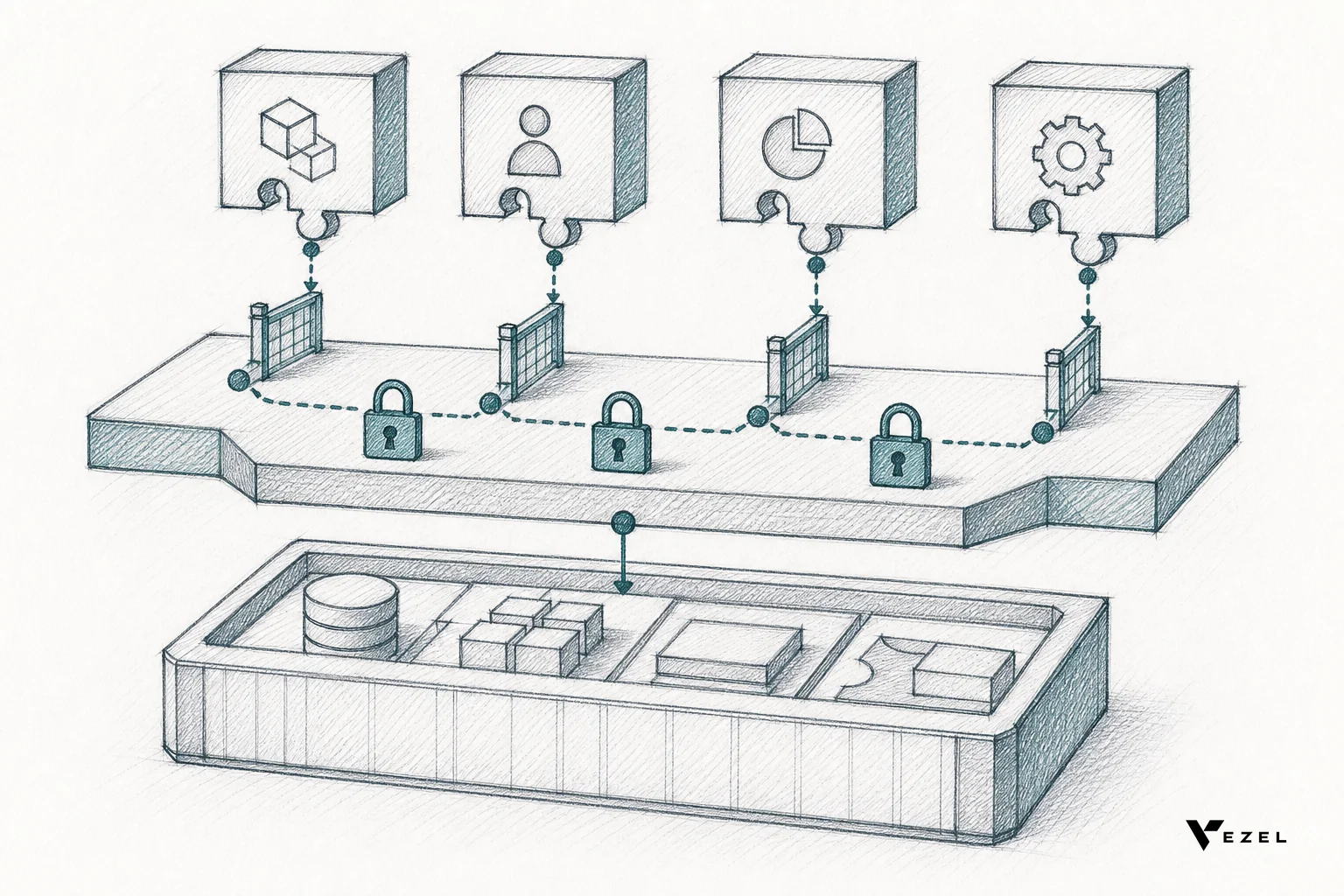



Custom reporting for legal tech SaaS platforms means letting each law firm, corporate legal department, or compliance team build its own matter status views, billing realization reports, and audit trails in plain English, directly inside the case management or e-discovery platform it already uses, without filing an engineering ticket. The report connects to live data and respects the firm's existing permission structure, so a litigation associate never sees another practice group's privileged matters.
Key Takeaways
- Firm-specific reports are the norm, not the exception: matter status by practice group, billing realization, and compliance audit trails rarely match across two firms using the same platform.
- Engineering can't keep pace: one-off legal reporting requests routinely eat into the 30-40% of engineering capacity many SaaS vendors already lose to bespoke customer work.
- Permissions are the hard part, not the chart: ethical walls between practice groups and client-matter confidentiality make RBAC inheritance a requirement, not a nice-to-have.
- Plain English generation removes the bottleneck: an embedded AI extension layer can turn a request like "billing realization by practice group last quarter" into a live report in minutes.
- This pattern repeats across verticals: healthcare, CRM, and insurance platforms face the same custom reporting demand curve legal tech does.
At a Glance: Legal Tech Reporting Requests vs Delivery Time
| Report Type | Requested By | Traditional Dev Timeline | With Embedded AI Extension |
|---|---|---|---|
| Matter status by practice group | Managing partner / COO | 4-8 weeks | Minutes to hours |
| Billing realization report | Finance / billing team | 3-6 weeks | Minutes to hours |
| Compliance audit trail | General counsel / risk | 6-10 weeks | Same day |
| E-discovery custody chain report | Litigation support | 4-8 weeks | Same day |
| Cross-practice conflict check dashboard | Conflicts counsel | 8-12 weeks | 1-2 days |
| Ethical wall access log | IT / security | 6-8 weeks | Same day |
Why Every Law Firm Wants a Different Report
Ask five law firms how they define "matter status" and you'll get five answers. A litigation practice tracks status by discovery phase and upcoming filing deadlines. A transactional practice tracks status by closing conditions and deal milestones. A regulatory group tracks status by agency response windows. All three might sit on the same case management platform, yet none of them want the same report.
Billing realization is even messier. Some firms calculate realization against standard rates, others against negotiated client rates, and alternative fee arrangement firms need something else entirely. Compliance audit trails vary by jurisdiction, by client contract terms, and by whether the firm is subject to specific bar association or regulatory recordkeeping rules.
None of this is a flaw in the platform. It's just what happens when hundreds of firms, each with their own practice mix, billing model, and compliance posture, run on the same shared software. The gap between the reports a legal tech platform ships out of the box and the reports each firm actually needs only grows as the customer base grows.
The Cold Reality of Engineering Backlogs in Legal Tech
Most legal tech vendors already know the pattern. A large firm signs a contract contingent on a custom compliance report. Product logs the request. Engineering estimates the build. Three months later, the report either ships, late, or the firm gives up and builds a workaround in Excel.
Multiply that across every enterprise account and the math stops working. Vendors report losing a significant share of engineering capacity to one-off customization work that benefits a single customer and never becomes a reusable feature. Meanwhile the roadmap for genuinely new capabilities, the things that actually differentiate the platform, sits waiting.
It also slows sales. A general counsel evaluating case management software will ask, early, whether the platform can produce the specific audit trail their outside auditors require. If the honest answer is "we'd need to build that," the deal stalls or goes to a competitor who says yes.
Custom Reporting for Legal Tech SaaS Platforms: What It Actually Looks Like
This is where an embedded AI extension layer changes the equation. Instead of routing every firm-specific report through a backlog, the platform lets a firm administrator describe the report in plain English, and the extension builds it against the platform's own live data.

A managing partner might type: "show open matters by practice group, sorted by days since last billing entry." A finance director might ask for "billing realization by attorney for Q3, compared to standard rate." A compliance officer might request "an audit trail of every document access on matter 4471 over the last 90 days." Each of those becomes a live, working report, connected to the platform's real matter, billing, and document data through API auto-discovery, without a developer writing a line of custom code.
This is the core idea behind Adaptive SaaS: rather than every firm-specific need becoming a feature request, the platform generates the capability on demand. Vezel's extension builder maps directly to a legal tech platform's existing API and data model, so the reports it generates aren't static exports. They stay live as matters progress and billing entries post. If your team has already tackled this for dashboards, the same pattern applies here; see how to build custom dashboards inside your SaaS for the underlying mechanics.
Why Permission-Aware Reporting Matters More in Legal Tech Than Almost Anywhere Else
Legal tech has a permissions problem most other verticals don't. Ethical walls exist for a reason: a litigator on one side of a matter cannot see privileged work product from the other side, even inside the same firm. Client confidentiality rules mean a paralegal assigned to Client A's matters should never stumble across Client B's billing data in a shared report.

A generic BI tool or a spreadsheet export doesn't know any of this. It pulls whatever data the person running the query has access to, and if that access is set too broadly, sensitive matter data leaks across a wall it was never supposed to cross. That's why any custom reporting approach for legal tech needs to inherit the platform's existing role-based access control (RBAC) and row-level permissions, not recreate them from scratch in a side tool.
When a report is generated through an embedded extension that inherits authentication and permissions natively, a firm administrator building a billing realization report only ever sees the matters and attorneys they're already authorized to see. The report respects the same ethical walls and row-level scoping the core platform already enforces. For a deeper look at how that inheritance actually works under the hood, see how to inherit row-level permissions in SaaS tools.
Can I Connect My Own AI Client to My Own SaaS Accounts?
This is a question legal tech buyers ask often, and the honest answer matters. You generally shouldn't want a general-purpose AI client with unrestricted access to your case management or e-discovery accounts. What you want is a governed connection, one where an AI extension is scoped to your existing API endpoints, inherits your existing login and RBAC, and only ever acts within the permissions the requesting user already has. That's the difference between plugging in an open AI assistant and embedding a permission-aware extension layer purpose-built for the platform you're already running. It's also why API auto-discovery, not open-ended AI access, is the right starting point; see how the two connect in connecting AI extensions to legacy SaaS APIs.
How This Plays Out: A Case Management Vendor's Rollout
Picture a mid-market legal case management vendor serving 200-plus firms. One enterprise account, a 300-attorney firm with litigation, transactional, and regulatory practices, requests three things before renewal: a matter status dashboard split by practice group, a billing realization report weighted by alternative fee arrangements, and a compliance audit trail for their outside auditors.
Under the old model, that's three tickets, three engineering estimates, and a renewal date creeping closer while none of them ship. With an embedded extension layer in place, the firm's own administrator builds all three inside the platform, in plain English, in an afternoon. The practice group dashboard pulls live matter data. The billing realization report reflects the firm's actual fee structure, not a generic template. The audit trail logs document access by matter, scoped to exactly what the firm's compliance team is authorized to see.
The vendor's engineering team never touches any of it. No custom code ships, no bespoke maintenance burden gets added, and the renewal conversation shifts from "we're still waiting on that report" to "here's what we already built."
Legal Tech Isn't the Only Vertical Facing This
The same pattern shows up wherever regulated, permission-sensitive data meets diverse operating structures. Healthcare tech platforms face nearly identical pressure around clinical KPI views and compliance reporting, covered in how healthcare tech SaaS can offer custom reporting. CRM platforms see it around pipeline and revenue reporting, in how CRM SaaS platforms can offer custom reporting. If you're weighing whether an embedded approach fits your platform versus a low-code build, low-code platforms vs embedded AI extensibility breaks down the tradeoffs.
Build vs Buy: Embedded Extensibility vs Custom Development
| Approach | Speed | Permission Handling | Ongoing Maintenance | Engineering Load |
|---|---|---|---|---|
| Custom development per firm | Weeks to months per request | Rebuilt manually each time | High, grows with every custom build | Heavy, ongoing |
| Generic BI tool export | Days to weeks | Often disconnected from source RBAC | Moderate, brittle over time | Moderate |
| Standalone internal tool builder (Retool-style) | Days | Requires manual permission replication | Moderate, dev-dependent | Moderate to heavy |
| Embedded AI extension layer | Minutes to hours | Inherits existing RBAC natively | Low, self-serve for the firm | Minimal |
The comparison isn't close once permission inheritance enters the picture. A firm-facing report that gets the access model wrong isn't just an engineering headache, it's a confidentiality breach waiting to happen. If your team has evaluated a Retool-style approach already, Retool vs embedded extensibility for SaaS products covers exactly where that path breaks down at scale.
FAQ
Does this replace our BI tool? Not necessarily. Firm-wide analytics and cross-account benchmarking still have a place in a BI stack. What an embedded extension layer replaces is the one-off, firm-specific report that would otherwise sit in an engineering backlog.
How fast can a firm-specific report actually ship? Once the API is mapped through auto-discovery, generating a new report from a plain English request typically takes minutes to hours, not weeks.
What about e-discovery data volumes? Because the extension queries live data through existing APIs rather than duplicating it into a separate warehouse, it scales with however the underlying platform already handles large document sets.
Enterprise legal customers will keep asking for reports built around how their firm actually works. That's not going away, and it shouldn't have to sit on an engineering roadmap for months at a time. If you want to see how a permission-aware, plain English reporting layer would look inside your own case management or e-discovery platform, book a demo or see how it works. If you have questions specific to your data model or RBAC setup, talk to an expert before your next renewal conversation puts you on the spot.