

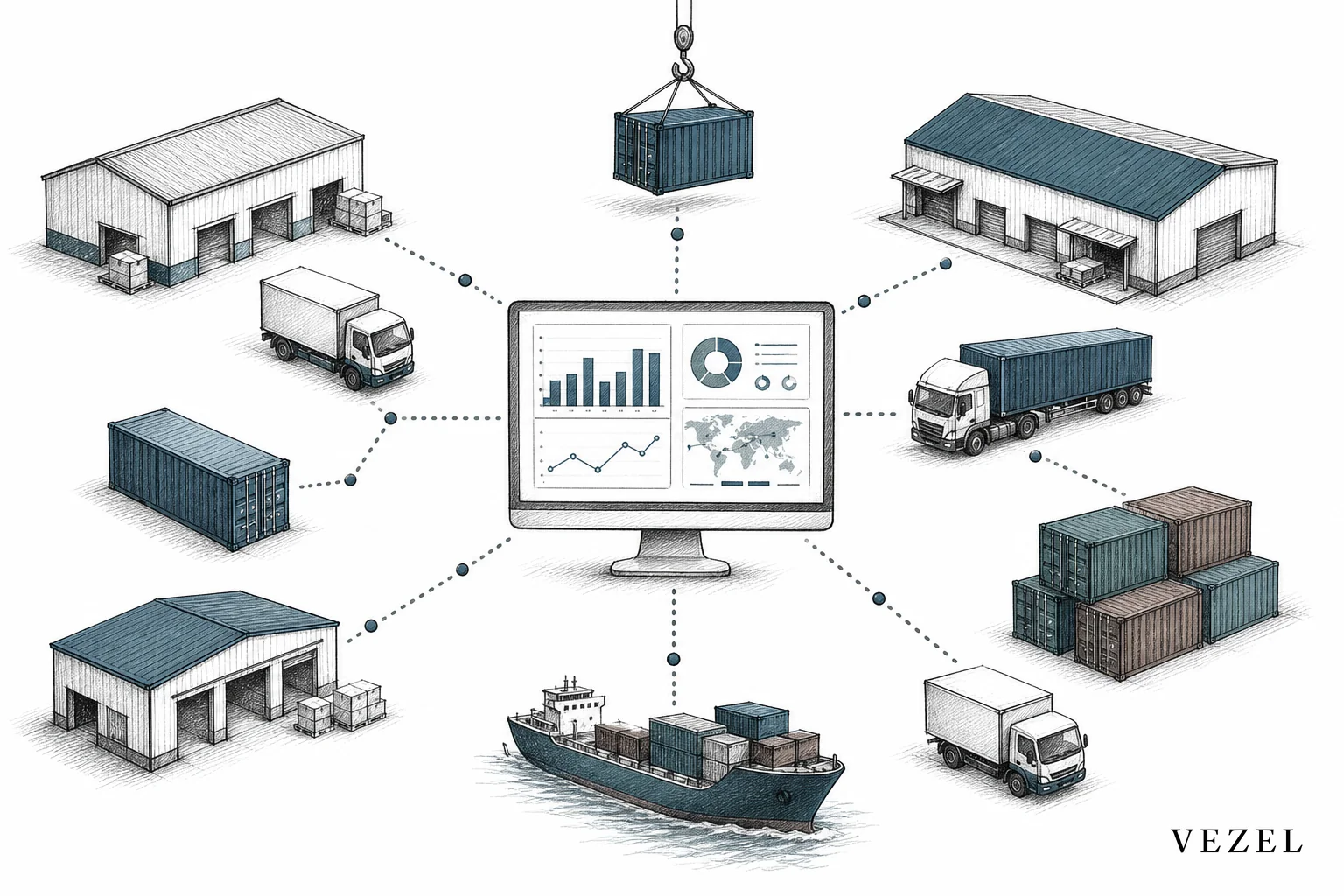
Custom reporting for supply chain SaaS platforms means letting each shipper, 3PL, or carrier network build its own SLA compliance views, carrier scorecards, and exception reports in plain English, directly inside the TMS or visibility platform they already log into. For enterprise buyers evaluating vendors, the real question isn't whether a platform can show data. It's whether it can generate the specific report your operations team needs without a six-week engineering ticket.
Key Takeaways
- API auto-discovery beats requirements docs: Vendors that map your existing OpenAPI spec automatically cut weeks off implementation compared to manual data-mapping consulting engagements.
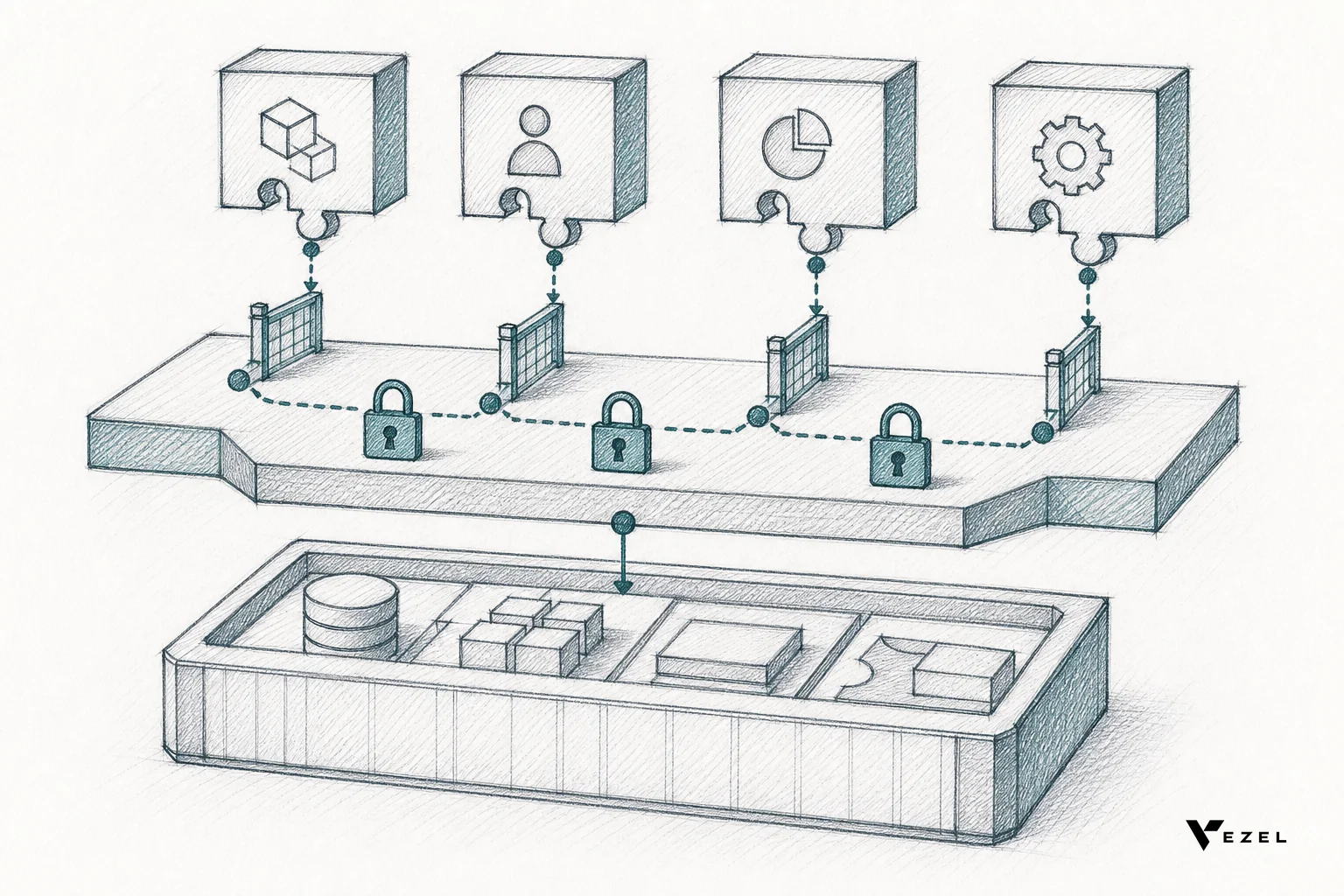
- Security inheritance is non-negotiable: Extensions that rebuild RBAC and row-level permissions from scratch create a second access-control system you now have to audit forever.
- White-labeling affects deal velocity: Enterprise buyers trust extensions that look native far more than ones that feel like a bolted-on third-party tool during procurement review.
- Governed marketplaces prevent shadow IT: Without versioning and lifecycle controls, customer-built reports sprawl into unmanaged spreadsheets and rogue BI connections.
- Build vs buy has a real cost gap: In-house custom development for one enterprise account routinely consumes weeks of engineering time that a governed extension platform delivers in days.
At a Glance: Evaluation Criteria for Custom Reporting Platforms
| Criteria | What to Look For | Why It Matters |
|---|---|---|
| API integration | OpenAPI-based auto-discovery of existing endpoints | Avoids months of manual schema mapping |
| Security model | Inherits host platform's authentication, RBAC, row-level access | Prevents a second, unaudited permission system |
| Design fit | White-labeled theming matching your product's UI | Extensions feel native, not bolted on |
| Publishing control | Governed marketplace with versioning and review | Stops shadow IT and unmanaged sprawl |
| Who builds it | Non-technical end users via plain English, not just developers | Removes engineering as the bottleneck |
| Time to first report | Days, not sprint cycles | Shortens enterprise sales cycles |
| Deployment footprint | Zero-footprint, embedded inside your existing product | No separate login or standalone app for customers |
Why Supply Chain SaaS Buyers Are Asking This Question Now
Every enterprise shipper measures performance a little differently. One 3PL cares most about on-time-in-full rates by lane. Another tracks detention and demurrage exceptions by carrier. A retail distribution customer wants a single scorecard blending both, sliced by region. Your product can't ship a report for every combination, and it shouldn't try.
The old fix was the feature request cycle: log the ask, size it, wait for a sprint, ship it months later if it survives prioritization. That cycle worked when customer diversity was manageable. It breaks down once your enterprise pipeline includes dozens of shippers who each want a report built around their own KPIs before they'll sign.
This is exactly why reducing engineering roadmap pressure from customer requests has become a board-level topic at vertical SaaS companies. Enterprise buyers now expect self-serve customization as a baseline, not a stretch goal, and supply chain SaaS is one of the categories where the pattern shows up hardest, since no two logistics operations run identical processes.
1. Start With API Auto-Discovery, Not a Requirements Doc
The first thing to check with any vendor is how they connect to your existing product. If the answer involves a multi-week discovery phase with consultants mapping your data model by hand, walk away. A serious embedded extensibility platform reads your existing OpenAPI or Swagger specification and automatically maps endpoints, objects, and relationships.
This matters more in supply chain platforms than almost anywhere else, because the data model is genuinely complex: shipments, carriers, lanes, accessorials, milestones, and exceptions all reference each other. A platform that can auto-discover those relationships gets a customer from request to working report in days. One that requires a services team to hand-map your schema will still be in discovery when your competitor has already closed the deal.
Ask vendors directly: can your team point the platform at our existing API today and generate a working extension this week? If the honest answer is no, you're evaluating a services engagement dressed up as software.
2. Demand Security Inheritance, Not a Parallel Permission System
A custom report that shows the wrong customer's shipment data is worse than no report at all. This is the single most common failure mode with homegrown or Retool-style internal tool builds: they look correct in a demo, then break three weeks later when a regional dispatcher logs in and sees another region's freight rates.

The fix is security inheritance. Every extension, dashboard, or report should execute using the requesting user's own identity and existing role, not a shared service account with elevated access. That means row-level filters, tenant scoping, and RBAC all flow automatically from your core platform into whatever the customer builds. You shouldn't have to replicate your permission model a second time inside a separate tool.
For a deeper technical breakdown of how this actually works under the hood, see how to inherit row-level permissions in SaaS tools. If a vendor can't explain their inheritance model in specific terms, that's a governance risk you'll be explaining to your CISO later, not something to discover after rollout.
3. White-Labeling: Extensions Should Feel Native, Not Bolted On
Enterprise procurement teams notice when a "custom report" opens in a different color scheme, a different font, or a separate browser tab with someone else's logo. It reads as a stitched-together workaround, and it undermines trust exactly when you're trying to close a deal.
A properly white-labeled extension inherits your product's design system: your colors, your typography, your navigation patterns. The customer building a carrier scorecard shouldn't be able to tell where your core product ends and the generated extension begins. That consistency is also what makes the capability sell during a demo. Sales engineers can show a prospect building their own SLA report live, inside your actual product, without a caveat about "this part looks different."
4. Governed Marketplace Publishing Beats Ad-Hoc Sprawl
Letting customers build their own reports solves one problem and can create another if there's no governance layer. Without versioning, review, and lifecycle management, you end up with dozens of undocumented extensions floating around, some outdated, some duplicating each other, some quietly broken after an API change.
A governed in-product marketplace fixes this. New extensions go through a publishing workflow, get versioned, and become discoverable to the right teams instead of living in one person's browser bookmarks. This is also your best defense against shadow IT: if customers can build what they need inside your product with proper oversight, they stop building it outside your product in spreadsheets or unsanctioned BI tools. For the full governance model, see how to embed a workflow builder in your SaaS.
Build vs Buy vs Embedded Extensibility: How the Options Compare
Most product leaders evaluating custom reporting land on three real options: build it in-house, adopt an internal tool builder like Retool for customer-facing use, or bring in a purpose-built embedded extensibility platform. Here's how they stack up.

| Approach | Time to First Report | Security Inheritance | Customer-Facing Ready | Ongoing Engineering Load |
|---|---|---|---|---|
| In-house custom build | Weeks per customer | Manual, re-implemented each time | Yes, but expensive to maintain | High |
| Retool-style internal tool builder | Days to weeks | Not designed for customer-facing RBAC | Limited, built for internal ops teams | Moderate |
| Embedded AI extensibility platform | Days | Inherited automatically via auto-discovery | Yes, white-labeled and native | Low |
The distinction between the last two options trips up a lot of engineering leaders, because Retool and similar tools are genuinely good at what they're built for. The problem is they're built for your own team's internal dashboards, not for handing a governed, permission-scoped builder directly to paying enterprise customers. For a full breakdown, read Retool vs embedded extensibility for SaaS products and internal tool builders vs customer-facing extensibility. If you're also weighing low-code platforms like Mendix or OutSystems, low-code platforms vs embedded AI extensibility covers that comparison directly.
How Custom Reporting Plays Out in Supply Chain SaaS
In practice, supply chain enterprise buyers ask for a narrow set of recurring report types: carrier performance scorecards, SLA compliance breakdowns by lane or contract, exception and detention reports, and cost-per-shipment views segmented by customer or region. None of these are exotic. What makes each one custom is the combination of fields, filters, and grouping logic specific to how that shipper actually runs its operation.
An embedded extension platform lets the customer describe the report in plain English, connects it to live data through the auto-discovered API, and publishes it under the same permissions the user already has. No engineering ticket, no waiting for the next sprint. For a full walkthrough of this pattern applied to logistics platforms specifically, see how logistics SaaS platforms can offer custom reporting.
Vertical Deep Dives Worth Reading
Custom reporting shows up with the same shape across nearly every vertical SaaS category, just with different fields and compliance requirements. If you're benchmarking against how other verticals handle this, these deep dives walk through the specifics: CRM SaaS custom reporting, insurance SaaS custom reporting, healthcare tech SaaS custom reporting, fintech SaaS custom reporting, and legal tech SaaS custom reporting.
Can I Connect My Own AI Client to My Own SaaS Accounts?
This question comes up often, and it's worth separating from the buying decision above. Connecting a personal AI assistant to your own SaaS login gives you a conversational interface to existing data. It can summarize a report or answer a question about it. It cannot generate a new, governed, permission-scoped report that your whole team uses every morning, publish it for other users, or inherit your organization's RBAC model automatically.
That's the core distinction covered in earlier chapters of the Adaptive SaaS framework: AI improved interaction with software, but interaction isn't the same as adaptation. A personal AI client answers your question once. An embedded extension platform builds a persistent capability that becomes part of the product for everyone with the right access.
Questions to Ask Every Vendor Before You Sign
- Can you point your platform at our live API and generate a working report this week, not after a discovery phase?
- How exactly does an extension inherit our existing authentication, RBAC, and row-level permissions?
- Will generated reports match our product's design system automatically, without manual styling work?
- What does your publishing and versioning workflow look like once a customer builds something?
- What happens to a published extension if our underlying API changes?
- Is pricing based on seats, extensions, or usage, and how does that scale as we add enterprise accounts?
Frequently Asked Questions
How is embedded extensibility different from Retool for our use case?
Retool and similar internal tool builders are designed for your own engineers and ops teams working with trusted internal data. Embedded extensibility platforms are built specifically to hand a governed, permission-scoped builder to your paying customers, with security inheritance and white-labeling built in from the start.
How long does implementation actually take?
With API auto-discovery, most teams see a working extension within days rather than the weeks or months typical of custom development or consultant-led integration projects. Actual timelines depend on API documentation quality and the complexity of your data model.
Does this replace our product roadmap?
No. It absorbs the long tail of customer-specific requests that were never going to justify a roadmap slot anyway, freeing your product and engineering teams to focus on capabilities that benefit every customer.
If enterprise supply chain deals keep stalling on custom report requests your roadmap can't absorb, it's worth seeing how an embedded, white-labeled extension layer changes that math. Book a demo to watch a carrier scorecard get built live inside your own product, or see how it works end to end. If you'd rather talk through your specific API and permission model first, talk to an expert before your next enterprise renewal conversation.