

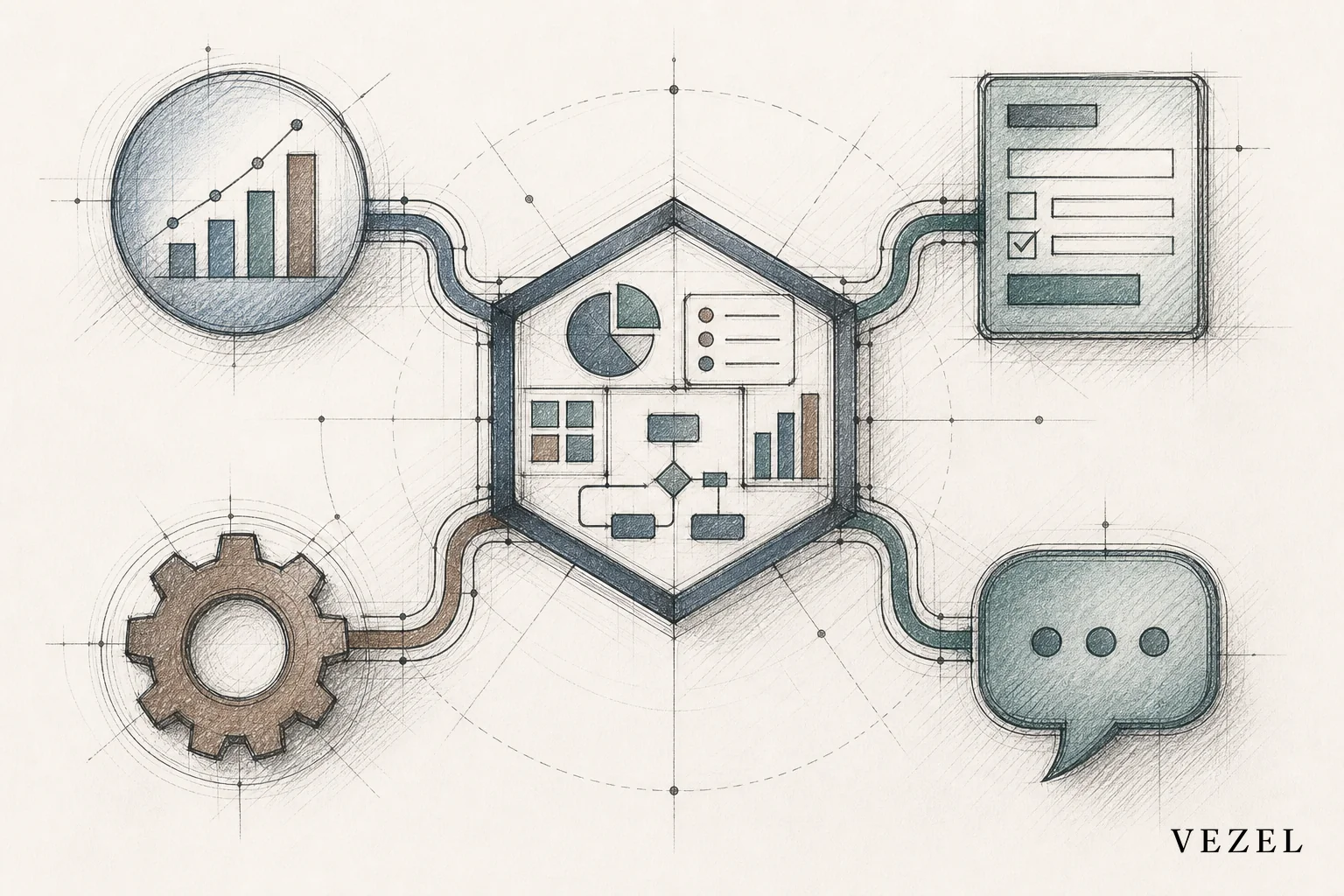
Adaptive SaaS is an architectural approach that lets a software product continuously generate customer-specific dashboards, workflows, reports, and AI agents inside itself, using plain English, without engineering having to build each one by hand. It keeps the shared, scalable core that made SaaS successful, but adds a layer that bends around every customer's unique way of working instead of forcing them to bend around the product.
Key Takeaways
- It's an architecture, not a feature: Adaptive SaaS describes how a product is built to extend itself, not a single tool or dashboard you bolt on.
- AI solved interaction, not adaptation: Copilots and assistants made software easier to talk to, but they still leave every customer on the same fixed set of workflows and screens.
- The Adaptation Gap keeps widening: Vezel's own product teams routinely see SaaS companies lose up to 40% of engineering capacity to one-off enterprise customization requests.
- Extensions inherit the product's DNA: Done right, customer-built dashboards and agents inherit existing authentication, permissions, and design system automatically.
- It changes the roadmap conversation: Instead of every custom request becoming a backlog ticket, it becomes something the customer builds themselves, inside a governed, white-labeled layer of the product.
At a Glance: Adaptive SaaS vs Traditional Approaches
| Approach | Who builds it | Speed | Scales across customers? | Security inheritance |
|---|---|---|---|---|
| Configuration & custom fields | Customer (limited) | Fast | Yes, but shallow | Native |
| Integrations / iPaaS | Customer or partner | Medium | Yes, for data movement only | Depends on integration |
| AI copilots & assistants | Vendor | Instant answers | Yes, but no new capabilities | Native |
| Custom development / professional services | Vendor engineering | Slow (weeks to months) | No, one-off per customer | Manual rebuild each time |
| Standalone internal tool builders (e.g. Retool) | Vendor's dev team | Medium | No, not customer-facing | Must be rebuilt separately |
| Adaptive SaaS (embedded extensibility) | End customer, self-serve | Minutes to hours | Yes, natively | Inherited automatically |
What Is Adaptive SaaS, Exactly?
Picture a product manager at a mid-market vertical SaaS company staring at a backlog with 40 open tickets, half of them requested by a single enterprise account. That's the moment most teams start asking what is adaptive SaaS and whether it's actually different from the configuration tools they already ship.
Adaptive SaaS is the architectural approach that lets software keep adapting to each customer's business, continuously, without every adaptation turning into a new line of code owned by your engineering team. It's not a rebrand of low-code. It's not another AI chatbot bolted onto your app. It's a layer that sits inside your product and lets customers describe, in plain English, the dashboard, workflow, report, or agent they need, then generates it using your product's own data and design system.
The distinction that matters most is between a feature and a capability. A feature is something your product team ships to everyone at once. A capability is something a specific customer creates for themselves, on demand, that lives natively inside the product they already pay for. Traditional SaaS scales by shipping features. Adaptive SaaS scales by enabling capabilities.
This isn't a rejection of the SaaS model. It's the next layer on top of it. The shared core, the multi-tenant architecture, the subscription pricing, the centralized upgrades, none of that goes away. What changes is that the product gains a self-extending edge, one that absorbs the long tail of customer-specific requirements that no roadmap could ever fully anticipate.
Why Traditional SaaS Hits a Wall: The Adaptation Gap
Here's something every SaaS founder eventually learns the hard way: two customers in the exact same industry, using the exact same product, almost never want the exact same thing. Two B2B SaaS companies might both run their pipeline through the same CRM, yet one measures health by conversion rate while the other tracks deal velocity. One organizes territories by geography, the other by industry vertical. Neither is wrong. Neither wants identical software.
Multiply that pattern across every customer segment, and you get what's worth calling the SaaS Adaptation Gap: the growing distance between the software every customer receives and the software each customer actually needs. This gap isn't a sign of bad product design. It's the natural result of building one product for thousands of different businesses.
Businesses have gotten remarkably resourceful about closing that gap themselves. They build spreadsheets. They stitch together BI tools. They hire implementation consultants. They quietly stand up shadow IT tools that live outside your platform entirely, a pattern we break down in how to prevent shadow IT in your SaaS platform. None of these workarounds are failures on the customer's part. They're signals that your product hasn't caught up with how fast their business is evolving.
Meanwhile, the feature request cycle grinds on: a customer asks, product managers weigh demand, engineering estimates cost, the item gets prioritized or shelved. It's a process that's worked for two decades. But as your customer base grows more diverse, the number of legitimately valid, customer-specific requests eventually outpaces what any roadmap can absorb. That's not an engineering problem. It's an economics problem, and it's one we go deeper on in how to reduce SaaS engineering backlog from enterprise requests.
Why AI Assistants and Copilots Didn't Solve This
Ask any product leader whether their platform has AI, and the answer is almost always yes. Natural language search, document summarization, intelligent recommendations, conversational assistants, these have become table stakes across enterprise software in the span of a couple of years. That's a real achievement, and it's made software genuinely easier to use.
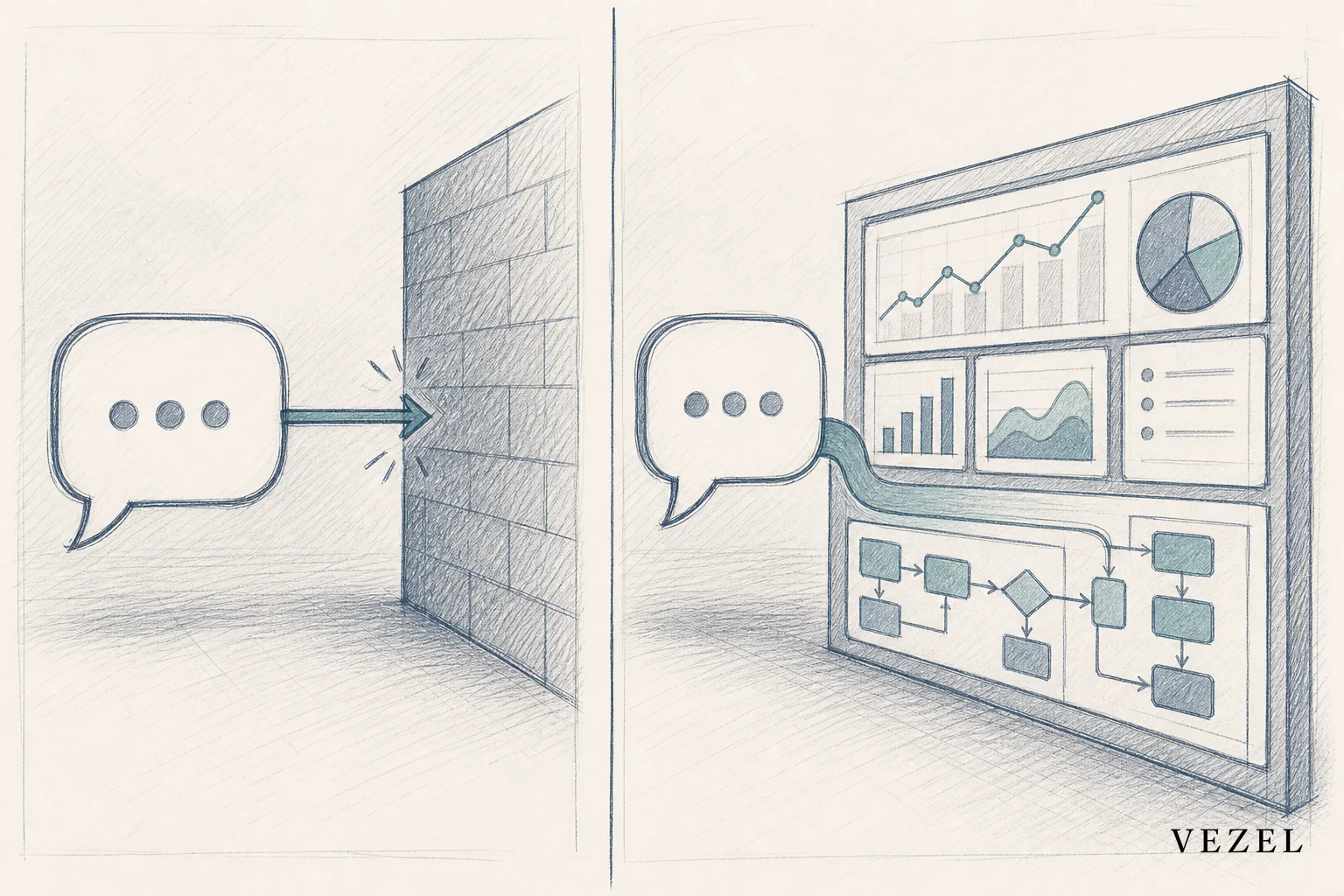
But easier to use isn't the same as more adaptable. An AI assistant that flags overdue opportunities for a sales manager is still working inside the same fixed sales review workflow every other customer gets. A chatbot that summarizes support tickets doesn't build the customer-specific insights dashboard a support director's team checks every morning. These tools improve interaction with the product you already built. They don't change what the product is capable of doing for that specific business.
This is the quiet distinction most SaaS companies miss: customers rarely want a one-time answer. They want a repeatable capability that becomes part of how their team operates every day. A finance team doesn't want to ask "what's our accrual variance" once, they want that number sitting on a dashboard every Monday morning, built around their chart of accounts, visible only to the people who should see it. Copilots answer questions. Adaptive SaaS builds the thing that keeps answering them automatically, indefinitely, without another support ticket.
Adaptive SaaS vs Configuration vs Custom Development
It helps to see these approaches side by side, since most SaaS companies are already running two or three of them at once without a clear strategy connecting them.
| Method | Best for | Main limitation | Typical cost per request |
|---|---|---|---|
| Custom fields & settings | Small tweaks to existing behavior | Cannot create new capabilities | Low, but limited value |
| Integrations / iPaaS | Moving data between systems | Doesn't build new UI or logic | Medium, ongoing maintenance |
| Professional services / custom dev | Deep, bespoke enterprise requirements | Slow, expensive, hard to maintain long-term | High, often $15k-$100k+ per build |
| Standalone no-code builders (Retool, Glide, Mendix) | Internal tools, prototypes | Not customer-facing, no native security inheritance | Medium, plus dev overhead |
| Embedded AI extensibility (Adaptive SaaS) | Customer-facing dashboards, workflows, agents at scale | Requires a purpose-built platform to embed | Low marginal cost per customer |
We've written a full cost breakdown in extensibility platform vs custom dev: what's cheaper, and a head-to-head look at standalone builders in Retool vs embedded extensibility for SaaS products and Glide vs embedded extensibility, if you're actively comparing vendors.
How Adaptive SaaS Works in Practice
Strip away the theory and Adaptive SaaS comes down to a few concrete mechanics working together inside your existing product.
- 🧩 Natural language generation: A customer describes what they want, "build a supplier scorecard grouped by region" or "create an approval flow for new hire credentialing", and the extension is generated from that description, not a blank canvas.
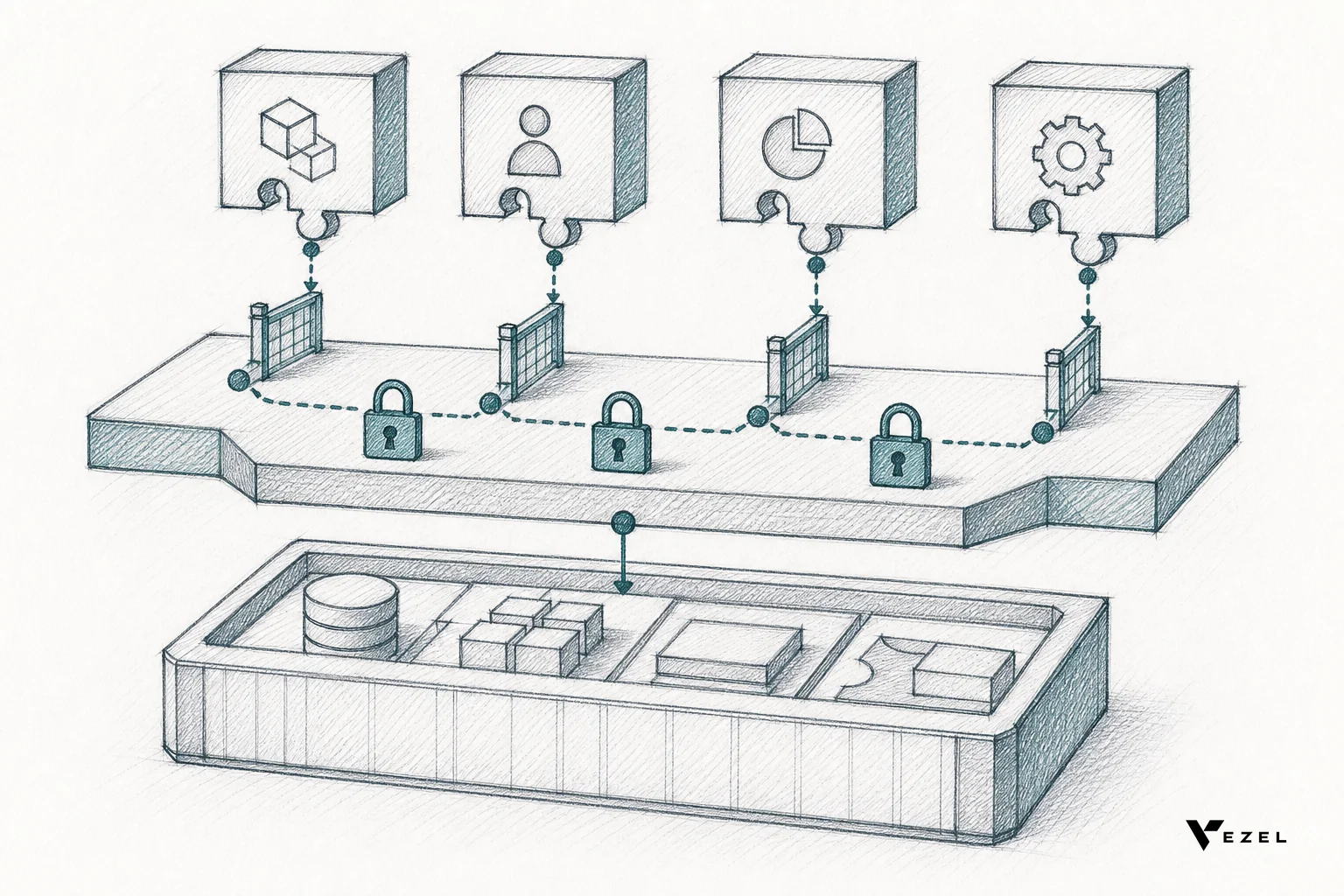
- 🔌 API auto-discovery: The platform maps to your product's existing APIs and data models automatically, usually via OpenAPI, so extensions pull live data instead of stale exports.
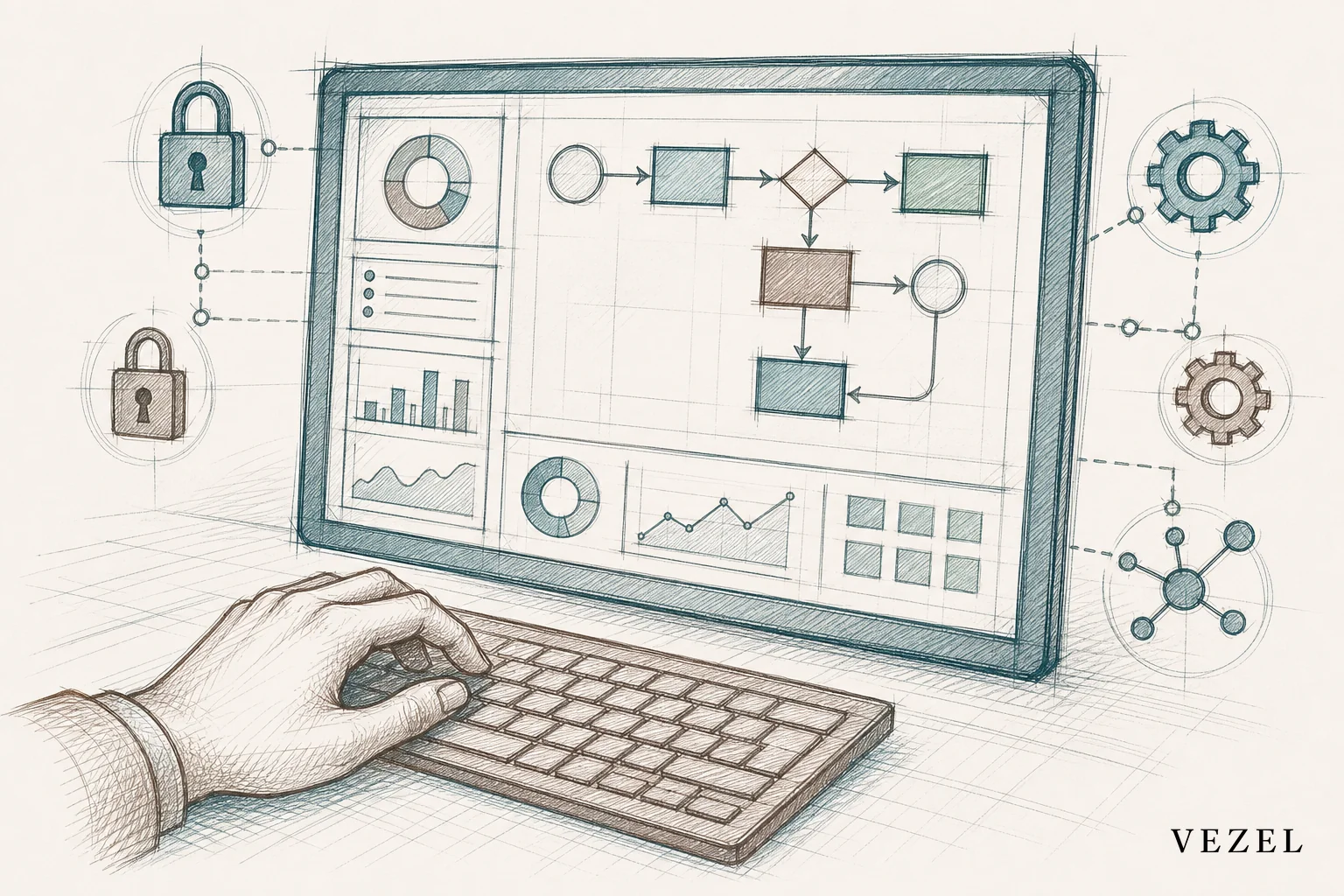
- 🔒 Security inheritance: Generated dashboards, workflows, and agents inherit your product's existing authentication, role-based access control, and row-level permissions. Nobody rebuilds a permission model from scratch.
- 🎨 White-labeled theming: Extensions match your product's existing design system, so they feel like a native part of the platform, not a bolted-on third-party tool.
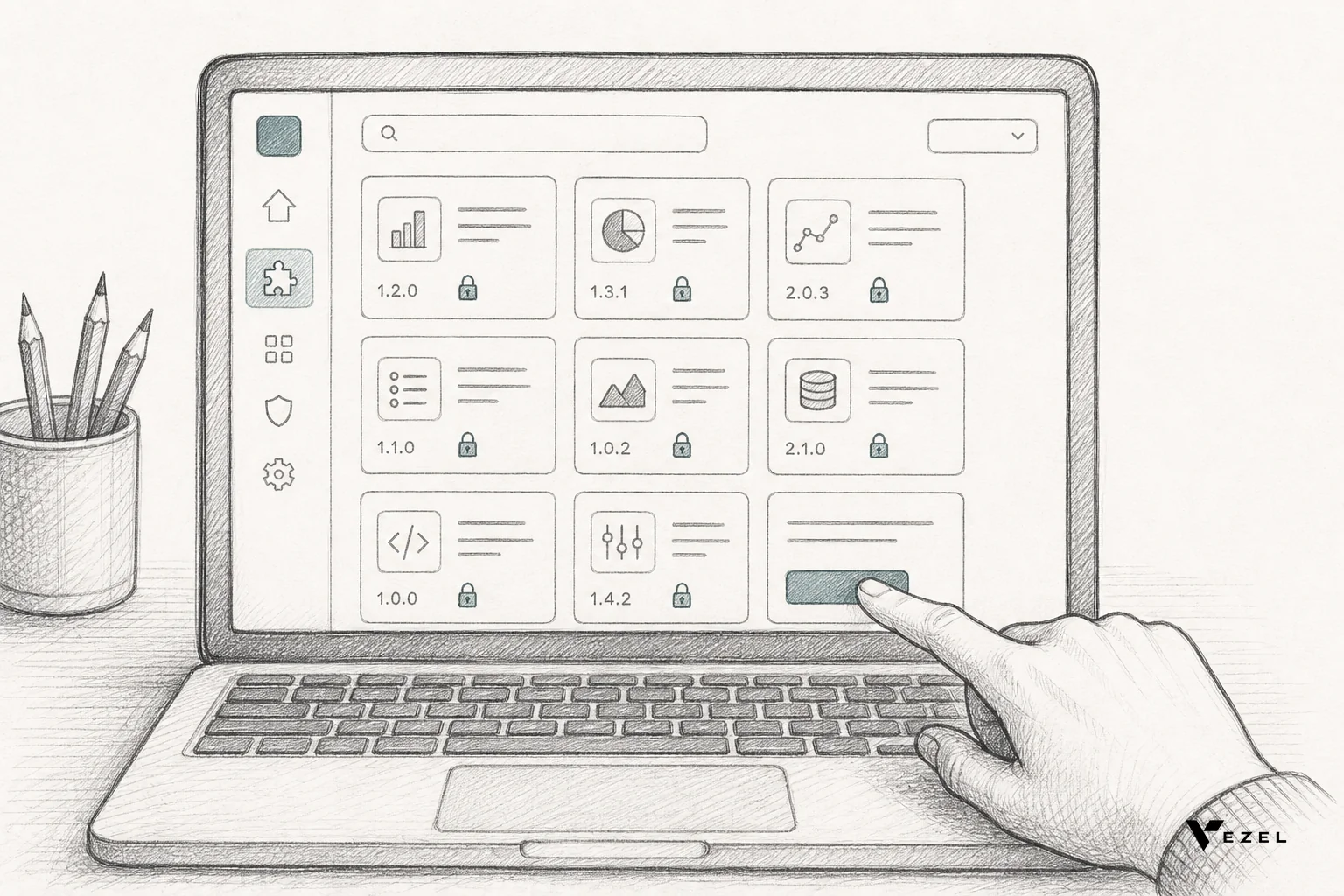
- 📦 A governed marketplace: Extensions get published, versioned, and discovered inside your product, giving you a control plane instead of an unmanaged pile of one-off builds.
This is exactly the model Vezel was built around: an embeddable, white-labeled AI extension layer that lets end customers create dashboards, workflows, reports, forms, and AI agents inside the SaaS products they already use, using plain English instead of a developer. If you want to see the mechanics behind specific pieces of this, we cover dashboards in how to build custom dashboards inside your SaaS, workflows in how to embed a workflow builder in your SaaS, and agents in how to deploy AI agents inside your SaaS platform.
What This Means for Product and Engineering Leaders
If you lead product or engineering at a B2B SaaS company, the appeal here isn't philosophical. It's operational. When customers can self-serve the dashboard, workflow, or report they need, your team stops absorbing every one-off request as a backlog ticket. Engineering gets to spend its time building the platform layer instead of repeatedly implementing customer-specific functionality, a shift we detail in how to stop enterprise deals from bloating your roadmap.
Sales and customer success feel this too. Enterprise deals often stall waiting on a custom workflow demo. When a sales engineer can show a prospect their own approval hierarchy or dispatch dashboard built live in a call, deals move faster instead of sitting in limbo, a pattern explored in how to shorten your enterprise SaaS sales cycle. And on the retention side, missing workflows are a quiet but real churn driver, something we unpack in is missing workflows causing your SaaS churn.
There's also a governance upside that's easy to underestimate. When customers don't have a sanctioned way to build the tool they need, they build it anyway, in a spreadsheet, in Retool, in a shadow database nobody on your team can see. An embedded, governed extensibility layer keeps that work inside your product, inside your permission model, instead of scattered across unmanaged tools your security team will eventually have to explain in an audit.
Is Adaptive SaaS Right for Your Product?
A few signals suggest your product is a strong candidate for this shift. If your team has heard variations of "we need a custom dashboard before we sign," if your backlog has a growing pile of tickets that only benefit one customer, or if your CS team has quietly discovered customers running their own spreadsheets and BI exports to compensate for gaps in the product, you're already living the Adaptation Gap described earlier in this piece.
When evaluating any embedded extensibility platform, whether that's Vezel or an alternative, it's worth asking a short list of questions:
- Does it generate customer-facing extensions, or only internal tools for your own team?
- Does it inherit your existing authentication and permissions automatically, or require you to rebuild access rules for every extension?
- Can non-technical end customers actually use it, or does it still require a developer on their side?
- Does it feel native to your product, white-labeled and on-brand, or does it look like a third-party plug-in?
- Is there a governance layer for publishing, versioning, and managing what gets built?
We've laid out a fuller evaluation framework in how to choose an embedded extensibility platform, which is worth a read before you sit through another vendor demo.
Frequently Asked Questions
Is Adaptive SaaS the same as low-code?
No. Low-code platforms like Mendix still typically require a developer to assemble an application. Adaptive SaaS is built around plain-English generation for non-technical end users, embedded directly inside the product they already use, not a separate app builder. See Mendix vs embedded extensibility for a closer comparison.
Does Adaptive SaaS replace my product roadmap?
No, and it isn't meant to. Core product decisions, the features that belong to everyone, still belong on your roadmap. Adaptive SaaS absorbs the long tail of one-off, customer-specific requests that were never going to scale as roadmap items in the first place.
Is it secure to let customers build their own dashboards and agents?
When extensions inherit your existing authentication, RBAC, and row-level permissions rather than requiring a rebuilt access model, the security posture stays consistent with the rest of your product. That inheritance is a core design requirement, not an afterthought.
Who actually builds the extensions, customers or my team?
End customers, typically business users like ops managers, finance leads, or CS admins, describe what they need in plain English. No developer, on your side or theirs, has to write custom code for each request.
Adaptive SaaS isn't a rebrand of features you already ship. It's a recognition that every business is different, that AI raised expectations faster than most product architectures could keep up, and that the SaaS companies who close the Adaptation Gap first will be the ones who win the renewal conversations, not just the demo. If your engineering team is buried in one-off requests, or your sales team keeps losing deals to "can it do this specific thing," it's worth seeing what an embedded extension layer actually looks like inside your own product. Book a demo to walk through it with your own data, see how it works end to end, or talk to an expert about where Adaptive SaaS fits into your roadmap this year.