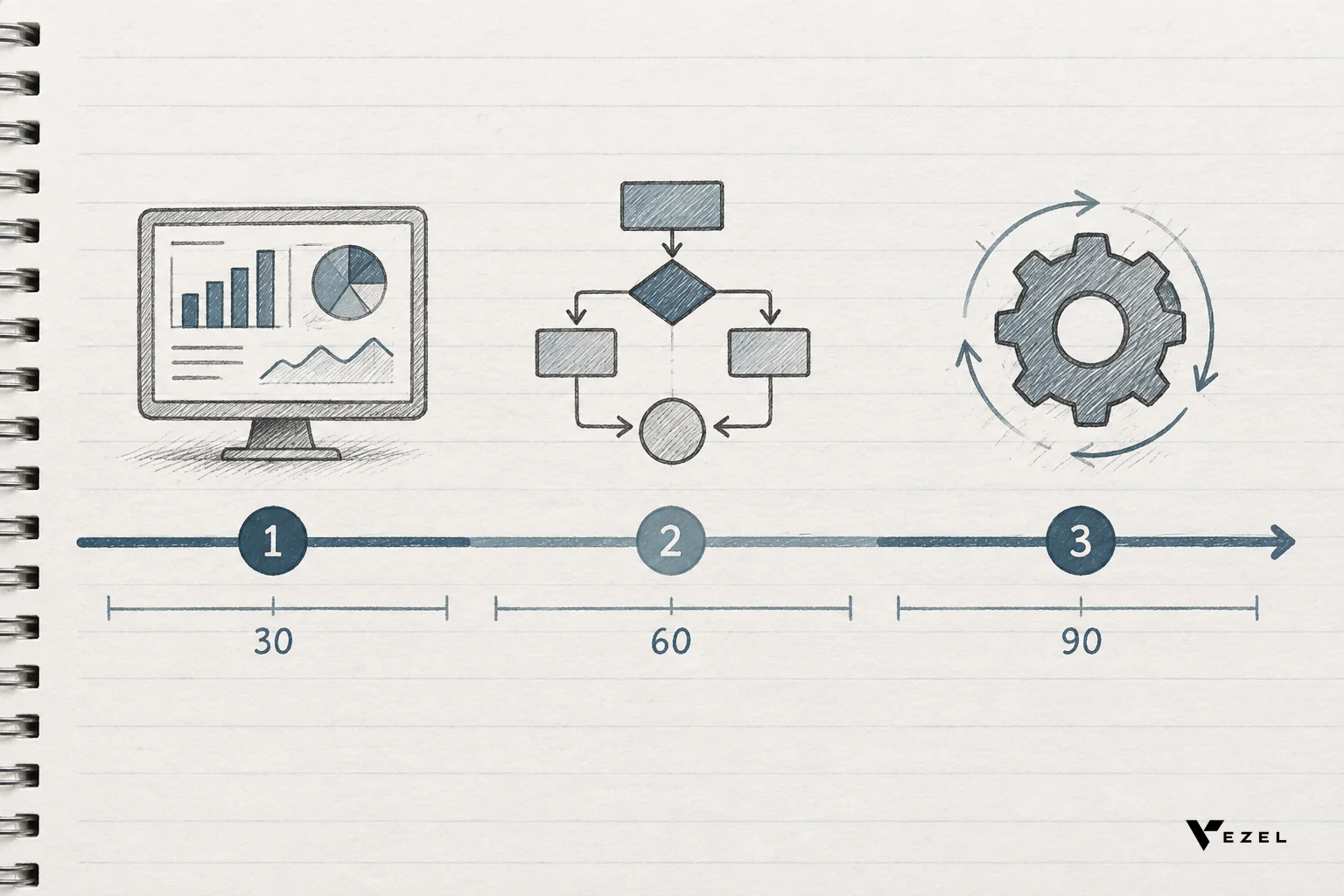



Custom reporting for real estate SaaS platforms means letting each landlord, broker, or asset manager build their own occupancy views, NOI rollups, and maintenance-turnaround reports in plain English, directly inside the property management platform they already log into. The report connects to live data and respects that customer's own permissions, so no engineering ticket is required.
Key Takeaways
- Every real estate role tracks something different: landlords watch occupancy, brokers watch pipeline, asset managers watch NOI, and compliance teams watch lease expirations.
- One-off reporting tickets pile up fast: product teams report spending up to 40% of engineering capacity on bespoke customer requests.
- Plain English replaces the backlog: embedded AI extensions let customers describe the report they want and generate it themselves.
- Permissions travel with the report: a broker never sees another portfolio's numbers because the extension inherits the host platform's existing RBAC.
- Engineering gets its roadmap back: reporting requests stop competing with core product work.
At a Glance: Custom Reporting Options Compared
| Approach | Speed to Deliver | Engineering Cost | Security Model | Long-Term Maintenance |
|---|---|---|---|---|
| Manual engineering build | Weeks to months | High, per request | Custom, rebuilt each time | Grows with every customer |
| Spreadsheet / BI export | Days | Low, but recurring manual work | Often outside platform controls | Breaks when source data changes |
| Standalone internal tool builder | Days to weeks | Moderate, needs developer | Permissions rebuilt separately | Requires ongoing dev ownership |
| Embedded AI extension layer | Minutes | Low, self-serve by customer | Inherits existing RBAC natively | Governed and versioned in-product |
Why Every Real Estate Customer Wants a Different Report
A landlord managing three apartment buildings cares about one thing above all else: occupancy. A broker running deals across a commercial portfolio cares about pipeline velocity and commission splits. Neither wants the other's dashboard.
Asset managers roll up net operating income across dozens of properties, often blending data from multiple sub-systems. Property managers live inside maintenance turnaround times and vendor SLAs, because a slow work order becomes a bad tenant review. Compliance teams track something else entirely: lease expirations, tenant screening records, and fair-housing documentation.
Every one of these roles uses the same underlying platform. None of them wants the same report. That's not a product failure; it's simply what happens when a single piece of software serves an entire industry with wildly different job functions inside it.
The Reporting Ticket Problem in Property Management Software
Here's how the pattern usually plays out. A landlord asks for an occupancy-by-building breakdown. Support escalates it. Product reviews it. Engineering estimates it. Three months later, the landlord gets a report, and the broker down the hall asks for something completely different.
Multiply that across hundreds of enterprise accounts and the backlog stops being manageable. Customers don't wait around. They export data into spreadsheets, wire up a BI tool, or build their own workaround outside the platform entirely.
This is the engineering backlog problem that most vertical SaaS platforms eventually run into. Requests keep growing. The roadmap doesn't stretch to match them.
How Do Healthtech Platforms Build Permissioned Reporting for Customers?
Healthtech platforms build permissioned reporting the same way real estate platforms should: by generating each report through the requesting user's own role and row-level access, instead of a shared admin view. The report engine maps to existing data models through API auto-discovery, so a hospital's compliance team sees only its own records, just as a landlord sees only their own buildings.
Both industries handle sensitive, siloed information. A hospital protects patient records; a property management platform protects lease terms, tenant screening results, and financial data across dozens of independent owners. The architecture pattern is identical even though the data looks nothing alike. You can see this pattern applied to another vertical in how healthcare SaaS platforms can offer extensibility.
How Embedded AI Extensions Generate Real Estate Reports in Plain English
A customer types a plain-English request: "Show me occupancy by building for the last twelve months, broken out by unit type." That request maps against the platform's existing property, lease, and unit data through API auto-discovery, no new database and no separate integration project required.
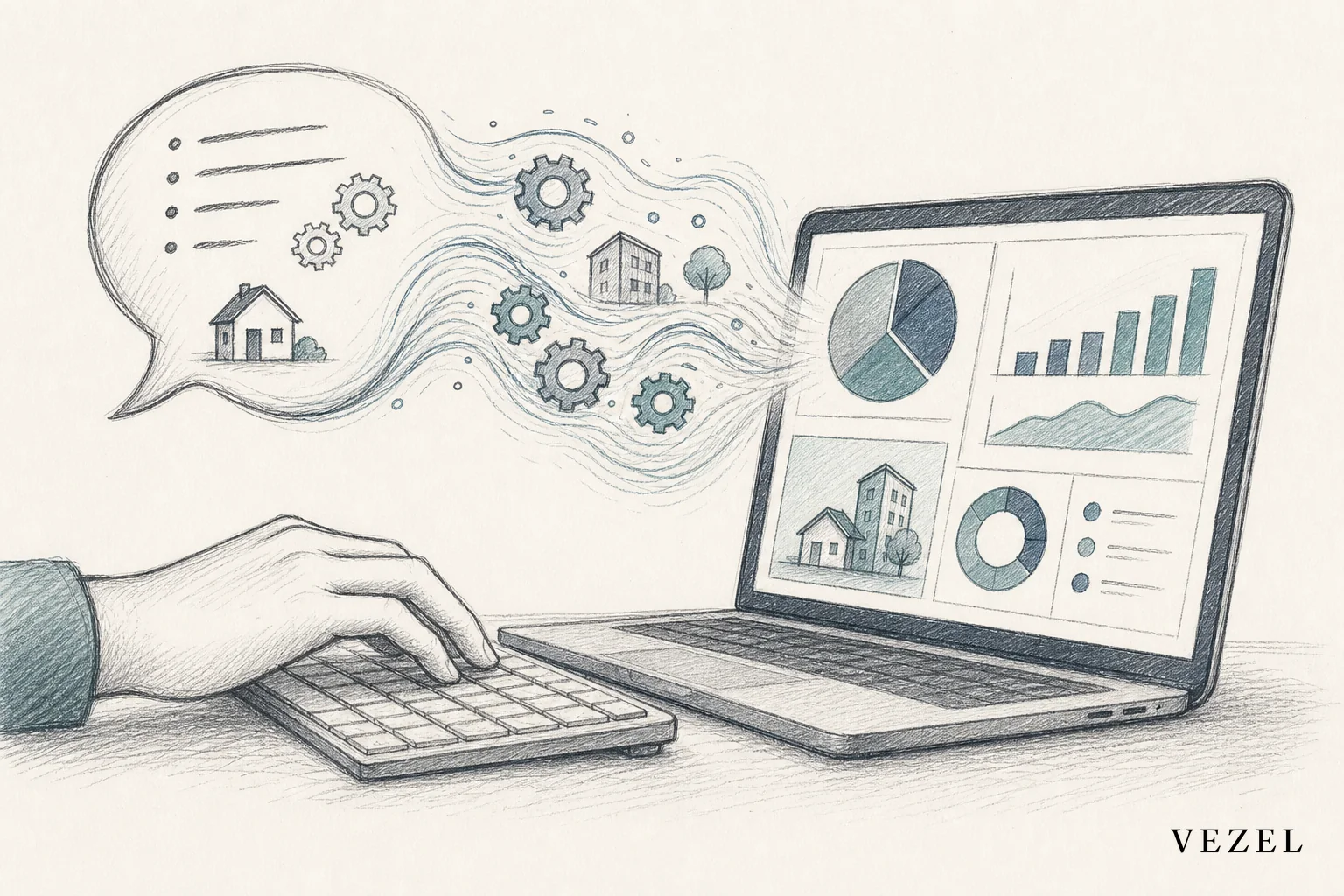
The report that gets generated is live. It pulls from the same production data every time the customer opens it, not a static export that goes stale the day it's created. It's also white-labeled, so it looks and feels like it was built by the platform's own product team, not bolted on.
Security travels with the report automatically. Because the extension inherits the host platform's authentication and role-based access controls, an asset manager working across twelve properties sees a full portfolio rollup, while a single-building landlord only ever sees their own building. Nobody had to rebuild that logic separately.
This is the same engine used to generate live dashboards, covered in depth in How to Build Custom Dashboards Inside Your SaaS. Reports and dashboards share the same underlying extension architecture; only the presentation differs.
Case Example: A Property Management Platform Cuts Its Reporting Backlog
Picture a mid-market property management platform serving landlords, asset managers, and compliance teams across a few thousand units. Three requests land in the same week: an occupancy-by-building view, an NOI rollup across a twelve-property portfolio, and a lease-expiration tracker for the compliance team.
Under the old model, that's three tickets, three backlog items, and three separate conversations about priority. Product teams report losing up to 40% of engineering capacity to exactly this kind of one-off work.
With an embedded extension layer, each customer builds their own version directly inside the product. The landlord gets their occupancy view in minutes. The asset manager rolls up NOI without waiting on a data export. Compliance builds a lease-expiration report without touching engineering at all. None of it required a sprint, a ticket, or a status update.
Where Custom Dashboards Fit Alongside Custom Reports
Reports answer a specific question at a point in time: what was occupancy last quarter, what's the commission split on closed deals this month. Dashboards do something different. They monitor a metric continuously, refreshing as new data comes in.
A landlord might run a one-time report to check occupancy trends before a refinancing conversation, then keep a live dashboard open every morning to watch maintenance turnaround. Both use cases matter, and both run on the same extension engine. For the architectural detail on how the dashboard side works, read How to Build Custom Dashboards Inside Your SaaS.
How to Prevent Shadow IT From Reporting Gaps
You prevent shadow IT by giving customers a governed, in-product way to build their own reports, so they never need to reach for an external spreadsheet or unauthorized BI connection. When the option inside the platform is faster than the workaround outside it, customers stop building workarounds.
A governed marketplace tracks who published which report and what data access it uses. Without that layer, customers end up exporting sensitive lease and financial data into tools nobody on the security team ever approved. For a deeper look at closing that gap, see How to Prevent Shadow IT in Your SaaS Platform.
What This Means for Product and Engineering Leaders
Freeing engineering from one-off reporting requests changes more than the backlog. It changes how fast an enterprise deal can close, because a sales team can demo custom reporting live during the sales cycle instead of promising it on a future roadmap.

It also changes retention. Every unmet reporting request is a reason a customer might churn to a competitor who says yes faster. According to the U.S. Census Bureau's Rental Housing Finance Survey, property owners increasingly rely on software for financial reporting, which raises the stakes on getting reporting right the first time.
Product leaders looking to reduce this pressure across their whole platform, not just reporting, can start with How to Give SaaS Customers Self-Serve Customization. Self-serve reporting is usually the first extension a vertical SaaS company ships, and it tends to be the one with the fastest payback.
Frequently Asked Questions
Is embedded AI reporting secure for multi-tenant real estate data?
Yes, because the report executes under the requesting user's own login and permission set rather than a shared service account. A tenant in one portfolio never has a query path into another portfolio's financials, since the extension inherits row-level access straight from the host platform's existing authentication.
Does this replace our existing BI tool?
Not necessarily. A BI tool is still useful for deep, cross-system analysis by internal analysts. Embedded reporting is built for the end customer, the landlord or broker who needs a live answer inside the product they already use, without exporting data anywhere.
How long does it take to set up custom reporting this way?
Because API auto-discovery maps directly to a platform's existing data model, setup typically takes days rather than the months a custom-built reporting module would need. The remaining variable is your team's own review and rollout process, not the underlying integration work. According to National Association of Realtors research, reporting speed increasingly factors into how property owners select management software, which puts pressure on vendors to shorten this timeline.
Real estate SaaS platforms don't need a bigger engineering team to solve their reporting problem. They need a way to let landlords, brokers, and asset managers build their own answers, safely, inside the product they already trust. Book a demo to see how an embedded AI extension layer turns reporting requests into a self-serve capability instead of a backlog item, or see how it works before you talk to your team. If you'd rather walk through your specific reporting bottlenecks first, talk to an expert about your platform's roadmap.