

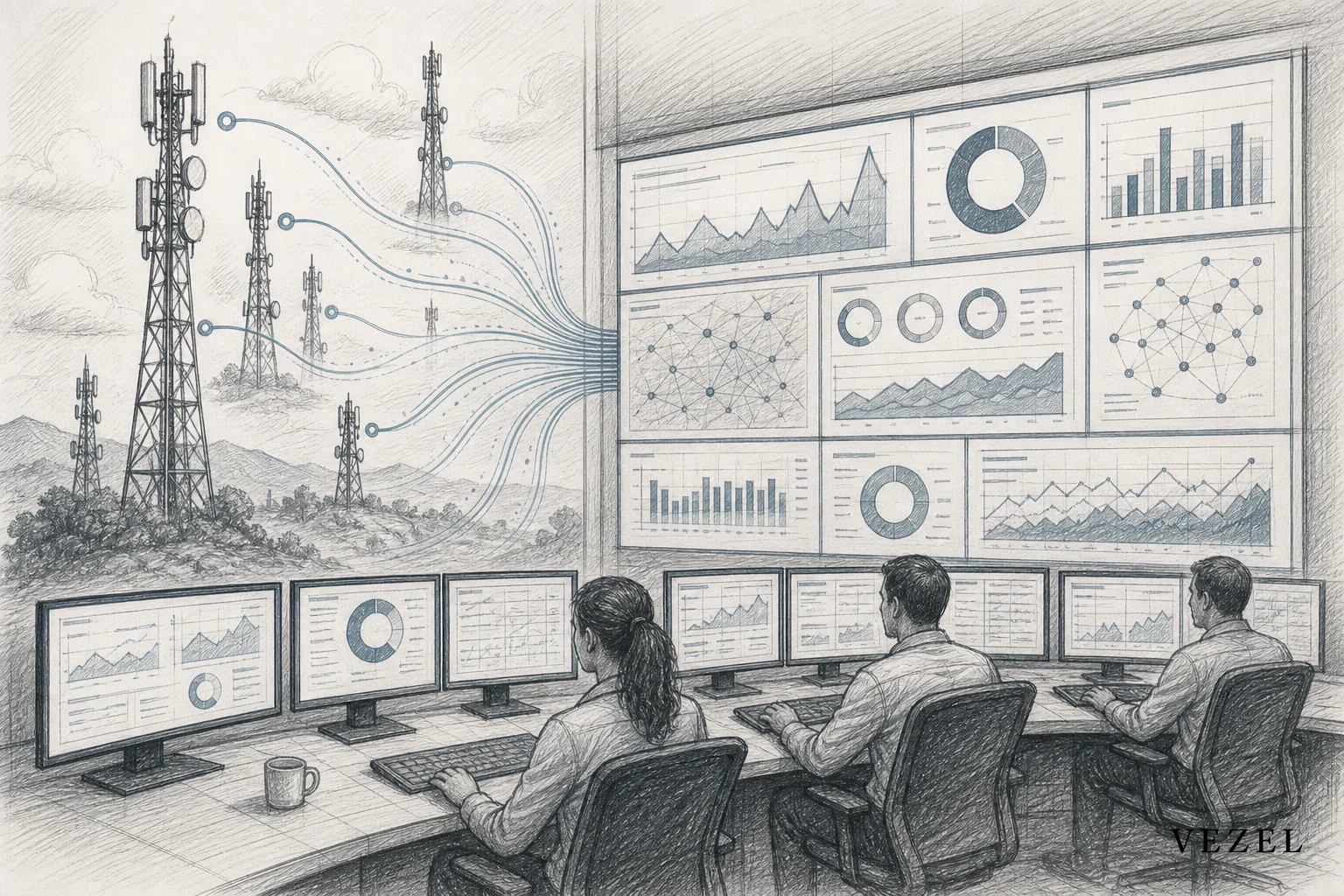
Custom reporting for telecom SaaS platforms means letting each carrier, MVNO, or enterprise IT customer build its own SLA uptime views, usage-and-billing breakdowns, and compliance reports in plain English, directly inside the network operations or billing platform they already log into. The report connects to live CDR, network monitoring, or billing data, and it respects each customer's existing permissions instead of requiring a new engineering ticket.
Key Takeaways
- Three customer types, three different reports: carriers track SLA uptime by region, MVNOs track usage and billing tiers, enterprise IT tracks compliance and audit trails, and one shared dashboard rarely satisfies all three.
- Engineering backlog is the real cost: telecom SaaS vendors often lose a third or more of engineering capacity to one-off reporting requests tied to CDR exports, SLA dashboards, and regulatory formats.
- API auto-discovery removes the integration step: mapping a new report to existing CDR, billing, and network-monitoring APIs no longer requires a developer to write custom queries.
- Permission inheritance is non-negotiable in telecom: CPNI rules and regional telecom regulations mean every generated report must respect the same row-level access controls as the core platform.
- Self-serve reporting shortens enterprise sales cycles: prospects who ask for a custom SLA dashboard during procurement can see one built in minutes instead of waiting on a roadmap commitment.
At a Glance: Telecom Reporting Needs by Customer Type
| Customer Type | Primary Metric | Data Source | Compliance Concern | Report Frequency |
|---|---|---|---|---|
| Tier 1/2 Carrier | SLA uptime by region | Network monitoring APIs | Regional telecom authority SLAs | Daily/weekly |
| MVNO | Usage and billing tiers | CDR and billing systems | Carrier wholesale agreements | Monthly |
| Enterprise IT (B2B lines) | Cost-center allocation | Billing and usage APIs | Internal chargeback audits | Monthly/quarterly |
| Enterprise IT (compliance) | Data access audit trail | Platform activity logs | CPNI, GDPR, regional privacy law | Ongoing/on-demand |
| Wholesale carrier partner | Interconnect volume | Network and billing APIs | Interconnect agreement terms | Weekly |
Why Telecom SaaS Customers All Want Different Reports
A carrier operations team lives and dies by SLA uptime, broken down by tower, region, and time window. An MVNO reselling that carrier's network cares about something else entirely: usage tiers, overage charges, and billing reconciliation against its wholesale agreement. An enterprise IT buyer managing thousands of corporate lines wants a cost-center allocation report that maps usage back to departments, plus an audit trail that satisfies internal compliance.
These aren't feature requests you can batch into one dashboard. Each contract has its own SLA terms, its own regulatory region, its own usage tiers, and its own idea of what "healthy" looks like. A telecom SaaS platform built for all three ends up shipping a lowest-common-denominator report, then fielding customization requests from every account that doesn't fit the mold.
That mismatch is exactly the vertical SaaS extensibility retention problem playing out in telecom: the more specialized the customer base, the wider the gap between shared product and actual need.
What Happens When Engineering Owns Every Report Request
Most telecom SaaS teams handle this the same way: a customer success manager files a ticket, an engineer writes a one-off SQL query against the CDR warehouse, and the result gets exported to a spreadsheet or bolted onto a BI tool. It works, once. Then the next carrier asks for a slightly different breakdown, and the cycle repeats.
Left unmanaged, this pattern eats a large share of engineering capacity on work that never becomes reusable product. Enterprise sales cycles slow down too, because a prospect asking for a custom SLA dashboard during procurement often has to wait weeks for a proof of concept that should take minutes. That's the same bottleneck covered in how to reduce SaaS engineering backlog from enterprise requests, and telecom feels it harder than most verticals because of how fragmented SLA and billing formats already are.
How Does API Auto-Discovery Solve Telecom's Custom Reporting Problem?
API auto-discovery solves telecom's custom reporting problem by scanning your existing CDR, billing, and network-monitoring endpoints, mapping their fields automatically, and letting customers describe the report they want in plain English instead of engineering writing a new query. The dashboard then reads live data through the requesting user's own permissions.
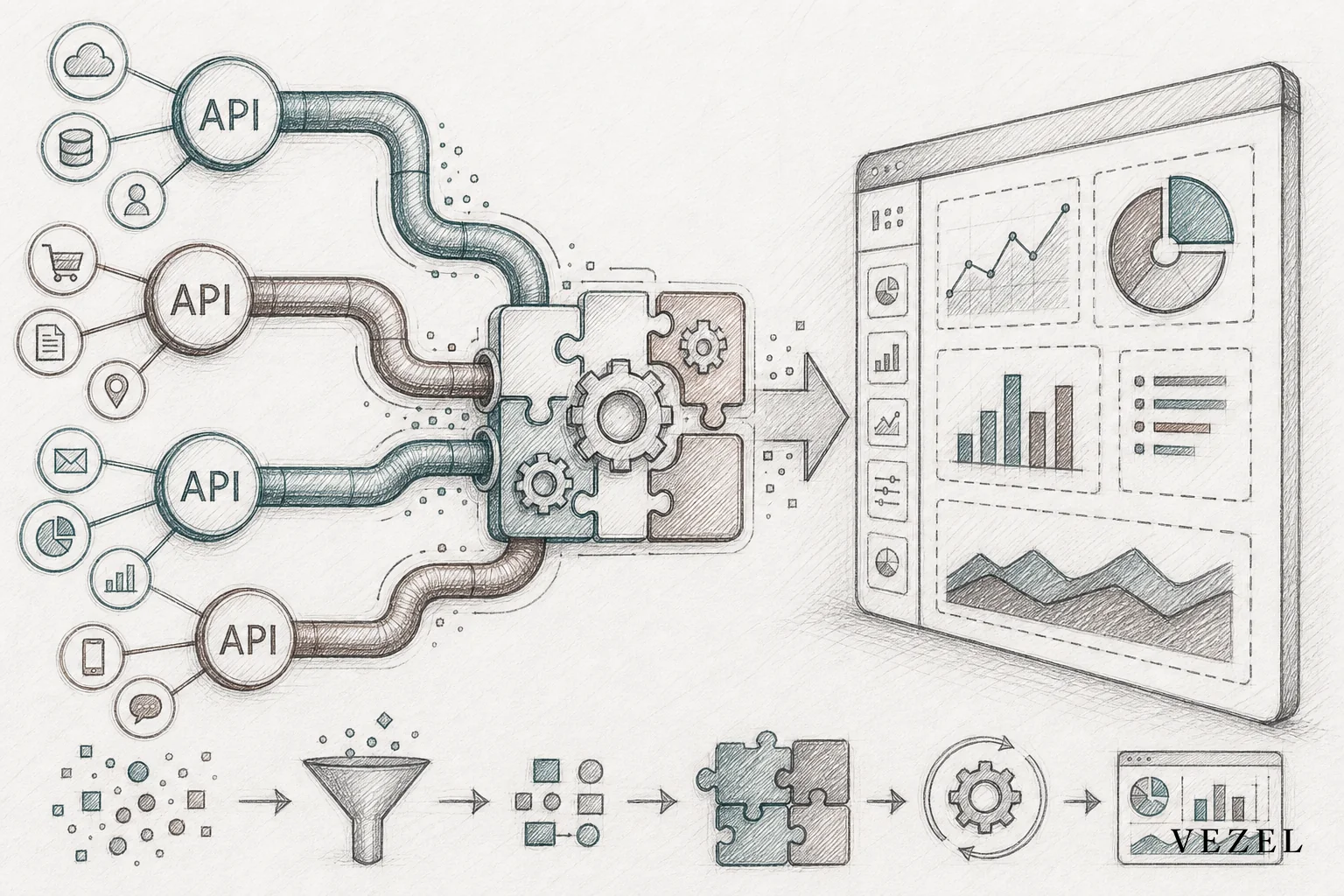
This matters in telecom specifically because the underlying data is messy. CDR schemas vary by network generation, billing systems often predate the current product, and network monitoring APIs may only expose partial OpenAPI specs. Vezel's discovery layer infers schema from live response data where documentation falls short, so a carrier's uptime report and an MVNO's usage report can both be generated against the same underlying platform without a developer touching either one.
Once a report is built this way, it isn't a one-time export. It's a persistent dashboard, refreshed against live data, that the customer can revisit daily without filing another ticket. That's the same shift covered in how to connect SaaS to customer workflows without code: turning a support ticket into a self-serve capability.
Building Live, White-Labeled Dashboards in Plain English
Picture three customers on the same telecom platform. A Tier 2 carrier types a request for an SLA uptime view broken out by region and tower cluster, refreshed hourly. An MVNO asks for a usage-and-billing scorecard that flags subscribers approaching overage thresholds. An enterprise IT buyer wants a cost-center report that ties phone line usage back to internal department codes, plus a running audit log of who accessed what.
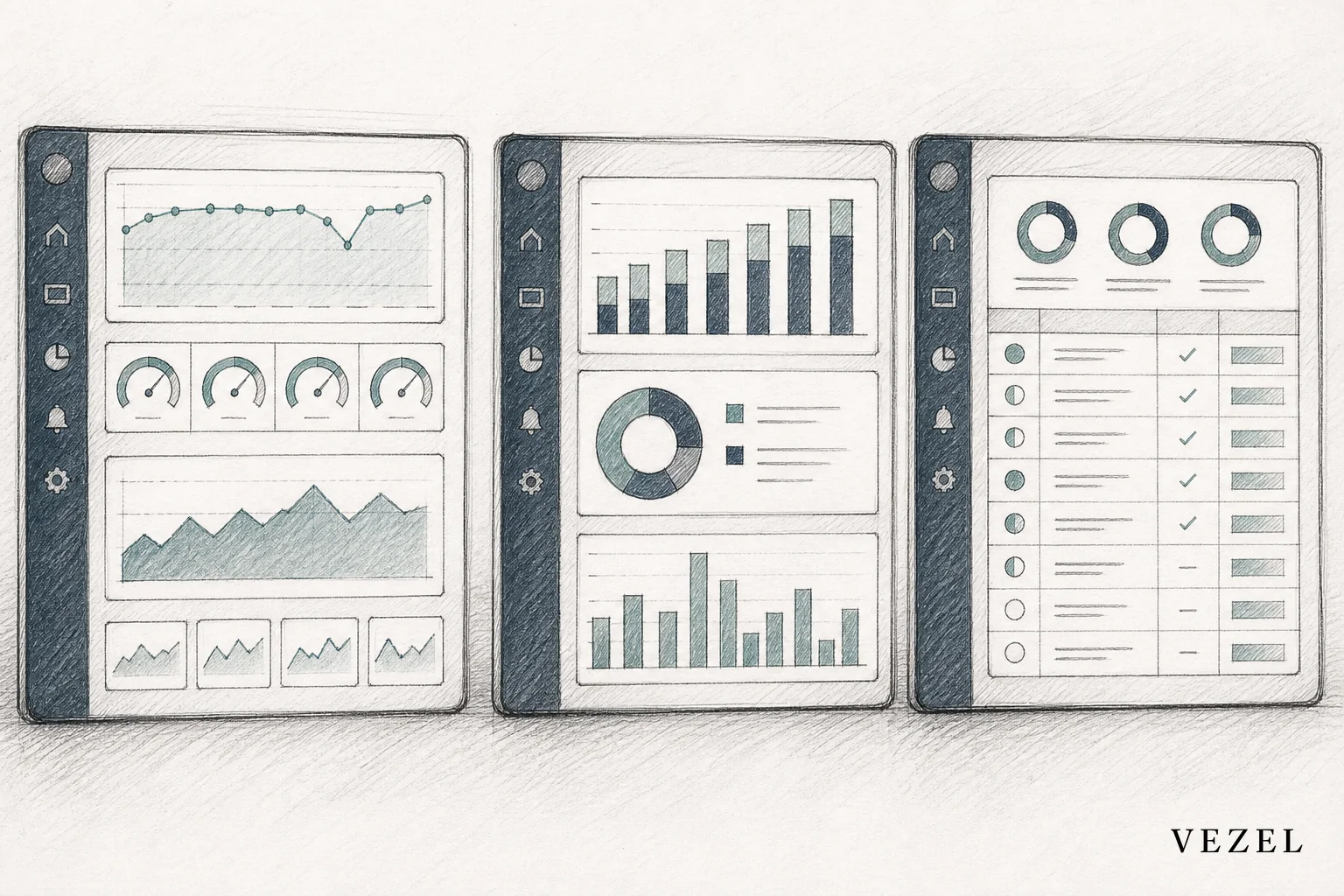
All three get generated from the same underlying platform, in the customer's own language, styled to match the host product's design system rather than looking like a bolted-on third-party tool. None of it requires a new database, a separate login, or a parallel data pipeline. The dashboards read live data and stay in sync automatically.
- 🔹 Carrier SLA dashboards segmented by region, tower, and time window
- 🔹 MVNO usage and billing scorecards with overage alerts
- 🔹 Enterprise IT cost-center allocation and compliance audit trails
- 🔹 Wholesale interconnect volume reports for carrier partners
Teams building this kind of capability internally often start by reviewing how to build custom dashboards inside your SaaS for the underlying architecture, then extend it into telecom-specific data sources.
Security and Compliance: Why Permission Inheritance Matters in Telecom
Permission inheritance matters in telecom because CPNI rules and regional telecom regulators restrict who can see subscriber-level usage and location data. A generated report that bypasses existing row-level access controls creates compliance exposure, even if the dashboard itself looks correct.
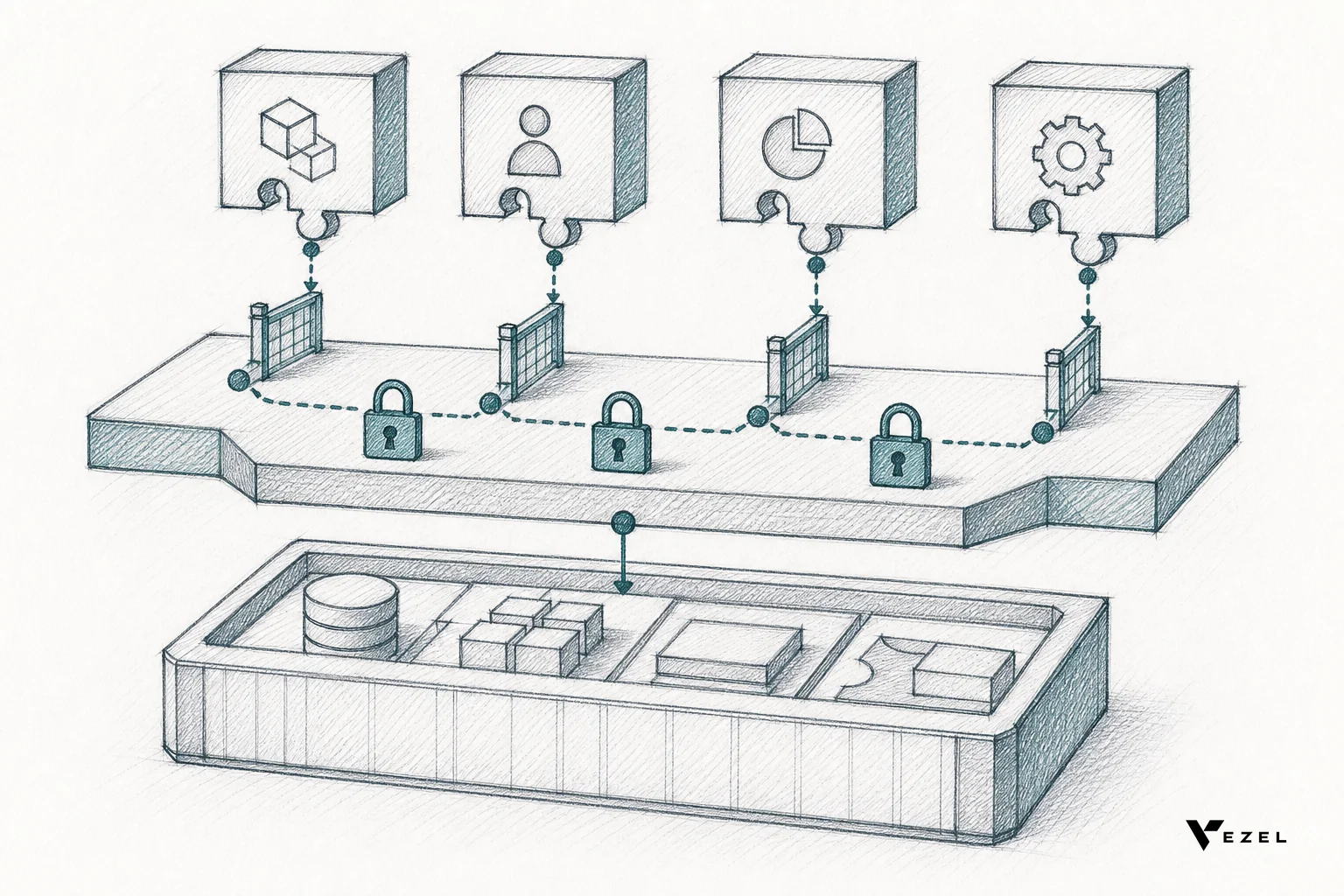
Every extension needs to inherit the host platform's authentication and RBAC rather than introducing a separate access layer. A wholesale carrier partner viewing an interconnect report should never see another carrier's subscriber data, and an enterprise IT admin building a cost-center report should only see the departments their role already permits. This is the same principle explored in how to prevent shadow IT in your SaaS platform: give customers a governed way to build what they need, so they stop exporting sensitive CDR data into unmanaged spreadsheets.
What This Means for Product and Engineering Teams
Fewer one-off reporting tickets means engineering capacity goes back into the core network monitoring or billing product instead of custom SQL work for a single carrier. Enterprise sales teams get a faster answer when a prospect asks for a custom SLA view during procurement, because the answer becomes "build it now" instead of "add it to the roadmap."
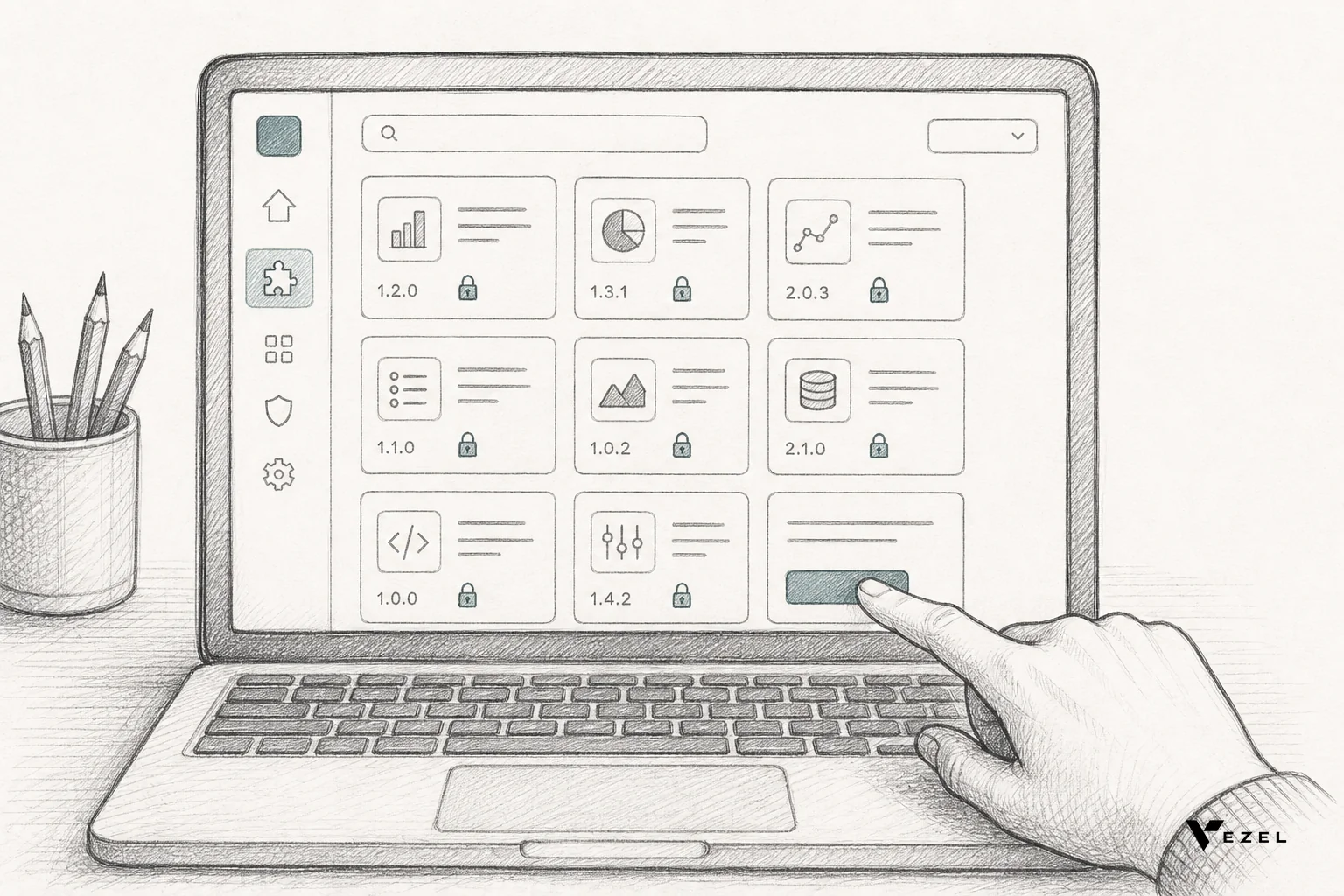
Reports customers build can also be published into a governed marketplace inside the platform, so a compliance dashboard one enterprise IT admin builds can be reused by a peer team without recreating it from scratch. That reduces the maintenance burden that comes with bespoke, single-customer builds and keeps the core telecom product focused on what it does best.
Frequently Asked Questions
Can telecom SaaS platforms let customers build their own SLA reports without engineering?
Yes. Once a platform connects a natural-language report builder to its existing CDR and network monitoring APIs through auto-discovery, a carrier or MVNO can describe the SLA report it wants and get a live dashboard without an engineering ticket.
How is this different from a generic BI tool like Looker or Power BI?
Generic BI tools require a separate login, a data export or warehouse connection, and often a dedicated analyst to build and maintain reports. An embedded reporting layer stays inside the telecom platform itself, inherits the customer's existing permissions automatically, and matches the product's own branding rather than looking like a third-party add-on.
For the broader framework behind this approach across other verticals, see the buyer's guide to choosing an embedded extensibility platform. If your telecom platform is still routing every custom SLA or billing report through engineering, it's worth seeing what this looks like connected to your own APIs. Book a demo to walk through how auto-discovery maps to your CDR and billing systems, or see how it works before bringing in your team. If you'd rather talk through a specific carrier or MVNO use case first, talk to an expert about your platform's data model.