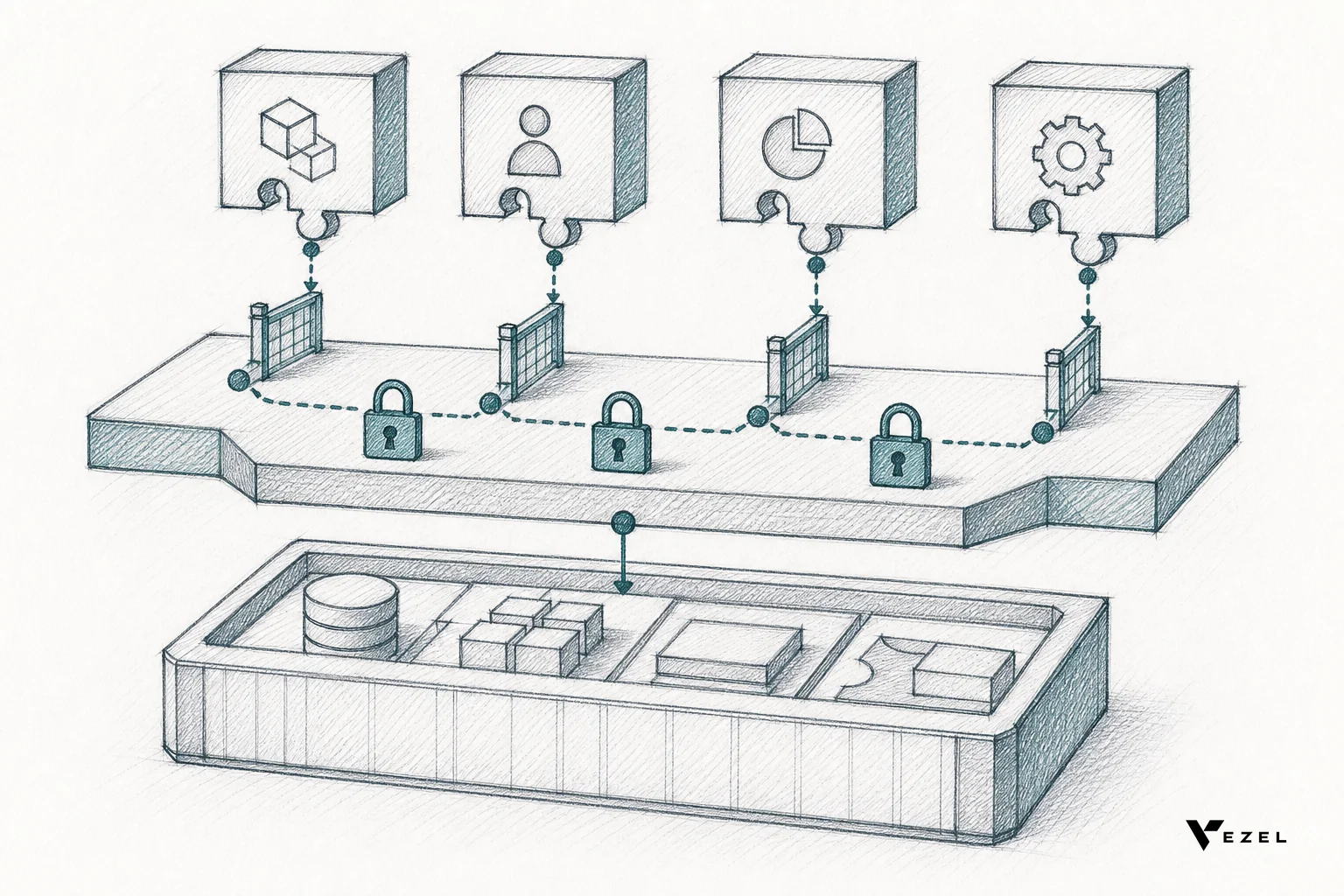



The Vezel AI embedded extensibility platform is a layer that lives inside your SaaS product. It lets your customers build their own dashboards, workflows, reports, and AI agents. They just type plain English requests. No code needed, no ticket to your engineering team. Vezel connects to your existing APIs. It inherits your existing permissions. And it looks native to your product.
Key Takeaways
- It's embedded, not standalone: Vezel runs inside your product's UI as a white-labeled layer. Retool and Mendix work differently. They are separate tools your team builds with.
- End users build it, not developers: Non-technical customers describe what they want in plain English. They get a working dashboard, form, or workflow in minutes, not sprint cycles, using embedded no-code that actually works under the hood.
- Security is inherited, not rebuilt: Every extension a customer creates runs under your existing login system and role-based permissions, including row-level access.
- It targets product, engineering, and CS teams differently: Product leaders cut roadmap pressure. Engineering reclaims capacity. CS closes gaps that were causing churn.
- Publishing is governed: A marketplace inside your product handles versioning and lifecycle. This keeps customer-built extensions from multiplying unchecked.
At a Glance: Vezel Fundamentals
| Attribute | Detail |
|---|---|
| What it builds | Dashboards, reports, forms, workflows, AI agents |
| Who builds it | Non-technical end users inside the host SaaS product |
| Input method | Plain English prompts |
| Integration approach | API auto-discovery mapped to existing endpoints and data models |
| Security model | Inherits host platform's login system, role-based access, and row-level access |
| Design fit | White-labeled theming matching the host product's UI |
| Governance | In-product marketplace for versioning and publishing extensions |
| Primary buyers | SaaS product, engineering, and customer success leaders |

What Is the Vezel AI Embedded Extensibility Platform?
Vezel is an embedded AI extension platform. It sits inside a B2B SaaS product, not beside it. It gives that product's own customers a way to create the tools their business actually needs.
Think about a project management platform used by a construction firm and a marketing agency. Both need dashboards. Neither needs the same one. A construction customer wants a permit-tracking view sliced by site. The agency wants campaign ROI grouped by client. Normally, one of those requests sits in a backlog and waits.
Vezel changes that. The customer types what they want in a plain English sentence, right inside the product they already use. Vezel then builds a working dashboard, form, or workflow connected to live data. No separate login, no export, no spreadsheet.
This works differently from an internal tool builder like Retool, which your own developers use to build things for your team. Vezel is built for the end customer. It sits embedded directly in the product your customer already pays for. Read more on how the two approaches compare in this practical guide to the Vezel adaptive SaaS platform.
How Does Vezel Embed Inside a Host SaaS Product?
Vezel embeds through API auto-discovery. It maps its extension layer to your product's existing OpenAPI-based endpoints (a common standard for describing APIs) and data models. Then it wraps the result in your own design system, with zero-footprint setup.
Your engineering team doesn't need to build and maintain a parallel integration. Vezel reads what your APIs already expose. It maps objects, fields, and relationships on its own. That mapping is what lets a plain English request turn into a query against live data, instead of a stale export.
Security travels with that connection. Every extension a customer builds inherits your existing login system, your role-based access controls, and your row-level permissions. A support rep who can only see their assigned tickets sees the same restriction inside any dashboard they build. Nothing new to set up, nothing separate to audit.
The result looks native because it is themed to match. White-label theming pulls your fonts, colors, and layout patterns. A customer-built report won't feel like a bolted-on third-party tool. For a deeper technical breakdown of how permission inheritance actually works, see how embedded extensions inherit RBAC permissions.
What's the Practical Difference Between Governed Extensibility and Just Technically Open?
A governed extensibility model tracks who published what. It versions every change and enforces permission inheritance automatically. A technically open API leaves those controls to whoever builds against it. Openness alone doesn't stop shadow IT or unreviewed access sprawl, which is one of the 5 criteria that separate a real embedded extensibility platform from a glorified iframe.
Plenty of platforms expose an API and call that extensibility. The gap shows up later. Nobody can say which customer built which extension. Nobody knows whether it still works after a data model change, or who approved it going live. Vezel's in-product marketplace handles publishing and versioning, so every extension has a lifecycle, not just an install date.
How Natural Language Generates Dashboards, Workflows, and Agents
A customer types a request like "show overdue renewals by account owner this quarter." Vezel parses the intent. It matches it to the discovered API schema. Then it renders a working dashboard against live data within seconds.

Workflows follow the same path, but with more structure. Say a customer describes an approval process, like three-tier sign-off for expense reports over a threshold. They get a working workflow app that respects the same role hierarchy already defined in the host product. No developer translates the business rule into code. The rule is the prompt.
AI agents are the third output. A support assistant that reads live account data before answering a question is one example. An operations copilot that pulls a weekly metrics summary is another. Both start from the same plain English description. The agent inherits permissions the same way a dashboard does, so it never shows data the requesting user couldn't already see.
Every dashboard, workflow, and agent a customer builds gets published through a governed marketplace, so your team retains visibility into what exists, who built it, and when it was last updated.
You can explore this in more depth in how to deploy AI agents inside your SaaS platform, which walks through agent-specific setup considerations.
Which Teams Benefit Most From Vezel?
Product, engineering, and customer success teams each get a different return from the same platform. Knowing which one applies to your situation helps you frame the internal pitch.
- Product leaders stop fielding one-off feature requests that never belonged on a shared roadmap in the first place. This frees capacity for work that benefits every customer.
- Engineering teams reclaim hours previously spent on bespoke customer builds, the same kind of backlog described in 6 months of backlogged dev tickets cleared by 1 embedded AI builder. Industry estimates put that at 30-40% of capacity for growing SaaS companies.
- Customer success teams close the "last mile" functionality gap that causes churn, without waiting on a sprint to ship.
- Sales and GTM teams demo a working custom workflow inside a live sales cycle, instead of promising a roadmap item that may never ship.
Vezel vs Other Ways to Close the Adaptation Gap
SaaS teams typically close the gap between what their product does and what customers need in one of five ways, a pattern outlined in the EXTEND framework for how B2B SaaS companies turn customization chaos into a self-serve advantage. Each comes with different tradeoffs in speed, cost, and who does the work.
| Approach | Who builds it | Speed | Security inheritance | Ongoing maintenance |
|---|---|---|---|---|
| Vezel (embedded extensibility) | End customer, plain English | Minutes to hours | Automatic | Governed by marketplace |
| Custom development | Your engineers | Weeks to months | Manual, per build | High, per customer |
| Retool / internal tool builders | Your developers | Days to weeks | Manual reconfiguration | Moderate to high |
| Mendix / low-code platforms | Trained internal developer | Weeks | Manual reconfiguration | Moderate |
| Professional services / consultants | Third-party implementation team | Weeks to months | Depends on contractor | Ongoing contractor dependency |
For a closer look at two of these comparisons, read Mendix vs embedded extensibility or professional services vs embedded extensibility.
How to Know If Vezel Is Right for Your SaaS Product
Vezel fits best if your engineering team already spends real hours each month on one-off customer requests. It also helps if your product already exposes documented APIs that a mapping layer can discover, similar to the embedded iPaaS approach described in how B2B SaaS integrations boost ROI with embedded iPaaS.
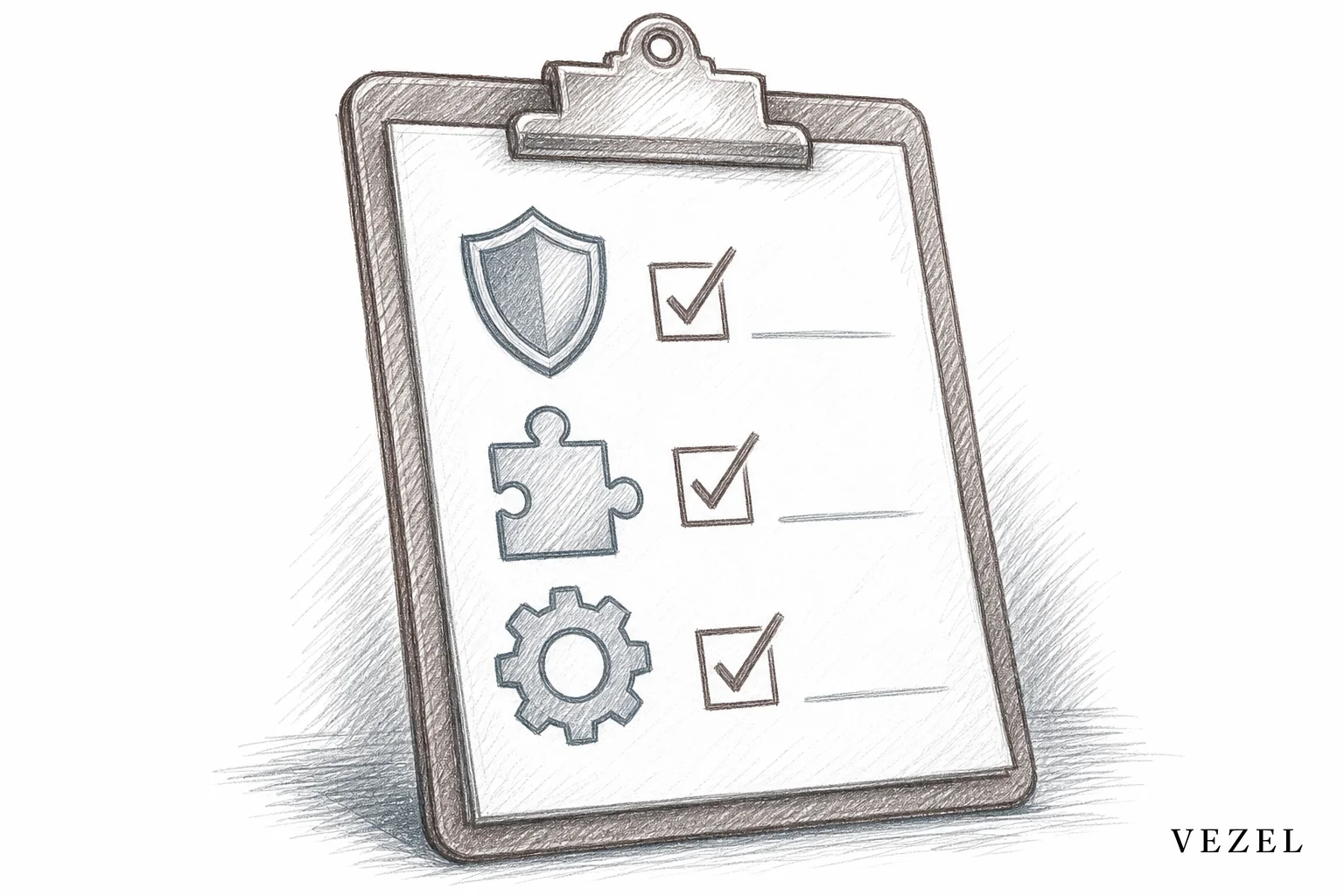
Look for a few specific signals before deciding.
- Recurring customer requests that never make the roadmap because they're too specific to one account, one industry, or one workflow.
- Enterprise deals stalling on a requirement for a custom dashboard, report, or approval flow that sales can't demo on the spot.
- Customers building workarounds in spreadsheets or shadow IT tools that live outside your product entirely.
- A support queue full of "can you pull this report" tickets that a self-serve dashboard builder would eliminate.
Watch for red flags when evaluating any extensibility vendor. Avoid vendors with no clear answer on how permissions are inherited, no versioning or publishing controls, and no plan for what happens when your underlying data model changes. A platform that's technically open but ungoverned tends to create the exact shadow IT problem you're trying to solve. For a full evaluation checklist, see how to choose an embedded extensibility platform.
Frequently Asked Questions
Does Vezel replace our product roadmap?
No. Vezel absorbs the customer-specific requests that never belonged on a shared roadmap in the first place. Your roadmap stays focused on capabilities every customer benefits from, not single-account requests.
Does Vezel work for vertical SaaS like healthcare or fintech?
Yes. Vertical SaaS products, including healthcare, fintech, and field ops platforms, use the same API auto-discovery and permission inheritance model. These industries typically already run strict role-based access, and Vezel simply reuses it.
Do customer-built extensions inherit our existing permissions automatically?
Yes. Every dashboard, workflow, or agent a customer builds runs under the same login session and role-based checks already enforced in your product. That includes row-level restrictions, with no separate permission system to maintain.
Does your team recognize this pattern? Enterprise deals stall on custom requirements. Engineers quietly maintain a growing pile of one-off builds. That gap is exactly what Vezel's embedded extensibility layer is built to close. Book a demo to see how a plain English request turns into a working dashboard or workflow inside your own product. Or see how it works before you talk to anyone.