

Engineering roadmap bloat from enterprise customers is getting worse because the incentive that causes it (bigger deals in exchange for one-off custom builds) is accelerating faster than any SaaS company's capacity to absorb it. Every enterprise logo you close today adds a permanent maintenance tail that competes with core product work for years, and that tail never gets shorter on its own.
Key Takeaways
- It compounds, it doesn't reset: a custom dashboard or approval flow built for one enterprise account in Q1 still needs to survive every release, migration, and security patch in Q4 and beyond.
- The real cost is 30-40% of engineering capacity: that's roughly how much bespoke, single-customer work now consumes at many mid-market SaaS companies, based on patterns reported across product and engineering teams.
- Bigger deals make it worse, not better: enterprise buyers have more entrenched internal processes than SMB buyers, so their asks are more specific, more numerous, and harder to generalize into shared features.
- The traditional feature request cycle can't clear these asks: most enterprise-specific requests never reach the threshold of "benefits enough customers" to earn a spot on the shared roadmap, so they get built as one-offs anyway.
- The fix is architectural, not procedural: separating a shared core product from a governed, customer-specific capability layer is the only approach that stops the compounding without stalling enterprise sales.
At a Glance: Engineering Roadmap Bloat From Enterprise Customers
| Factor | What's Happening |
|---|---|
| Typical engineering capacity lost | 30-40% spent on bespoke, single-customer requests |
| Where it starts | Enterprise sales cycles requiring a custom dashboard, report, or approval workflow before signing |
| Why it compounds | Every custom build must be maintained through every future release, indefinitely |
| Why the roadmap can't absorb it | Enterprise-specific asks rarely benefit enough customers to justify shared product investment |
| Common workaround today | Spreadsheets, BI exports, Retool-style internal tools, shadow IT |
| Risk if unresolved | Stalled deal cycles, renewal churn, and a growing backlog that never shrinks |
| Structural fix | Embedded extensibility layer that lets customers self-serve dashboards, workflows, reports, and AI agents |
The Deal That Started It
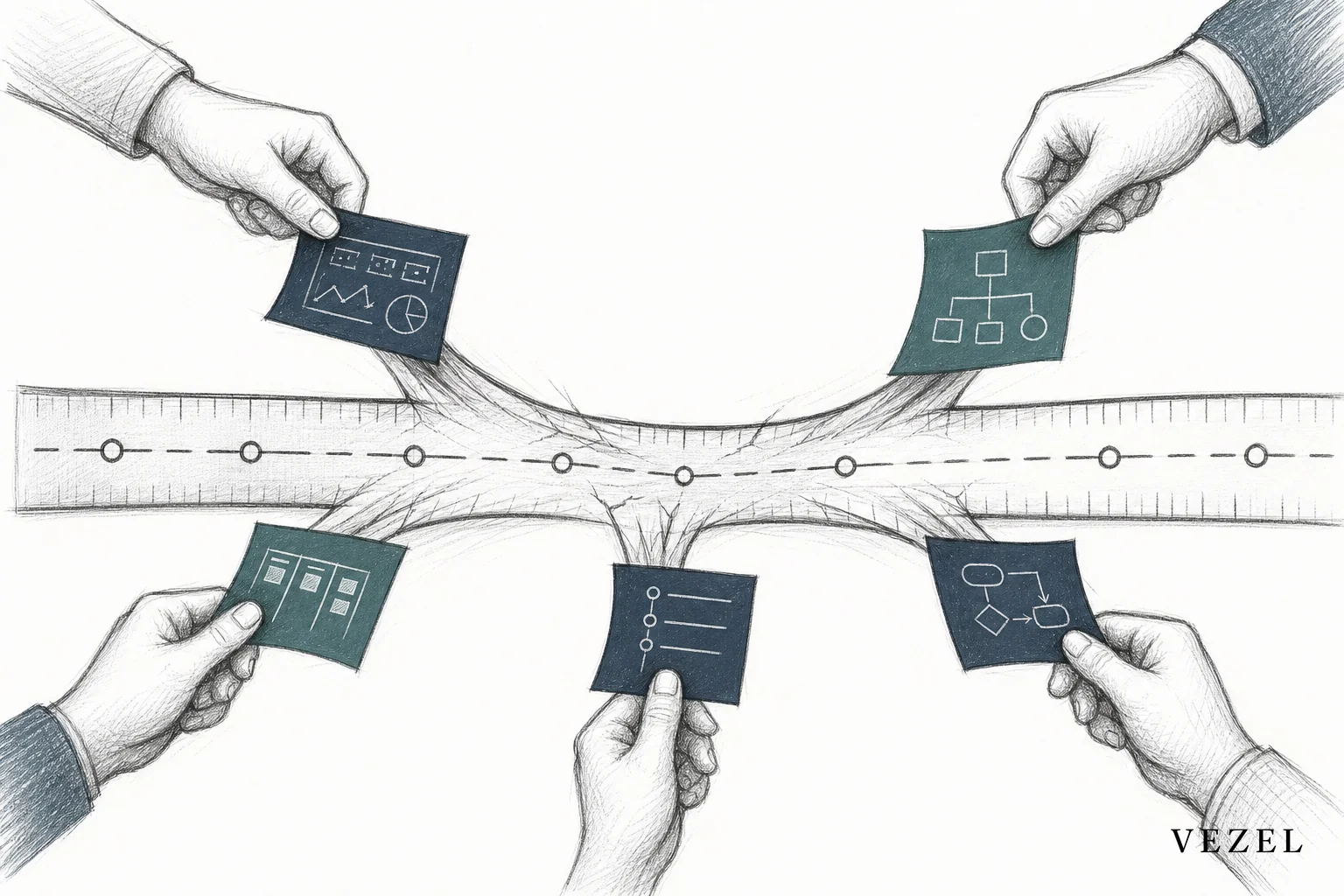
Picture a Tuesday afternoon at a mid-market vertical SaaS company. A six-figure enterprise deal is three weeks from closing. Then the prospect's ops director sends one more requirement: a compliance dashboard built around their specific approval hierarchy, or the deal doesn't move forward. Sales escalates it. The VP of Product agrees to "just this once." Two engineers get pulled off the core roadmap for three weeks.
The deal closes. Everyone celebrates. Nobody schedules time to ask what happens to that dashboard next quarter, or the quarter after that.
This is how engineering roadmap bloat from enterprise customers usually begins: not as a policy decision, but as a single exception made under sales pressure. The trouble is that exceptions like this rarely stay isolated. Once one enterprise account gets a custom build to close, the next one asks for the same treatment, and sales has no reason to say no. It worked last time.
Why Bigger Deals Mean More Roadmap Bloat, Not Less
There's a common assumption that chasing larger enterprise contracts should eventually reduce the need for one-off work, since bigger customers presumably have more standardized needs. The opposite tends to be true.
Enterprise buyers usually have more entrenched internal processes than small or mid-size customers, not fewer. A 40-person startup will often adjust its workflow to match your product. A 4,000-person enterprise account will not. Their approval hierarchies, reporting structures, and compliance requirements were built over years, and they expect software to match those structures exactly, not the other way around.
At the same time, the size of the contract changes the internal math. A $150,000 annual deal easily justifies pulling two engineers for three weeks in the eyes of a sales leader. Do that math across ten enterprise accounts in a year and you have twenty or more engineer-weeks committed to work that benefits exactly one customer each. None of that work shows up as "roadmap bloat" in the moment. It shows up quarters later, when engineering leadership tries to explain why the core product hasn't shipped anything new.
The Compounding Effect: How One-Off Requests Stack Up
The part that catches most engineering leaders off guard isn't the first custom build. It's the fifteenth.
Every bespoke dashboard, workflow, or report built for a single enterprise customer has to survive every future release. When you ship a new authentication system, someone has to update the custom integrations built on the old one. When you refactor your data model, someone has to check whether that one customer's custom report still pulls the right numbers. None of this work is optional. Skip it, and the custom build breaks, the customer notices, and the renewal is at risk.
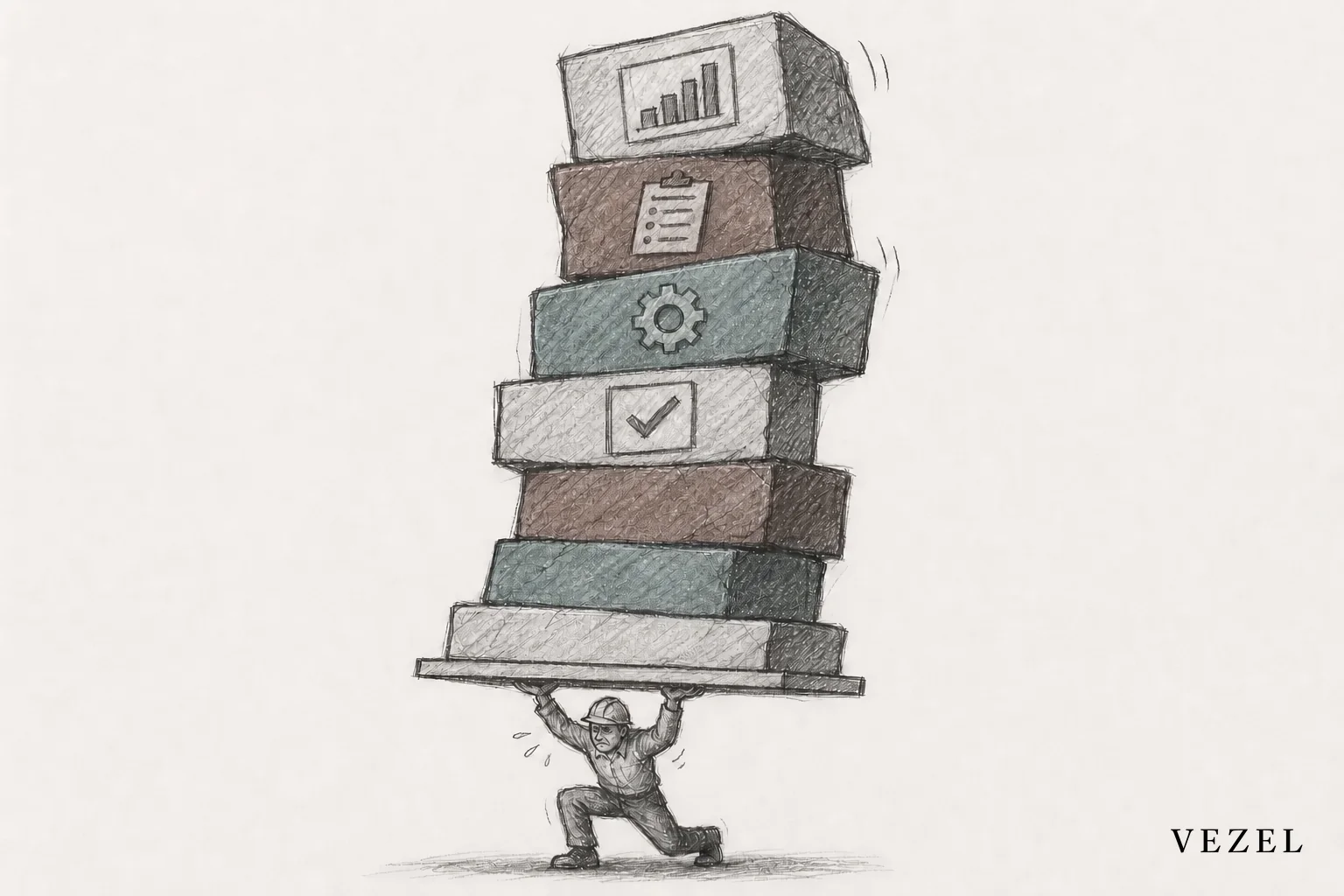
This is what makes engineering roadmap bloat different from ordinary technical debt. Ordinary technical debt is something you choose to pay down. Bespoke, customer-specific code is something you're contractually obligated to keep alive, often indefinitely, because a specific enterprise account depends on it working exactly as delivered. The maintenance burden doesn't plateau. It grows with every new logo you close, because the shared foundation stays the same size while the pile of one-off builds on top of it keeps getting taller.
Teams facing this exact pattern have started tracking it explicitly. Our related breakdown on how to reduce SaaS engineering backlog from enterprise requests walks through what that audit typically reveals: most companies underestimate the maintenance tail by half or more, because it's spread thin across many small tickets instead of showing up as one obvious line item.
Why the Feature Request Cycle Can't Keep Up
Every SaaS company has some version of a feature request process. A customer asks for something, the request lands in a backlog, product managers evaluate demand, engineering estimates the work, and the request gets prioritized against everything else competing for the same sprint.
This process works well when a request has broad appeal. It breaks down for enterprise-specific asks, because most of them were never designed to serve more than one customer. A custom approval flow matching one healthcare company's credentialing process, or a supplier scorecard built around one manufacturer's exact vendor criteria, will rarely clear the bar of "enough customers want this" that shared roadmaps are built to filter for.
The result is a permanent limbo. Either the request sits in the backlog indefinitely, frustrating the customer and putting the renewal at risk, or someone quietly builds it as a one-off anyway to save the deal, adding another brick to the pile described above. Neither outcome scales. Both keep happening every quarter, at every SaaS company chasing enterprise revenue.
Why This Trend Won't Reverse on Its Own
It's tempting to assume this pressure will ease once a product "matures" or once a company hires enough engineers. Neither is likely to happen, for three structural reasons.
- 😀 Competitive pressure keeps pushing toward bigger deals. As SaaS markets mature, growth increasingly comes from moving upmarket, and enterprise accounts inherently carry more custom requirements than the SMB segment a company may have started with.
- 🤖 AI has raised the bar for what "adaptive" software should look like. Once customers experience AI that understands natural language requests, they expect the underlying product to adapt to their business, not just answer questions about it. That expectation gap is explored further in how AI changed interaction without changing adaptation.
- 🏢 Every business genuinely operates differently. Two companies in the same industry, using the same category of software, will still define success metrics, approval chains, and reporting structures in their own way. That diversity isn't shrinking as markets mature. It's growing as businesses specialize further.
Put those three forces together and you get a trend line that keeps climbing: more enterprise deals, higher customer expectations for adaptability, and no reduction in how differently each business actually operates. Without a structural change to how customization gets delivered, engineering teams will keep losing a third or more of their capacity to this work indefinitely.
The Structural Fix: Separating the Shared Core From Customer-Specific Capability
The traditional response to this problem has been more customization: consultants, custom code, forked deployments, or internal tools cobbled together with something like Retool. These approaches solve the immediate request, but they carry the same trade-offs that have burdened enterprise software for decades: higher implementation costs, harder upgrades, and a growing maintenance surface that engineering owns forever.
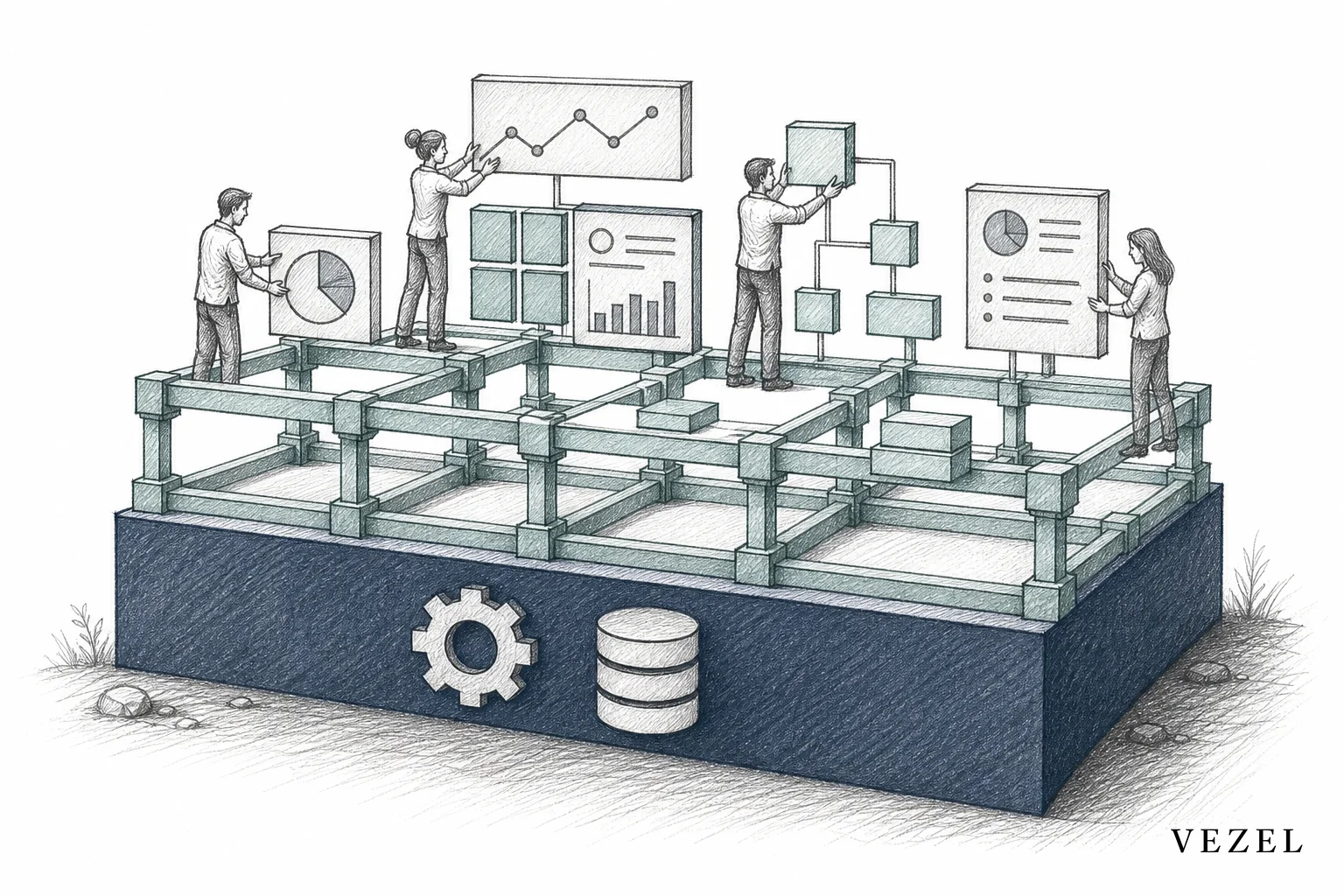
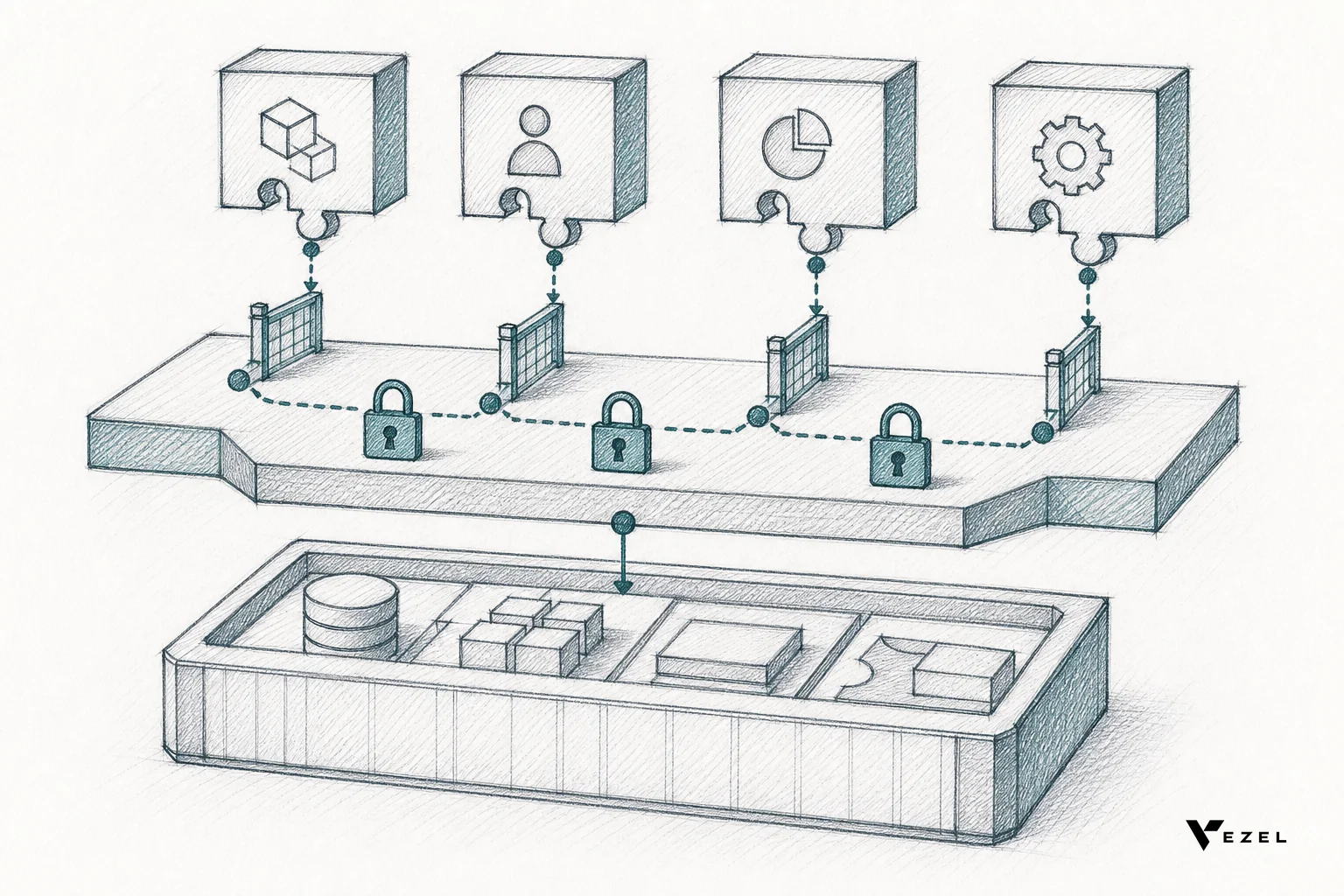
A more durable fix separates two things that traditional SaaS bundles together: the shared core product, and the customer-specific capability layer sitting on top of it. Instead of engineering building every custom dashboard, workflow, report, or AI agent by hand, customers get a governed way to build those things themselves, in plain English, directly inside the product they already use.
This is the architecture behind what Vezel calls Adaptive SaaS. Extensions built this way connect to your existing APIs through auto-discovery, so there's no separate integration project. They inherit your platform's authentication, role-based access controls, and row-level permissions automatically, so security teams aren't reviewing a new system for every custom build. And because everything is white-labeled to match your product's design system, customers experience it as a native feature, not a bolted-on tool.
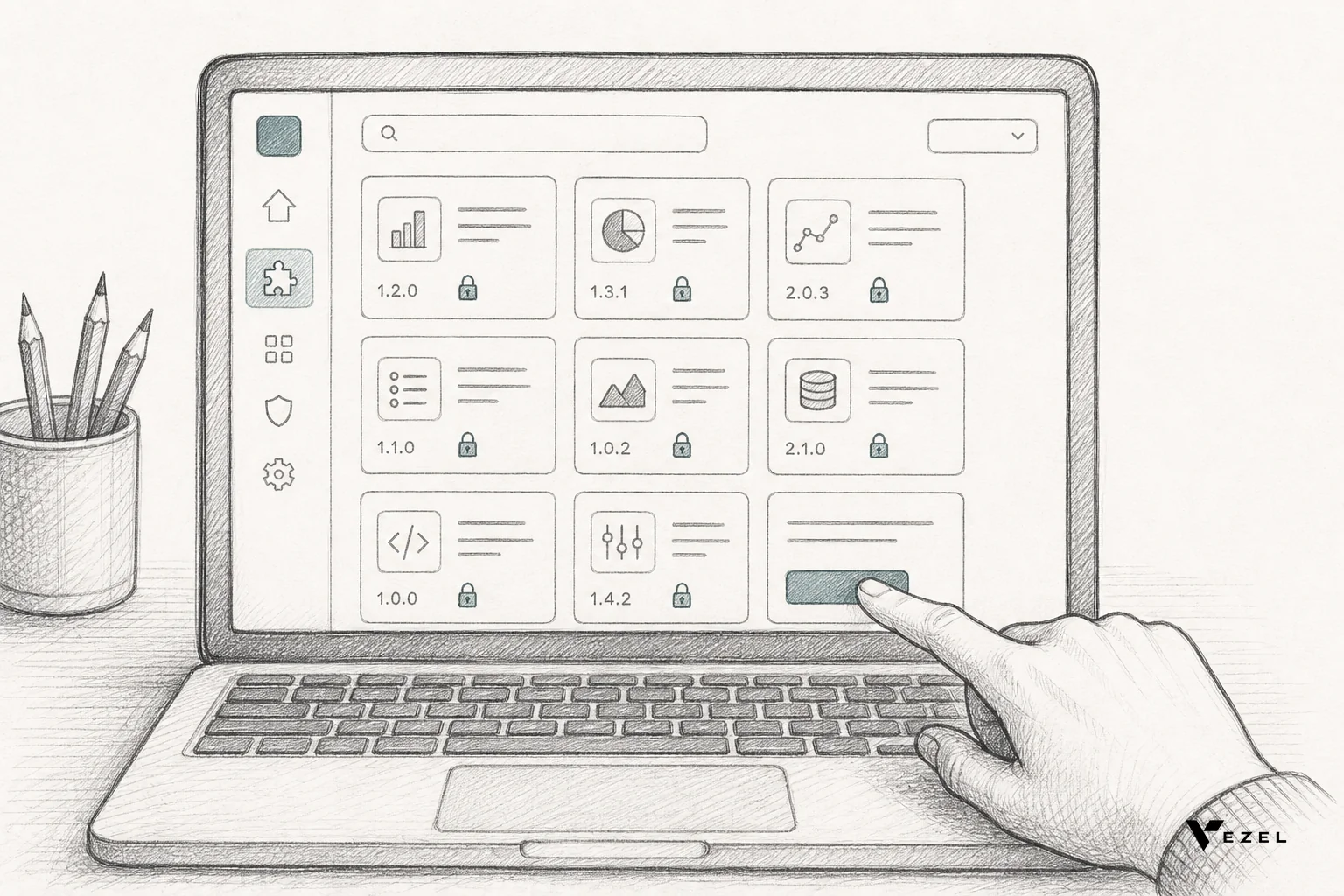
Crucially, none of this happens outside your control. A governed, in-product marketplace handles publishing, versioning, and lifecycle management, so product and engineering leaders retain oversight over what gets built and how it evolves, without personally building it. That's a meaningfully different position than the one most companies are in today, where every enterprise-specific ask either drains a sprint or ends up as an ungoverned spreadsheet nobody on the platform team can see. Our guide on how to prevent shadow IT in your SaaS platform covers what that visibility gap tends to cost teams that don't close it.
How This Differs From Building an Internal Tool Yourself
Teams sometimes try to solve this with a general-purpose builder aimed at internal engineering use. The problem is that tools built for internal teams rarely carry the security model, white-labeling, or customer-facing governance that end customers require. Our comparisons of Retool vs. embedded extensibility and Superblocks vs. embedded extensibility break down exactly where those tools stop scaling once you try to hand them to customers instead of your own developers.
What Engineering and Product Leaders Should Do Now
If your roadmap already feels crowded with one-off enterprise asks, a few concrete steps help before things get worse.
- Audit the last 12 months of enterprise-specific requests. Count the engineer-hours spent on custom dashboards, reports, and workflows built for a single account. Most teams find the number is higher than anyone estimated, because it's spread across many small tickets instead of one visible project.
- Separate "platform work" from "customer-specific work" in planning. Give each category its own visibility in sprint planning so leadership can see exactly how much capacity is going to work that only benefits one logo.
- Evaluate embedded extensibility against building in-house. Our breakdown of extensibility platform vs. custom dev costs lays out the real trade-offs, including the ongoing maintenance tail that in-house builds carry.
- Bring sales and customer success into the process early. Custom asks that surface late in a sales cycle should route to a self-serve capability layer, not straight into a sprint. See how it works to understand what that hand-off looks like in practice.
- Give customers a way to build dashboards and workflows themselves. Whether it's a compliance approval flow, a supplier scorecard, or a KPI dashboard, our guides on building custom dashboards inside your SaaS and embedding a workflow builder in your SaaS outline what that looks like without adding another line to the engineering backlog.
FAQ
What is engineering roadmap bloat?
Engineering roadmap bloat happens when a growing share of engineering capacity gets consumed by one-off, customer-specific requests instead of core product development. It's most visible in B2B SaaS companies selling to enterprise accounts, where custom dashboards, workflows, and reports pile up faster than the roadmap can absorb them.
Why do enterprise customers cause more roadmap bloat than SMB customers?
Enterprise organizations tend to have more established internal processes, approval hierarchies, and reporting structures than smaller companies. They expect software to match those structures exactly, which produces more specific, harder-to-generalize requests, and larger contract values that make it easier to justify pulling engineers off the core roadmap to satisfy them.
How much engineering capacity is typically lost to bespoke enterprise requests?
Patterns across mid-market SaaS companies suggest that bespoke, single-customer work commonly consumes 30-40% of engineering capacity once a company has a meaningful base of enterprise accounts, though this varies by company size and vertical.
Can AI coding assistants fix roadmap bloat?
AI coding assistants make it faster to write custom code, but they don't remove the underlying problem: every custom build still needs to be maintained through every future release. Without a structural separation between shared product and customer-specific capability, faster coding just means faster accumulation of the same maintenance burden.
What is the difference between customization and extensibility?
Customization typically means engineering, consultants, or developers modifying the product or writing custom code for a specific customer, which creates an ongoing maintenance obligation. Extensibility means giving customers a governed way to build their own dashboards, workflows, reports, and AI agents inside the product, using plain English rather than code, while the platform itself stays centrally maintained and secure.
The gap between the software every customer receives and the software each one actually needs doesn't close by working harder inside the same feature request cycle. It closes by changing who builds the last mile, and how it's governed once it exists.
If your engineering team is already living this pattern, closing five enterprise deals a year and quietly losing a third of your roadmap capacity to the custom work that came with them, it's worth seeing what a governed extensibility layer looks like inside your own product. Book a demo to walk through how Vezel connects to your existing APIs, inherits your security model, and lets your enterprise customers build the dashboards, workflows, and AI agents they're currently asking your engineers to build by hand. Or talk to an expert about what the audit of your last 12 months of enterprise requests would likely show.