

Fieldline's VP of Customer Success (a composite scenario drawn from patterns common across mid-market ops-management SaaS companies) reads the renewal notes twice before she believes them. The account is a national logistics customer, seven figures in annual contract value, and the champion on the call had nothing bad to say. No complaints about uptime. No complaints about bugs. Just one quiet, damning line buried in the notes: "Most of our actual dispatch process happens in a shared spreadsheet now. The platform is more of a system of record at this point."
That sentence is the entire problem with modern SaaS in miniature. The product wasn't broken. It just wasn't where the real work happened anymore. This is the story of what Fieldline tried before it fixed that, what changed after it embedded a white label ai extension builder for saas directly into its product, and what the numbers looked like on the other side.
The Renewal Call That Almost Went Wrong
Before the fix, Fieldline's product looked like most mature B2B SaaS platforms: a solid core, a long list of features, and a customer base that used maybe a third of what was actually built. The logistics account wasn't unusual. It was the norm. Enterprise customers kept asking for a "morning prioritization view" ranked by their own margin logic, or a compliance checklist that matched their specific regulatory category, and each request got logged, triaged, and quietly pushed to a backlog that never seemed to shrink.
The renewal call was a warning shot. It confirmed something Fieldline's leadership had suspected for a year: customers weren't leaving because the software failed. They were leaving because it had stopped being part of their daily routine, one unshipped feature request at a time.
Why This Keeps Happening: The Usage Gap Nobody Budgeted For
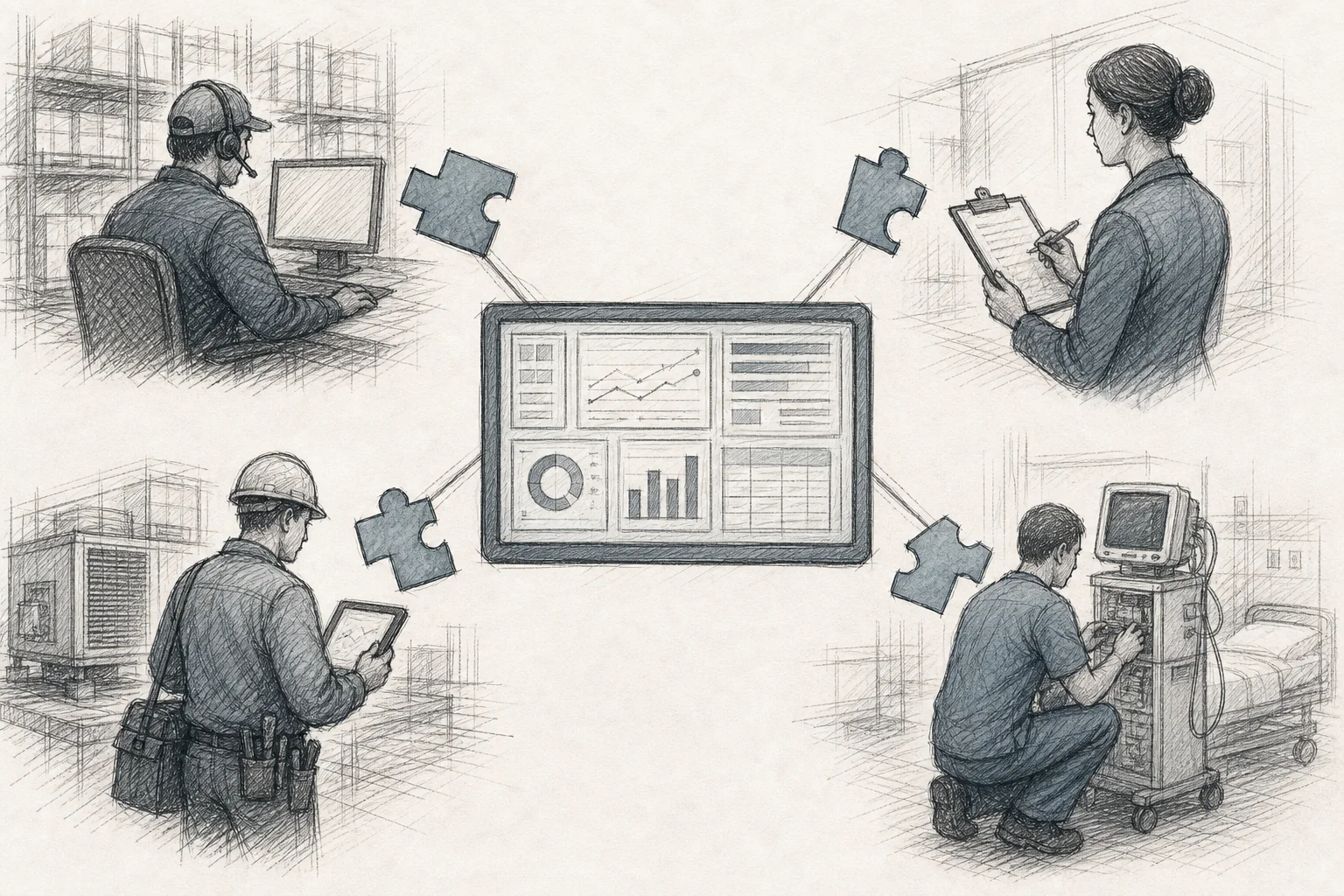
SaaS economics run on a simple idea: build the product once, sell it to thousands of accounts, and let margins do the rest. The idea has a crack in it. The customers buying that one product are rarely doing the same job the same way. A maintenance platform might serve a hospital's compliance team and a roofing crew's dispatcher on the exact same interface. A CRM might serve a real estate brokerage and a manufacturing distributor. Each group has its own vocabulary, its own regulatory pressure, and its own version of "the first thing I do every morning."
When one interface has to fit all of them, it ends up roughly 60-80% relevant to any single customer. The missing 20-40% doesn't vanish. It moves into spreadsheets, sticky notes, and group chats. Industry benchmarks for feature adoption commonly sit in the 22-35% range, meaning most of what a vendor builds goes unused by any given account. That's not because the features are bad. It's because they were built for an average customer who doesn't exist.
Multiple customer-success studies point to the same uncomfortable conclusion: roughly two-thirds of B2B SaaS churn correlates with low product adoption, not product defects. Meanwhile, estimates for enterprise technology spend happening outside IT-approved channels commonly land in the 30-40% range, a pattern that has evolved from Zapier workarounds into full-blown "shadow AI," where employees paste company data into consumer chatbots just to get their job done. And underneath all of it sits an arithmetic problem product teams already know by heart: founder communities consistently report that 70-80% of enterprise feature requests never ship, simply because there aren't enough engineers to build them all.
Fieldline was living every one of these numbers at once. You can read more about how this backlog pressure builds in how to reduce SaaS engineering backlog from enterprise requests, and how it quietly drives churn in is missing workflows causing your SaaS churn.
What Fieldline Tried First (And Why It Didn't Work)
Fieldline's product team didn't ignore the problem. They tried the same fixes most SaaS companies try, in roughly the same order.
First came more configuration: feature flags, custom fields, permission toggles. This helped a little, but every global setting change had a blast radius. A toggle that helped the compliance team could silently break the dispatcher's workflow on the same account. Configuration changes how existing features behave. It can't create a feature that doesn't exist yet.
Next came custom engineering for the biggest accounts, the classic "whale tax." Some industry estimates put the share of engineering capacity consumed by one-off, single-customer requests as high as 30-40% at mid-market B2B SaaS companies. Fieldline's engineering lead could confirm the number from memory. Worse, almost none of those bespoke builds got reused elsewhere. They became permanent maintenance debt sitting quietly inside the codebase, slowing down every future release.
Then came the AI chatbot. Fieldline added a sidebar assistant that could answer questions about the data, and it looked great in the sales demo. Within a few months, weekly active usage settled into the low single digits. A chat answer disappears the moment the tab closes. Nobody wants to retype the same prompt every morning; they want a button that already does the thing.
Finally, someone on the product team floated standalone AI app generators, the kind that let anyone describe an app and get a working prototype in minutes. They were fun to try and useless for this problem. The generated apps lived on someone else's infrastructure, with their own login and their own database. None of them could see Fieldline's real customer data without a manual integration, none of them inherited Fieldline's permission model, and there was no way for another user at the same company to find and reuse what got built. A parallel system isn't an extension of the product a customer already trusts. It's just one more tab to manage.
The Turning Point: Embedding a White-Label AI Extension Builder
The shift happened when Fieldline stopped asking "how do we build more features" and started asking "how do we let customers build the specific thing they need, inside the product they already use." That reframing is what led them to embed an AI extension builder directly into their platform, the same approach Vezel is purpose-built to provide.
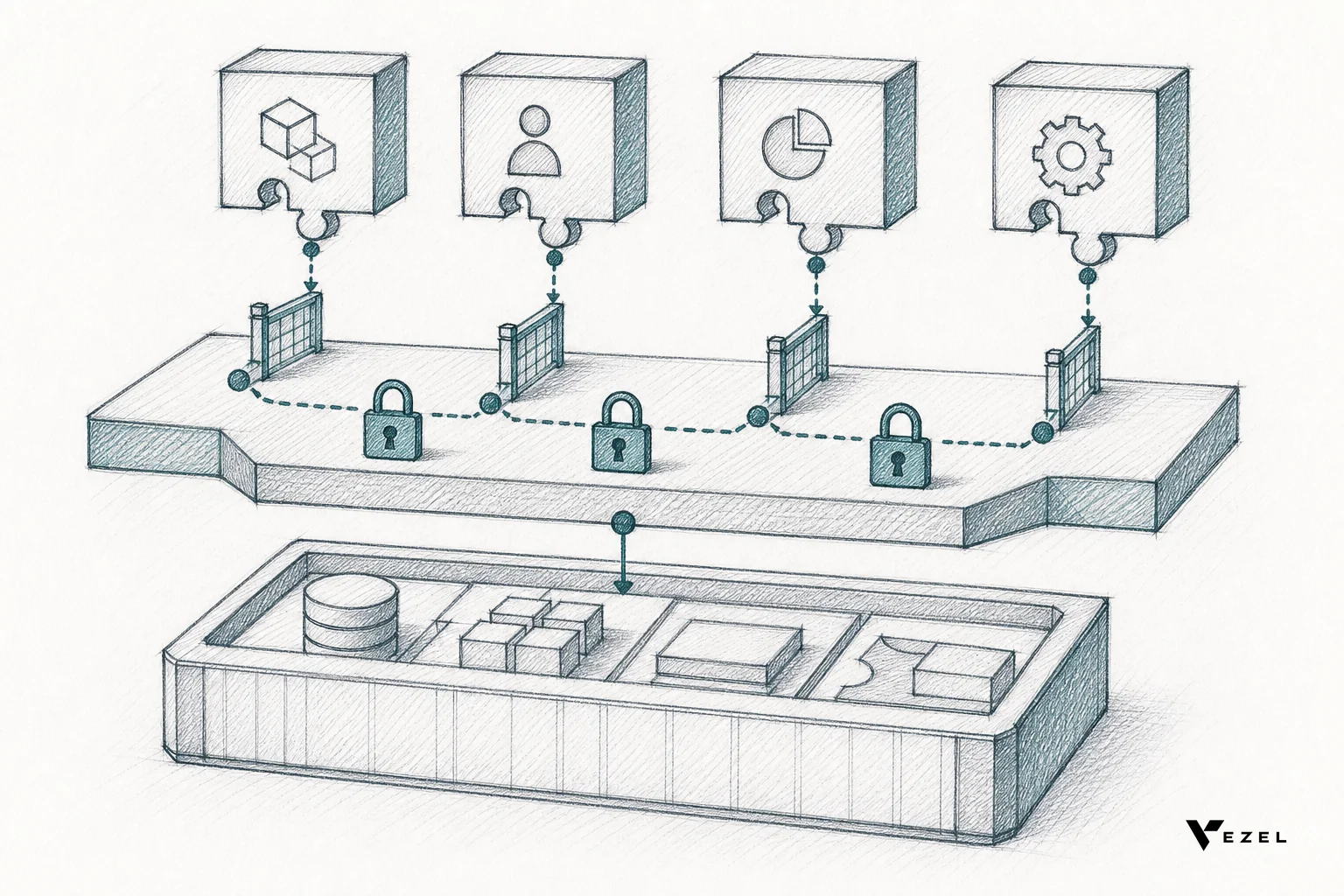
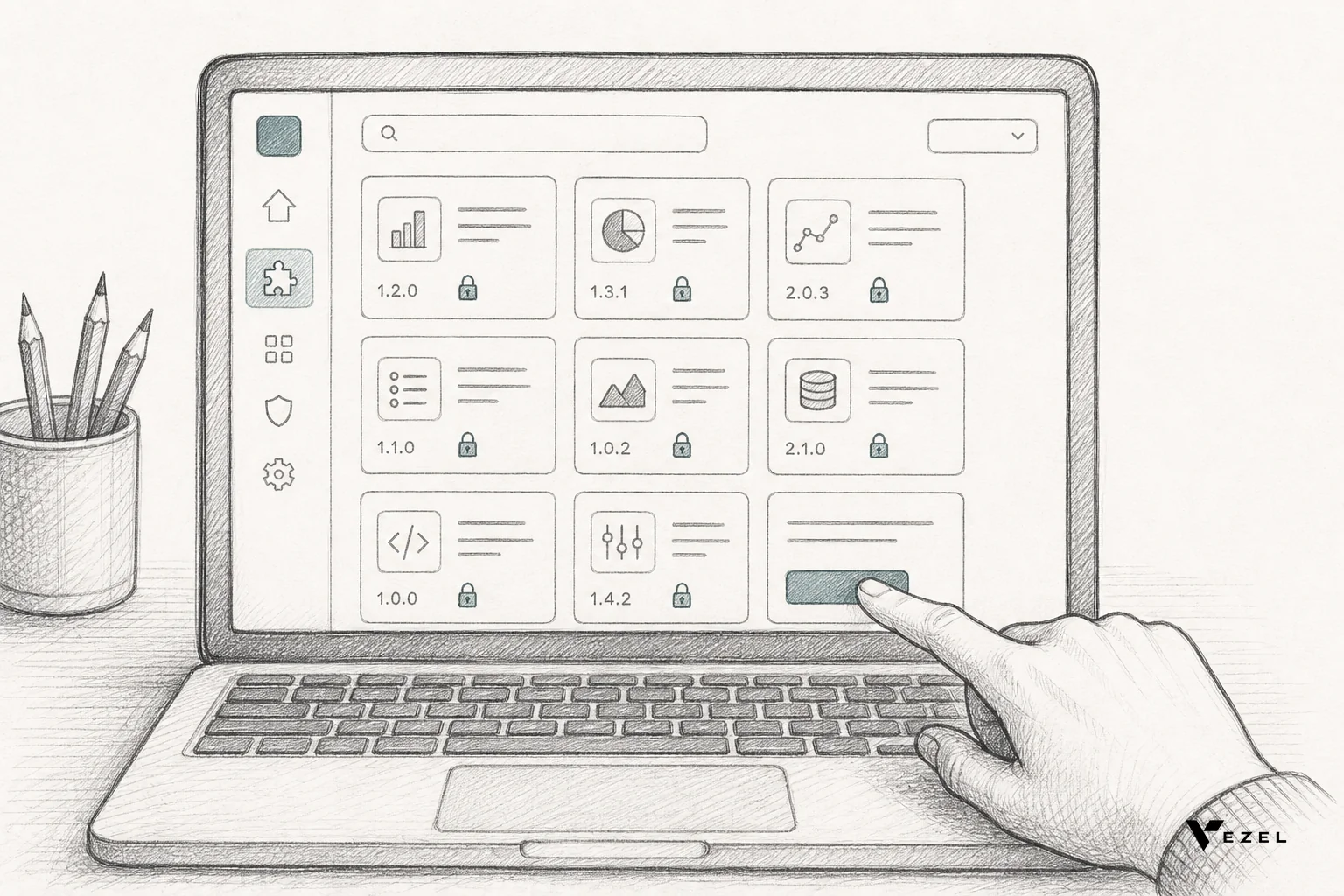
An embedded extension builder is different from everything Fieldline had tried before because it rests on five pillars working together. A multi-tenant runtime keeps every generated app scoped to a single customer's data, so no account can ever see another's. API auto-discovery lets the system map a plain-English request like "show me overdue jobs grouped by site" to the correct underlying endpoints automatically. Security inheritance means every generated app obeys the exact same authentication and row-level permissions the core product already enforces, no separate login, no new attack surface. White-label theming makes each app look and feel native, using Fieldline's own typography and colors instead of a bolted-on tool. And a governed marketplace means nothing gets built once and forgotten; apps are versioned, discoverable, and reusable across the account or, with permission, across other customers facing the same problem.
When the at-risk logistics customer described their dispatch workflow in plain English during a working session, the resulting microapp went live the same day, running against their real job data, scoped to their existing roles. No engineering ticket. No quarter-long wait. You can see how the same pattern applies to reporting specifically in how to build custom dashboards inside your SaaS and to structured processes in how to embed a workflow builder in your SaaS.
Before vs After: What Changed for Fieldline's Enterprise Accounts
The clearest way to see the impact is side by side. The table below reflects the pattern reported across production embedded-extensibility deployments, the same pattern Fieldline's team saw once the extension builder went live.
| Metric | Before: Fixed Product | After: Embedded AI Extension Builder |
|---|---|---|
| Feature/app adoption rate | 22-35% (typical standard feature release) | 85-95% of users activate at least one custom app |
| 30-day retention among adopters | ~35-40% industry average | High 80s percent among users who built or used a custom app |
| "How do I..." support tickets | High volume, growing with account complexity | Reduced by roughly 30-35% |
| Engineering time on one-off requests | Up to 30-40% of capacity at mid-market companies | Largely reclaimed for core roadmap work |
| Enterprise sales cycle | Delayed pending custom workflow scoping/build | Shortened; solutions engineers demo the live app during the call |
| Net revenue retention | Flat or declining on underused accounts | Reported gains of 20+ percentage points on accounts that expand custom usage |
The reason these numbers hold isn't magic. Specificity drives daily use. A generic dashboard is background noise. A dashboard built around one team's exact margin formula becomes the first tab they open every morning.
Inside the Microapps: What Enterprise Teams Actually Built
Once the at-risk account had a working example, other teams inside the same company, and other Fieldline customers entirely, started requesting their own. None of what got built was exotic. That was the point.

- A morning prioritization dashboard for the dispatch team, ranking open jobs by the customer's own urgency formula instead of a generic priority field.
- A compliance inspection checklist with mandatory photo capture and supervisor sign-off, built for a customer in a regulated freight category.
- A margin calculator pulling cost and pricing data so an ops manager could see profitability at different bid levels before a quote went out.
- A shift-handoff tool summarizing what changed during a shift so the next team wasn't starting cold.
Each of these solved one team's version of a common job, not a hypothetical average customer's version. Some of these fell under structured workflow patterns; you can see similar approval and sign-off logic in how to build approval workflows without coding, and role-based copilots in how to deploy AI agents inside your SaaS platform.
Why Embedded Beats Standalone: The Architecture That Makes This Work
It's worth being precise about why this differs from tools Fieldline's engineers already knew, like Retool or Glide. Those platforms are genuinely excellent for internal tooling: admin panels, ops dashboards, support consoles built by engineers, for engineers. They weren't designed to hand plain-English building power to end-customers inside a live, multi-tenant product. They live outside the host product, with their own login and their own environment, and they don't automatically inherit row-level security or role-based permissions from the platform they're supposed to extend.
A white-label AI extension builder solves a narrower, harder problem: giving the SaaS company's own customers the ability to build inside the product they already trust, without leaving it, and without creating a second security model to audit. That distinction is the entire subject of Retool vs embedded extensibility for SaaS products, Glide vs embedded extensibility, and Superblocks vs embedded extensibility, if you want the deeper architectural comparison.
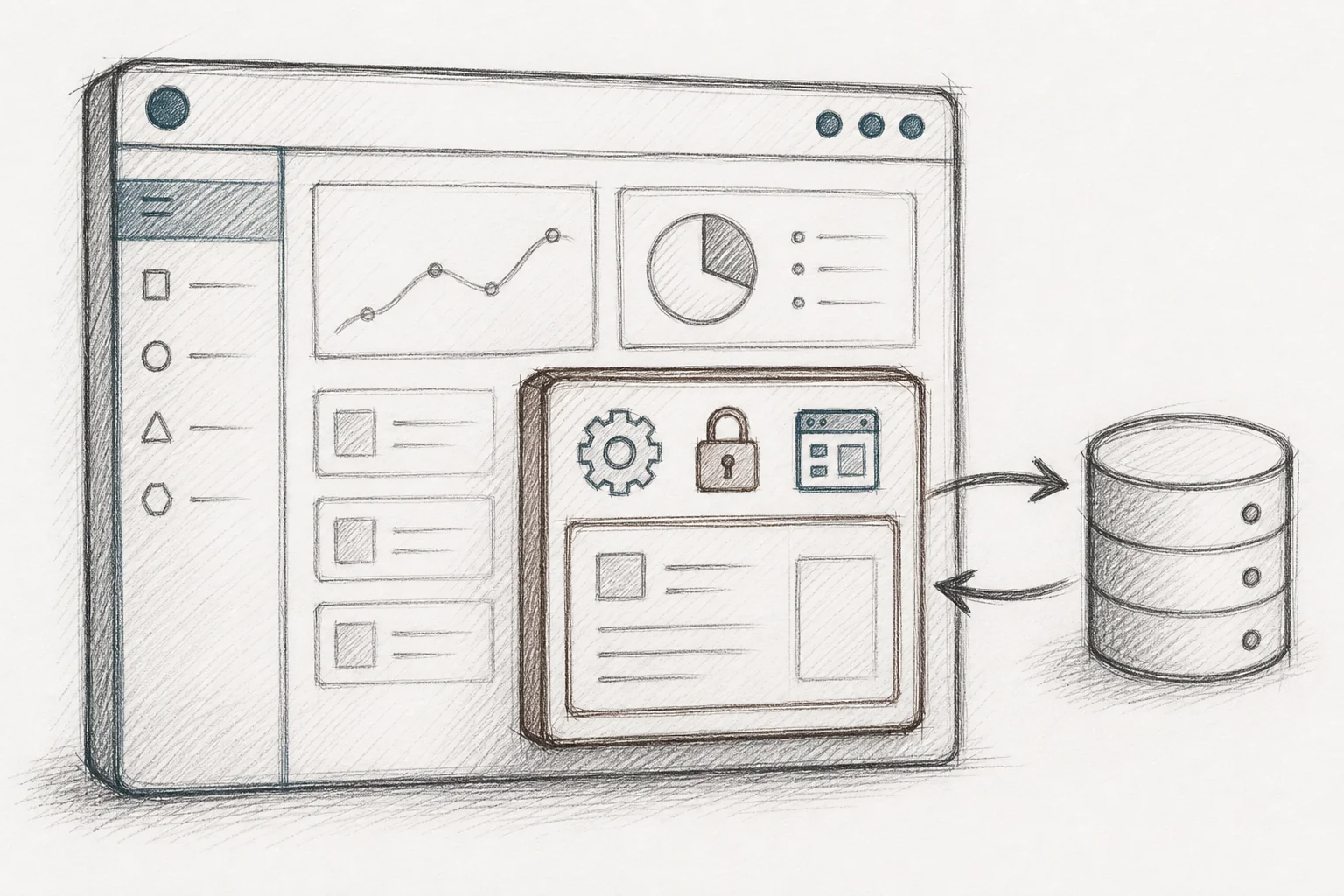
The generated app inherits the host platform's existing authentication, role-based permissions, and row-level access controls. If a user can't see certain records in the core product, an app they build can't see those records either.
That single sentence is why enterprise security and compliance teams sign off on this approach where they'd never sign off on a standalone AI app generator. Every generation and deployment event gets logged for audit purposes, which matters enormously in regulated industries. If you work in healthcare tech specifically, how healthcare SaaS platforms can offer extensibility covers how this plays out under stricter compliance requirements.
How Sales, Product, and Support All Win
The renewal call that started this story had a different ending the second time around. Fieldline's solutions engineers can now build a requested workflow live, during the sales call itself, instead of promising it "on the roadmap." That single change shortens sales cycles because prospects no longer wait weeks for a proof of concept before signing.
Product teams get their roadmap back. One-off enterprise demands used to hijack sprint planning every quarter; now those requests get self-served instead of queued. If your team is still fighting that battle, how to stop enterprise deals from bloating your roadmap walks through the same transition Fieldline made.
Support teams see fewer "how do I" tickets, because users who used to file a request now just build the answer themselves. Fewer tickets, faster resolution, and a support queue that finally reflects real product issues instead of unmet workflow gaps.
Frequently Asked Questions
Is a white label AI extension builder secure enough for enterprise data?
Security inheritance is the core design principle, not an add-on. Every generated microapp runs inside a multi-tenant sandbox scoped to one customer, and every API call passes through the host product's existing authentication and row-level permissions. Nothing bypasses the rules already enforced everywhere else in the platform.
How is this different from a chatbot or AI copilot?
A chatbot answer is a one-time transaction that disappears when the conversation ends. An embedded AI extension builder produces a durable, installable application that becomes part of a customer's daily toolkit, distributed through a marketplace so other users can find and reuse it.
How long does integration typically take?
Production integrations commonly take roughly two weeks: connecting the builder to the host product's API surface (ideally via an OpenAPI spec), mapping security and roles, applying brand theming, and seeding the marketplace with a few first-party example apps.
Does this replace our engineering team?
No. It removes the one-off, low-leverage customization work that never should have consumed engineering time in the first place, freeing that capacity for the core roadmap. Engineering still owns the platform; customers and implementation teams own the last mile.
Turn Your Product Into the Platform Enterprise Buyers Expect
Fieldline's story isn't unusual, and that's exactly the point. Every SaaS company selling to enterprise customers eventually hits the same wall: a fixed product trying to serve customers who are anything but average. The fix isn't more features, more configuration panels, or another chatbot sidebar. It's giving customers the ability to build the specific thing they need, inside the product they already trust, without waiting on your backlog.
If your renewal calls are starting to sound like Fieldline's before-story, book a demo to see how a white label AI extension builder for SaaS can turn your fixed product into an extensible platform. Curious about the mechanics first? start your free trial or explore how it works before you commit. And if your team has questions specific to your architecture or compliance requirements, talk to an expert who can walk through your product's API surface directly.